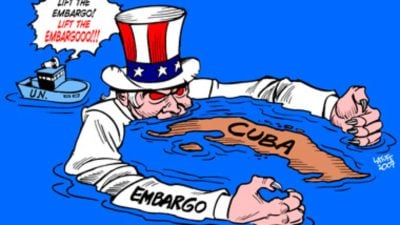
Cuba – over 60 years of US embargo. Suffering no end.
Now President Trump wants to sanction everybody who will ship anything to Cuba, especially petrol and other energy resources. Russia has announced they will ship gas and oil to Cuba. Will they?
Currently no airplanes can land because there is no aviation gasoline for refueling.
To read this article in the following languages, click the Translate Website button below the author’s name.
Русский, Español, Deutsch, 中文, عربي, Hebrew, Portugues, Français, Farsi, Italiano, 日本語, 한국어, Türkçe, Српски. And 40 more languages.
Cuba is drowning in misery, has been for over 60 years, almost for the entire period of their revolution. There seems to be no way out. Unless, what Trump calls, “they make a deal.” Maybe a deal has been made already a long time ago?
*
My involvement with Cuba dates back many years; working in Cuba on several occasions over the years, also private visits, traveling around, researching, and observing for many years.
Cuba has significant amounts of idle agricultural land, with estimates ranging from over 400,000 to over 1 million hectares of arable land left fallow. According to some reports, this may account for about 70% of all arable land in Cuba.
Why left unplanted?
Until Trump’s arrival, Cuba imported 70% to 80% of their food from Vietnam, Brazil, Spain, Argentina, and Mexico. But most of it from the United States. Yes, you read correctly, from the very country that embargoes Cuba, but allows imports not only from countries around the world, but herself, the US of A, exports food to Cuba.
During the time of dictator Fulgencio Batista and before him, Cuba was a net exporter of agricultural goods. Granted, it consisted deliberately of monocultural exports, sugar and tobacco, predominantly to and dependent on the US. After the revolution (January 1959), still monocultural exports were directed more towards the USSR. The lack of diversification after the revolution was already strongly criticized by some Cubans at the time.
In an informal interview with then Minister of Finance and Prices, José Luis Rodríguez García admitted that it may have been a mistake not to put more emphasis on diversifying Cuba’s agriculture.
Let me be clear, I am a friend of Cuba’s and, of course, not at all a supporter of Batista.
As a friend, in a TV interview in Havana around 2010, I revealed the untapped agricultural potential, with the idea of promoting food self-sufficiency and independence from food imports and from US sanctions. This came as a surprise to the interview organizers, who were not at all happy, reprimanding me afterwards. Of course, they did not invite me back for interviews.
By various Cuban groups, I am still considered a friend. For example, I am still accepted as a member of the José Marti Institute, an internationally recognized think-tank. So, even in Cuba, there are divided opinions about the “planned state of suffering.”
Cuba could be self-sufficient in food again today, as it was for a long time, and even operate a diversified agricultural economy—reformed, as in China in the 1970s and 80s. Fidel Castro traveled to China several times to see up close how China achieved food self-sufficiency. However, for some obscure reason, the Chinese method has apparently not worked in Cuba.
Were the visits to China just for show?
Cuba has significant, largely untapped offshore oil and natural gas potential, particularly in the North Cuba Basin, with estimates suggesting billions of barrels of undiscovered crude. The North Cuba Basin is estimated to hold 4.6 billion barrels of undiscovered oil and 9.8 trillion cubic feet of natural gas.
Development of these energy resources, they say, is hindered by the US embargo, lack of investment capital, and limited technological capacity.
This may be partially true. However, with the gains from a modernized and liberalized agriculture, Cuba could invest seed capital for the exploitation of her hydrocarbon resources, bringing in modern technologies from licenses to Chinese or Russian hydrocarbon companies, for example.
Would the US dare intervening in Russian and / or Chinese hydrocarbon exploitation in Cuba’s off-shore reserves? Has there perhaps been a “deal” in place for decades and nobody talks about it?
Agreed, US sanctions are criminal – for 60 years and counting – but they are not solely to blame for the collapse of Cuba’s economy. The “planned hardship” is maybe planned, but not (only) as described by the Cuban favoring mainstream.
Yet, the reasons for the embargo are always pushed to the fore to excuse the persistent hardship. But that is only part of the truth. Perhaps even today, one may venture saying the smaller part. The country swarms with CIA agents. It is said, there were over 600 attempts initiated by the CIA to kill Castro, and none of them succeeded.
If the US wanted to kill Castro, they would have done so without hesitation. They killed their own president, JFK, as well as his brother, Robert F. Kennedy, and Martin Luther King – and many leaders around the world, without any scruples. So, what stopped them from killing Castro?
Fidel Castro died of Parkinson’s disease brought on by natural causes in his sleep on 25 November 2016, at the age of 90.
During the “Covid” plandemic, Cuba complied with Western orders more than any other South American country. Pfizer – Moderna supervised Cuba’s own vaccines production. The western Covid dictate was followed – obedience, one is not used to from a country in revolution.
There are people who say that Castro “belonged” to the CIA, whatever that means. There is no evidence, only assumptions based on circumstantial evidence.
Why does Trump now want to change everything?
Good question, but also relatively easy to answer: He wants to emphasize the Monroe Doctrine 2.0. Cuba is the gateway to the American backyard. Then comes Venezuela.
If they both play along, they can probably even keep their “socialist-communist” regimes—see Venezuela. Under Acting President Delcy Rodriguez, the country is already moving in tune with US President Trump’s dictate.
Both Venezuela and Cuba would remain directly dependent on the will of the US. They may possibly even be allowed to develop independently, within the limits of what is “permitted” under the new Monroe Doctrine 2.0.
An African proverb comes to mind:
.
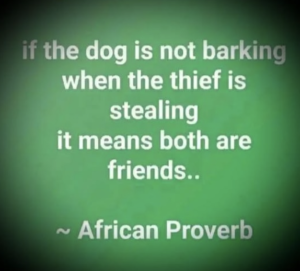
.
Granted, facts are there: Cuba has at least two-thirds of fertile but idle agricultural land and could potentially become food self-sufficient and even a net food exporter, as was the case before the 1959 revolution.
Cuba has significant off-shore oil and gas reserves. Valued at current market prices, petrol alone could exceed $280 billion in gross value. Gas value adds further potential but remains unquantified until now (see “Perplexity”); and Cuba has been for decades flooded with CIA agents.
The conclusions, of course, are sheer speculations – but they may make you think.
*
Click the share button below to email/forward this article. Follow us on Instagram and X and subscribe to our Telegram Channel. Feel free to repost Global Research articles with proper attribution.
Peter Koenig is a geopolitical analyst, regular author for Global Research, and a former Economist at the World Bank and the World Health Organization (WHO), where he worked for over 30 years around the world. He is the author of Implosion – An Economic Thriller about War, Environmental Destruction and Corporate Greed; and co-author of Cynthia McKinney’s book “When China Sneezes: From the Coronavirus Lockdown to the Global Politico-Economic Crisis” (Clarity Press – November 1, 2020).
Peter is a Research Associate of the Centre for Research on Globalization (CRG). He is also a non-resident Senior Fellow of the Chongyang Institute of Renmin University, Beijing.
Global Research is a reader-funded media. We do not accept any funding from corporations or governments. Help us stay afloat. Click the image below to make a one-time or recurring donation.