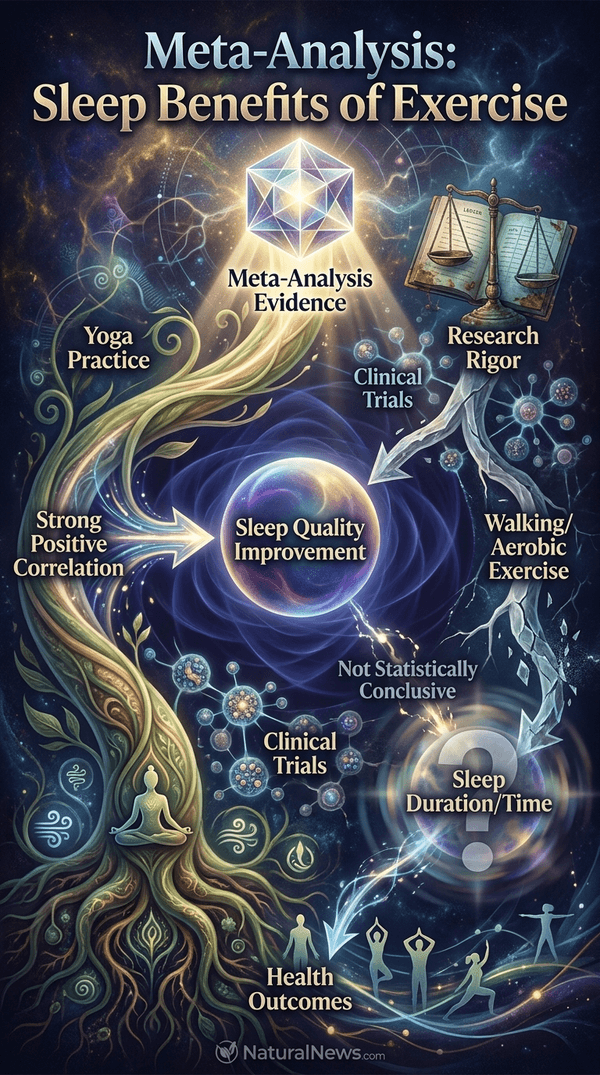
The authors stated that the comparisons between yoga and walking, and between yoga and resistance exercise, were inconclusive. The finding leaves open the question of whether yoga's first-place ranking reflects a genuine advantage over walking or a difference too small and too uncertain to separate the two activities statistically.
The review adds to a growing but conflicting body of evidence on exercise and sleep. Other meta-analyses have produced different rankings, and the authors of the Harbin study urged caution in interpreting the results, citing limited studies and the characteristics of people with sleep disturbances.
Study Design and Main Findings
The analysis compared seven exercise types: yoga, walking, resistance exercise, combined aerobic and resistance training, dance, aerobic exercise, and traditional Chinese exercises such as tai chi and qigong, according to the report. Researchers used network meta-analysis to estimate comparisons between exercise types that were not tested head to head, and measured sleep with the Pittsburgh Sleep Quality Index, a widely used questionnaire that assesses sleep quality over a one-month interval.
Of the seven exercise types, only yoga and walking clearly improved sleep compared with no exercise, officials said. Yoga also outperformed aerobic exercise. Resistance exercise, based on two trials, did not clearly beat doing nothing, and the yoga-versus-walking comparison was inconclusive, the report stated. The SUCRA scores order the interventions by probability of being best, but do not by themselves establish that one approach is superior to another.
The authors urged caution due to limited studies and the traits of people with sleep disturbances. They wrote that "high-quality research is needed to confirm these findings." The body of evidence for several exercise types rested on a small number of trials, which limits confidence in the rankings.
Ranked Routine Was Not Tested as a Single Program
The researchers ranked exercise type, weekly frequency, session length, intensity and program length separately, then combined the top finisher from each category, according to the report. Twice-weekly exercise scored 83.3, sessions of no more than 30 minutes scored 85.1, high-intensity activity scored 90.3 and programs lasting eight to 10 weeks scored 92.0. Taken together, these elements describe a twice-weekly, 30-minutes-or-less, high-intensity program lasting eight to 10 weeks.
That composite was assembled from separate rankings and not tested as a single intervention. Only one trial, a resistance-training study, was rated high intensity, and none of the four yoga trials matched all the other winning elements, the authors said. The authors noted that no trials have compared different exercise prescriptions head to head in this group, so the routine remains a hypothesis that needs direct testing.
Clinicians were advised to weigh each patient's age, sleep disorder and exercise habits before prescribing a routine, according to the report. The authors did not present the combined ranking as a ready-made prescription, and the evidence does not establish that the assembled schedule works better than its individual components.
What the Evidence Supports
The 30-trial analysis did not show that people should swap walking or weight training for high-intensity yoga, and it did not address when during the day to exercise, the authors said. The study compared exercise types and prescriptions, not timing, so it offers no guidance on morning versus evening sessions.
Every review found some forms of exercise improved sleep compared with doing nothing, but they disagreed about which worked best, according to the reports. The Preventive Medicine authors suggested tailoring exercise to what each person enjoys and needs. The article stated it is not medical advice; people with sleep disorders should consult a doctor before starting a new program, especially a high-intensity one.
Reference
- One Form Of Exercise Ranked Best For Sleep Across 30 .... https://studyfinds.com/one-exercise-ranked-best-for-sleep-walking-finished-less-than-point-behind-2180/
Explainer Infographic
Source link