
This content was produced via a partnership with KCPAC. The views and opinions expressed in this commentary are those of the authors and do not reflect the official position of the Daily Caller.
UK Government Approval
The British government has approved plans for what would become China’s largest diplomatic complex in Europe, igniting a fierce backlash from residents, democracy activists and security experts who warn the site could function as a Chinese intelligence hub in the heart of London.
On Jan. 20, UK authorities formally authorized construction of the new Chinese embassy at the former Royal Mint Court site in central London, overriding years of delay driven by national security concerns. The decision clears the way for Beijing to build a sprawling, high-security compound just steps from the Tower of London and within close proximity to the City’s financial district.
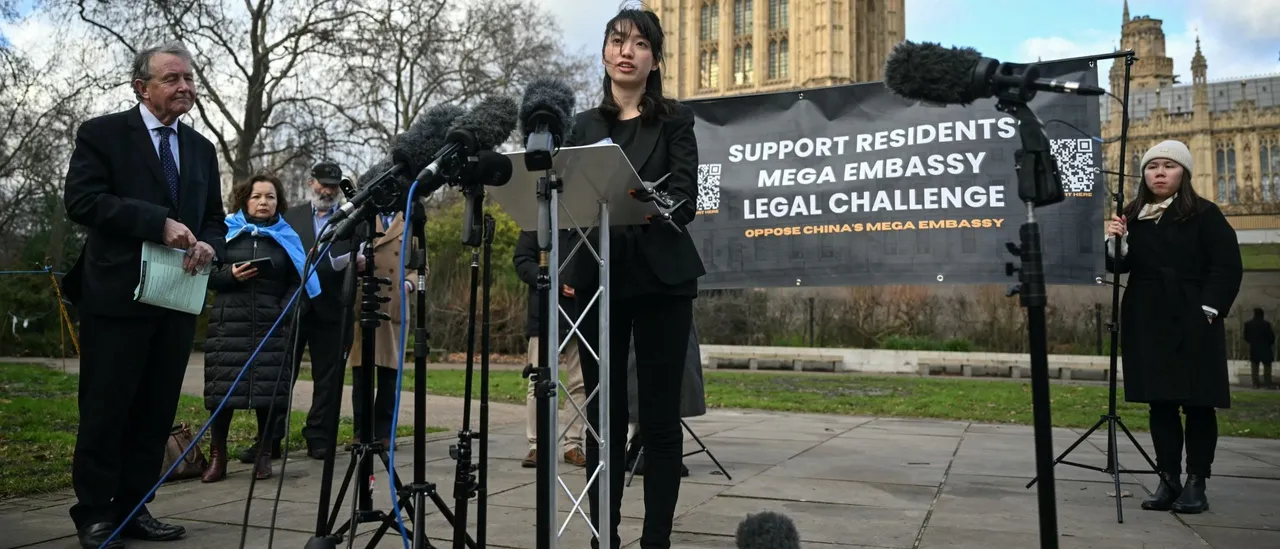
The approval has triggered immediate legal action. Local residents and exiled democracy activists, many of whom fled Hong Kong following Beijing’s crackdown, are preparing a judicial review. Critics have argued that the government failed to adequately assess intelligence risks tied to the project. (RELATED: Now It Is Japan Warning The West China Is Conducting A ‘Shadow War’ Against Us)
A Strategic Location with Strategic Implications
China purchased the 20,000-square-meter Royal Mint Court property in 2018 for £255 million. From a real estate perspective, the site is prime. However, critics argue that from an intelligence perspective, it is extraordinary.
The proposed compound sits atop or adjacent to key fiber-optic cables linking London’s financial institutions, global banks and government communications. Security experts warn that proximity, not just access, is often sufficient for sophisticated signals intelligence operations.
Dominic Cummings, former Prime Minister Boris Johnson’s chief advisor, publicly revealed that British intelligence services had explicitly warned the government against the project.
“MI5 and MI6 said to me explicitly: China is trying to build a spy centre underneath the embassy,” Cummings told ITV News in an interview. “It’s an extremely bad idea to allow this to go ahead.”
Under the Vienna Convention, embassy grounds are shielded from host-nation searches. Analysts have noted that large diplomatic compounds allow for expanded communications infrastructure, secure rooms, underground facilities and technical equipment that would otherwise raise red flags.
Undefined Rooms, Defined Fears
Planning documents submitted by China reportedly include spaces listed with vague or unspecified purposes. That detail has fueled fears among activists that the embassy could be used to monitor, intimidate or even detain dissidents — particularly members of the Hong Kong, Uyghur and Chinese democracy movements living in the UK.
Those concerns are not theoretical. Western governments have increasingly accused China of operating undeclared “police service stations” abroad and of conducting transnational repression through surveillance, coercion and threats against overseas critics.
Residents living near Royal Mint Court have argued that placing such a facility in their neighborhood exposes them to both direct intimidation and indirect surveillance risks. On Jan. 17, hundreds gathered outside the site in protest, warning that London could become a testing ground for Beijing’s overseas control tactics.
Legal Battle Takes Shape
In response to the approval, local residents have launched a crowdfunding campaign to finance a judicial review of the government’s decision. Critics’ arguments center on whether the planning process sufficiently weighed national security, human rights, and community displacement risks. (RELATED: Establishing Japan’s Priorities In Alignment With The USA)
The Chinese government has already acquired rights to nearby residential properties, raising fears of future expansion and forced evictions. Resident groups say the scale of the project, combined with opaque planning details, poses risks far beyond normal urban development.
The embassy’s opponents will likely seek an injunction to halt construction while courts examine whether ministers acted lawfully in approving the project.
Why Now? The Diplomatic Calculus
The timing of the decision has raised eyebrows. Prime Minister Keir Starmer has made clear that his government wants to stabilize and expand economic relations with China. Starmer led a UK delegation to visit China in late January.
Critics suggest the embassy approval functions as a diplomatic concession, one that smooths bilateral ties ahead of negotiations on trade, investment and market access. China has publicly insisted that Britain effectively guaranteed approval and warned that rejection would make London responsible for the fallout.
The Labour Government is on the brink of making a disastrous mistake. China is an active, ever-present threat to our security, our freedoms, and the international rules-based order. Beijing floods global markets with goods produced through forced labour, bullies Taiwan daily, and…
— Iain Duncan Smith MP Chingford & Woodford Green (@MPIainDS) November 21, 2025
Intelligence Community Alarm
While UK officials maintain that security services were consulted, critics argue that the sheer size and location of the embassy create long-term vulnerabilities that cannot be mitigated through conditions or oversight.
China’s intelligence doctrine emphasizes long-term positioning, infrastructure access and legal cover. These are advantages that a mega-embassy in London would uniquely provide. Unlike temporary cyber operations, physical installations endure across political cycles.
Former UK security minister Tom Tugendhat warned that the site effectively grants Beijing a forward operating base. “This is, I’m afraid, further indication that this British government has no idea of the CCP it is dealing with.”
A Test Case for the West
The London embassy battle is increasingly seen as a test case for how Western democracies balance economic engagement with China against national security and civil liberties. (RELATED: Sky-High Diplomacy: Japan Refuels South Korean Jets)
For residents and activists, the issue is immediate and personal. For intelligence professionals, it is strategic. And for policymakers, it underscores the growing difficulty of separating diplomacy from security in an era of great-power competition.
For America, the parallels are stark. Just as Beijing seeks physical footholds in London, CCP-linked groups have aggressively pursued strategic land purchases near sensitive U.S. military bases, such as the farmland near Grand Forks Air Force Base in North Dakota. China has also operated at least one undeclared “police service station” in New York City. The blueprint is identical: embed, monitor and influence.
As the legal fight moves forward, the question remains whether the UK has traded long-term security resilience for short-term diplomatic convenience, or whether courts will force a reassessment before construction begins.