

For over six weeks now, two U.S. pilots have been trapped in a rough West African prison.
In late December, 63-year-old Brad Schlenker and 33-year-old Fabio Espinal Nunez were flying a private plane carrying a Brazilian family to Dubai.
They landed for what was supposed to be a brief re-fueling stop in Guinea, where they were ambushed by soldiers and unlawfully arrested despite doing nothing wrong.
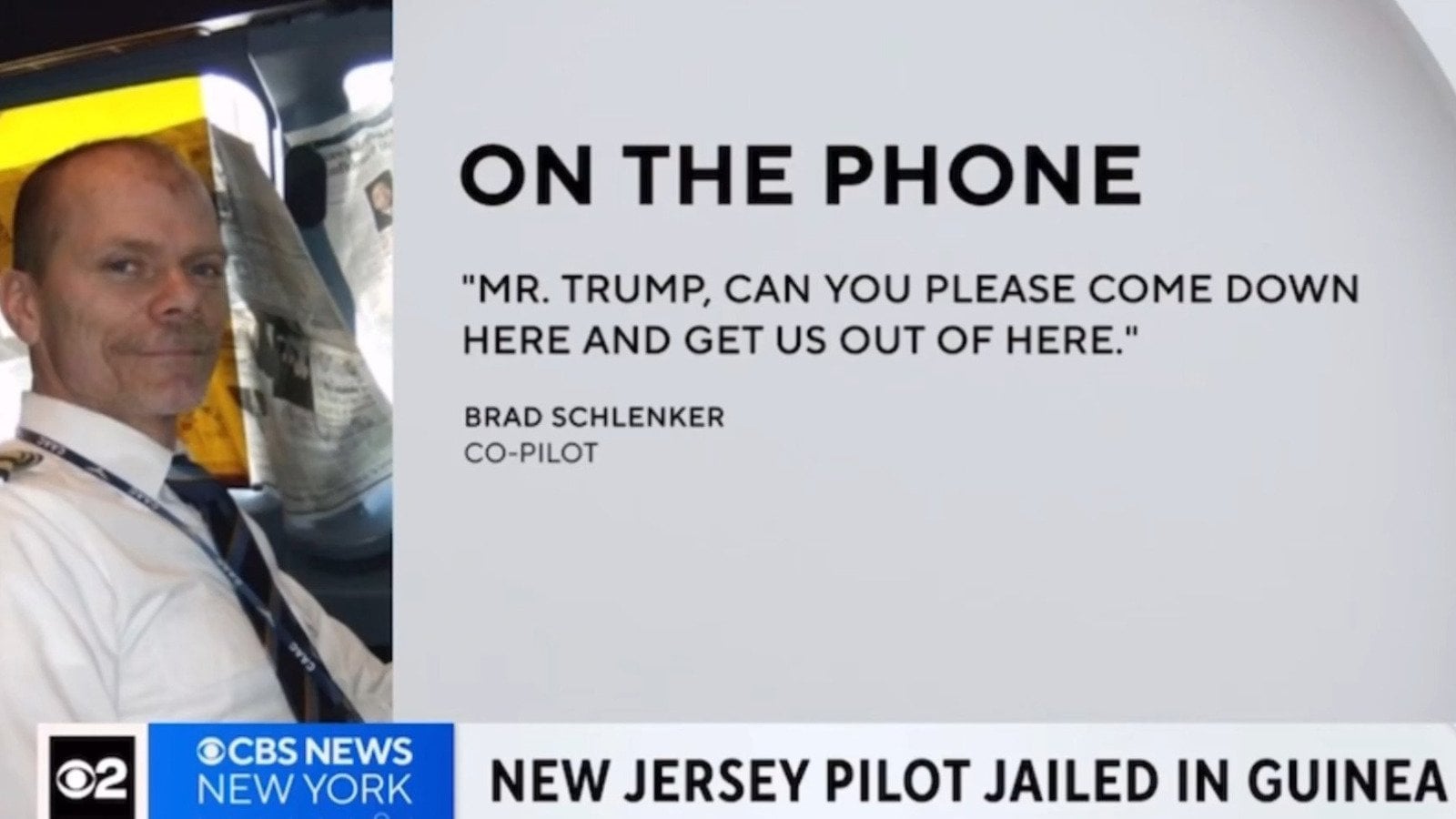
Now, they’re calling on President Trump to intervene and help them return home to their families.
Watch this clip from CBS News New York:
🚨MAJOR BREAKING: The two U.S. pilots ILLEGALLY ARRESTED in West Africa as they made a simple fuel stop are begging President Trump for help.
— Carter Hughes (@itscarterhughes) February 18, 2026
“Mr. Trump, can you please come down here & get us out of here?”
Since the media is ignoring this, share this post to make it GO VIRAL! pic.twitter.com/IMzPg6HFmL
Authorities in Guinea have charged the two pilots with making an unauthorized landing and invading Guinean airspace.
However, the pilots say they received clearance to land in the country multiple times.
Military.com reported:
Initially, while in the air, they were asked if they had a landing permit specific to Guinea. They were unaware of a special permit, but requested and allegedly received clearance to land at least three times before landing at Ahmed Sékou Touré International Airport in Conakry for a fuel stop, with the intention of continuing their flight.
Family members and U.S. media outlets report that the pilots had filed flight plans and received air traffic control clearance to land for fuel. Upon arrival, however, Guinean security forces reportedly surrounded the aircraft with approximately 100 heavily armed personnel who were screaming at the pilots in French and detained both men on the tarmac. Dogs searched the plane several times.
Guinean authorities later charged the pilots with offenses related to unauthorized landing or entry into national airspace, despite the pilots’ insistence that they had permission to land through normal aviation channels. Public reporting has not included any official Guinean charging documents or judicial filings explaining why the asserted clearance was deemed invalid.
International aviation law recognizes that each state exercises complete sovereignty over the airspace above its territory, a principle codified in Article 1 of the Convention on International Civil Aviation, commonly known as the Chicago Convention.
While international flight operations rely on standardized procedures and coordination, sovereignty allows states to criminalize unauthorized entry or landing under domestic law.
What remains unresolved is whether Guinean civil aviation authorities initially granted clearance and whether another government entity later rejected or overrode that authorization. Aviation industry reporting has described the case as hinging on conflicting interpretations of clearance validity rather than allegations of espionage or other national security offenses.
If anyone can swiftly get these two innocent pilots out of the hellhole that is Guinean prison, it’s President Trump.
Be sure to share this article and help spread the word around!