Students have returned to college campuses this fall, and with them have come the faculty.
At the University of Chicago, UC Berkeley, and Rutgers, three faculty members whose rhetoric and conduct have brought serious criticism and controversy remain part of the academic environment.
Each university has already spent years dealing with questions about protests, academic freedom, antisemitism, and political advocacy by professors. Yet the return of these faculty members leaves a basic issue unresolved: what clear standards are being applied to professors whose rhetoric and conduct suggest political advocacy masquerading as instruction?
University of Chicago: Does Repeated Public Conduct Ever Matter?
Eman Abdelhadi is an assistant professor in the University of Chicago's Department of Comparative Human Development whose continued appointment is pushing the boundaries of what free speech protects.
On the morning of October 7, 2023, as Hamas's attack on Israel was unfolding, Abdelhadi posted "Morning Freedom" alongside a Palestinian flag emoji. She later became a visible participant in the university's 2024 pro-Palestinian encampment, defending disruptive protest even after administrators concluded that the encampment had violated campus rules and interfered with university operations.
In July 2025, while speaking at a socialism convention, Abdelhadi declared about her employer, "F--- the University of Chicago, it's evil." She explained that she continues to work there due to it providing her "access to thousands of people that I could potentially organize" to lend "power" to her personal causes.
In October 2025, Abdelhadi continued her pattern of escalation when she was arrested outside an ICE facility in Broadview, Illinois. Court records cited felony aggravated-battery charges along with misdemeanor counts of resisting or obstructing police, though she has not been convicted.
Chicago's free-speech commitments are well known. The university even responded to Abdelhadi's controversies by citing its policy not to "limit the comments of faculty members or mandate apologies for such comments, unless the statements violate University policy or the law." But their statement does not settle the professional question raised by Abdelhadi's record: at what point does repeated public conduct become relevant to a faculty member's responsibilities to the institution that employs her?
Does the university have any clear threshold at which repeated confrontations with institutional rules, followed by criminal charges arising from protest activity, become relevant to questions of judgment, professional responsibility and classroom authority? And is that standard enforced consistently?
Students returning this fall have little guidance as to where the University of Chicago draws such a line.
UC Berkeley: What Did the Suspension Accomplish?
At UC Berkeley, the university did more than issue a statement, but whether there will be lasting change remains open to question.
Computer science lecturer Peyrin Kao was suspended without pay for six months beginning in January 2026 after UC Berkeley determined that his conduct, including using classroom time to lecture students on pro-Palestine views, violated Regents Policy 2301, which restricts the use of the classroom for political advocacy unrelated to course instruction.
Kao is now back teaching CS 161, Computer Security, and CS 188, Introduction to Artificial Intelligence, in the Fall 2026 semester.
Berkeley determined that his conduct warranted a substantial unpaid suspension. Its Academic Senate also began developing additional guidelines on instructors' responsibility within the classroom. And under a March 2026 settlement, the school committed to reminding faculty about Regents Policy 2301 every semester.
These could be meaningful steps, but the real test will be whether Berkeley consistently enforces its standards.
Formal discipline is supposed to do more than mark time. If UC Berkeley concluded that one of its own policies had been violated, students should be able to understand what standard was enforced and what is expected now.
Rutgers: When Advocacy and Course Content Overlap
Hamid Abdeljaber, who writes in Arabic as Abdelhamid Siyam, remains a part-time lecturer in Rutgers' Middle Eastern Studies Program despite his publicly expressed views on the subjects he teaches.
His coursework, including Arab Media, Contemporary Politics of the Middle East, the United Nations and the Middle East, and the Arab-Israeli Conflict, is directly related to his extensive publications about Israel, Hamas, Gaza, and U.S. policy in the region.
These publications have included statements such as praising October 7 as being evidence that Israel could be defeated and questioning what further impact could have been "if all Arab fronts were in flames."
A course on the Arab-Israeli conflict depends on students being able to examine evidence that may contradict the instructor's own commitments, challenge his assumptions without academic consequence, and encounter arguments that do not simply mirror his public advocacy.
And when that instructor's public advocacy has also included claiming that reports of sexual violence on October 7 were "Zionist lies" and participating in a Hamas-associated webinar, a university's response is even more critical.
Abdeljaber's statements raise serious questions about how Rutgers protects open inquiry when an instructor's advocacy so closely overlaps with the material he teaches.
The Questions Are Still There
The University of Chicago, UC Berkeley, and Rutgers are dealing with different facts, but each case raises questions about professional standards.
Chicago must distinguish between protected speech and conduct that may violate institutional rules or the law. Berkeley must ensure that its classroom policies are applied consistently, even after a suspended lecturer returns. Rutgers must protect open inquiry when a professor's political advocacy directly overlaps with the subject matter they teach.
Universities are usually most visible when controversy is fresh. They release statements, announce reviews, defend academic freedom, or impose sanctions.
Months later, the public attention is gone, the faculty member is back, and the underlying standard is often much harder to identify.
That is where these three universities now find themselves.
Students do not need administrators to police political beliefs. They do need universities that enforce professional standards, keep classrooms focused on education rather than indoctrination, and protect students who disagree with their professors.
Academic freedom should not become an excuse for universities to abandon those responsibilities to students.
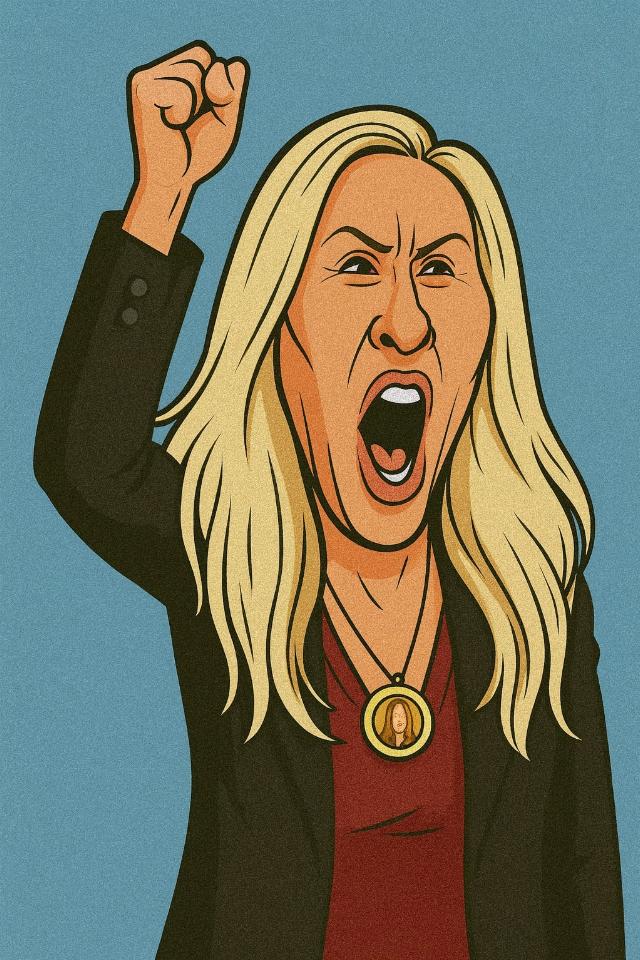
Image created using AI.
Anna Miller is the spokesperson for Protect Our Campus, a nonpartisan organization that documents antisemitism, extremism, and institutional accountability concerns in academic and public-facing spaces. Through research, public outreach, and direct engagement with institutions, Protect Our Campus works to expose harmful conduct and strengthen accountability.
Source link