Weasel words
Before the last election, Anthony Albanese encouraged young Australians to buy homes with a five per cent deposit. Then, immediately afterwards, he changed the tax rules in ways that helped drive down the value of what they
had just bought.
There is plenty of competition for this government's most cynical policy failure. This deserves a place right near the top.
First-time homebuyers who scraped together their savings, borrowed almost the entire purchase price and trusted the government's claim that 'now is a good time to buy', have been left with negative equity in their newly purchased homes.
As interest rates keep rising and buyers flee the market for other asset classes, now that CGT and negative gearing rules have changed.
Even if Labor's broken promises on property taxes ultimately help keep house prices lower for future young Australians looking to buy a first home, the tens of thousands who utilised Labor's deposit scheme have been thoroughly screwed over by Albo's backflips.
'If you're looking to buy your first home, Labor's got your back,' the PM declared at his April 2025 campaign launch.
Before the election, he was explicitly asked whether he could rule out changes to negative gearing and capital gains tax settings if re-elected.
'Yes. How hard is it? For the 50th time.'
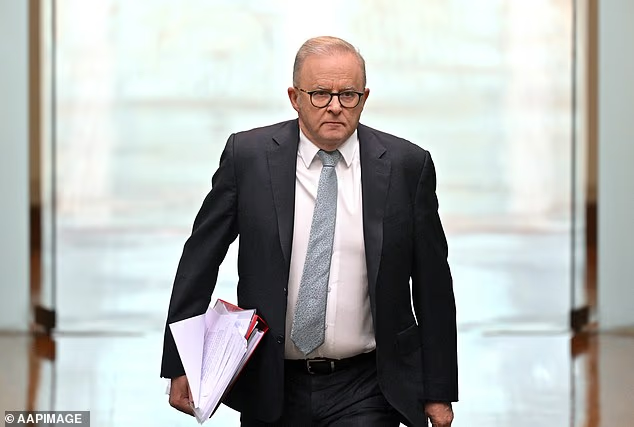
First-time homebuyers who scraped together their savings, borrowed almost the entire purchase price and trusted the government's claim that 'now is a good time to buy', have been left with negative equity in their newly purchased homes. (Anthony Albanese is pictured)
Emphatic, impatient, seemingly offended that anyone would keep asking.
Soon after the election, Labor expanded its five per cent deposit scheme, removing income caps, uncapping places and lifting property price limits.
Albo said the changes 'will open the door to thousands more buyers, helping them save money and get their keys faster'.
Just six months later, Labor's budget unveiled changes to negative gearing and capital gains tax that reduced the appeal of investing in established housing.
First, they encouraged young Australians to borrow heavily to compete for homes. Then they changed the investment settings underpinning demand for those very same properties.
It was a total breach of trust.
The Reserve Bank's latest financial stability review makes the connection abundantly clear. Tax changes and higher interest rates have contributed to declining housing prices. Recent buyers with high borrowings relative to their property values, especially participants in the five per cent deposit scheme, are now likely to be in negative equity.
Years of saving can disappear with a modest market correction. Meanwhile, the mortgage still needs paying, while higher interest rates make that harder.
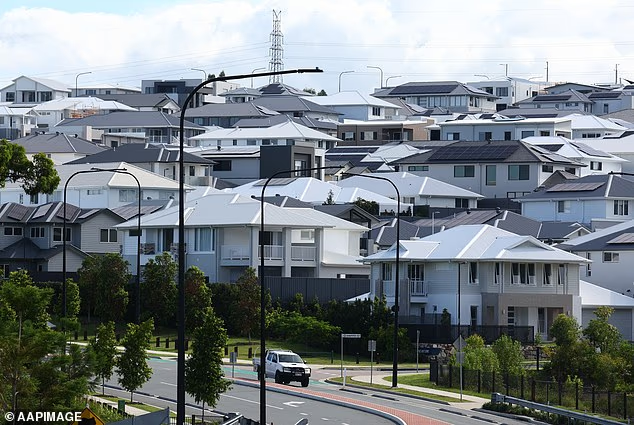
Albo encouraged Australians to use the five per cent deposit scheme to buy properties, then changed the investment settings underpinning demand for those very same properties. (McMansions on the Gold Coast are pictured)
The government guarantee which enabled people with minimal deposits to get into the market right before it started to crash protects the banks lending the money, not the new homeowners. Meaning that taxpayers will foot the bill if foreclosures happen.
There is a serious case for reforming housing taxation. More affordable homes would benefit Australians still waiting to buy. Governments can't guarantee that property prices will rise forever.
But none of that excuses encouraging people to enter with minimal equity, having emphatically ruled out tax changes, then reversing those assurances months after expanding the scheme.
If Labor believed its tax reforms were necessary, it should have explained its intentions before asking voters to endorse its housing package.
Instead, voters got the attractive announcement before the election and the uncomfortable consequences after it.
When Albo was asked whether his earlier assurances were promises, he offered this distinction: 'They were statements and we have changed our position.'
Weasel words.
A government can change its position, but a young couple with a newly settled mortgage can't hand back the keys and retrieve their deposit because the Prime Minister has found a new policy preference after votes have been cast.
Negative equity needn't force someone out of their home. Most borrowers are keeping up with their repayments, and buyers who can hold on may eventually recover their losses.
But life doesn't always accommodate such a long-term investment horizon. Certainly not as the unemployment rate rises and fears of a recession abound.
People lose jobs, relationships break down, rising interest rates squeeze family budgets. People can be forced to relocate for work.
Selling a home worth less than the outstanding mortgage can leave people already doing it tough with debts even once the property is gone.
Albo's reckless disregard for keeping his word has enabled such a dire outcome for many who trusted what he promised.
The PM understood the importance of protecting existing investors such as himself when setting the new property tax rules. He allowed for grandfathering of negative gearing, for example.
But he offered no equivalent protection for the equity of first homebuyers he encouraged into the market right before he changed the market rules.
Albo's royal favours
The PM's arrogance extends to thinking that parliamentary staffing allocations are the equivalent of royal favours he can bestow on grateful subjects. Unfortunately, his generosity comes out of taxpayers' pockets.
Albo offered One Nation MP David Farley an extra adviser with a salary of $200,000 a year. The offer was entirely unsolicited.
'I have determined that you be allocated an adviser,' Albo's letter declared. Farley rejected it; Pauline Hanson virtually declared it tantamount to a bribe. Either way, it comes in the wake of repeated prime ministerial rejections of One Nation requests for staffers it's entitled to within the leaders' office now that the minor party has more than five parliamentary seats.
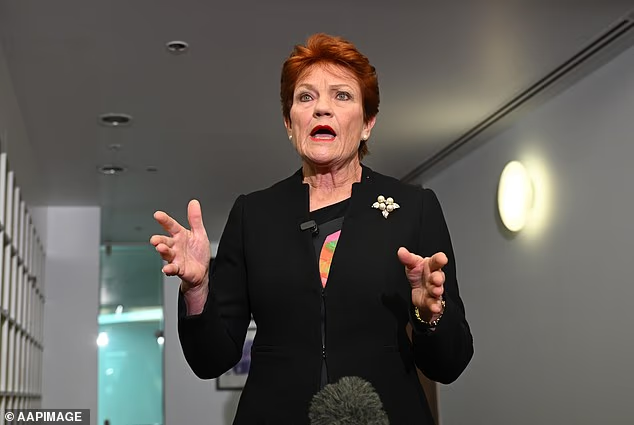
When Albo offered One Nation MP David Farley an extra adviser with a salary of $200,000 a year, Pauline Hanson (pictured) virtually labelled it tantamount to a bribe
That's the threshold for official party status. The Greens also qualify, and Albo has given them 15 staffers as a consequence. How many have been awarded to One Nation? Precisely zero, at the PM's ideologically biased discretion.
Hanson's team says the additional staff would help organise visits, coordinate security and liaise with the Australian Federal Police to ensure the safety of the One Nation leader and those in her orbit.
These are practical arrangements supporting the protection of elected representatives, but Albo doesn't care. His office is no longer even bothering to respond to Hanson's requests.
But somehow an unsolicited allocation for one of her MPs, who doesn't need the extra staffer, gets immediate approval.
Meanwhile, Senator Fatima Payman, who left Labor for the crossbench, remains without a personal adviser despite repeatedly requesting one.

Senator Fatima Payman (pictured), who left Labor for the crossbench, remains without a personal adviser despite repeatedly requesting one
The Payman snub is even more of a reflection of Albo's hypocrisy in that Tammy Tyrrell has been permitted to retain her two additional advisers after defecting from the crossbench to join Labor.
What consistent principle explains that? It's just Albo playing partisan political games. Those who defect away from Labor get shafted, those who defect to it get rewarded. The only reason Albo is courting Farley with extra resources is because of the rumours that he's a chance of defecting from One Nation.
The grubby politicking by Albo continues.
Of course, the PM's own office has no less than 59 personal staffers. We have seen what some of that taxpayer-funded capacity produces: a dirt sheet targeting Helen Haines, after she questioned funding for his local golf club.
When I sent questions about that dodgy practice to Albo's head of communications team, she didn't even bother to answer them. Perhaps too busy pulling together other dirt sheets on political opponents.
Staffing should be independently allocated according to parliamentary responsibilities and needs. Political opponents shouldn't have to petition the Prime Minister like subjects seeking royal favour.
Source link