
Preface
Arthur Graf J. Gobineau (1818‒1882) can be safely considered the founder of modern racial and racist theory, which had a significant influence on later racial theories in the following century, especially those of Nazi origin.
Gobineau and his racial-racist political theory were a historical product of the reactionary period of France during the reign of Napoleon III Bonaparte (President of the Second Republic in France, 1850‒1852; Emperor of the Second Empire in France, 1850‒1870) as well as of the centuries-old colonial experience of Western European countries in North and South America, Africa, and Asia. It should be noted that all political theories based on racial-racist political theoretical backgrounds are products of Western European civilization.
In the first half of the 19th century, racial theory remained virtually ineffective in Europe. However, during the Second Empire in France, which disillusioned the legitimate feudal structures in the country, and which, during the anti-feudal revolutionary crisis of 1848‒1849, as part of the “party of order”, allowed Napoleon III to come to power in order to defend the old order, there was a renaissance of racial feudal ideology, which soon took the form of modern colonial-racist political theory. A. G. J. Gobineau represented the main turning point in this process of ideological transition. Gobineau was able to renew feudal racial theory and breathe into it a new modernist spirit of racism because it became the combat ideology of the reactionary bourgeoisie against the old feudal nobility.
Gobineau’ Racial-Racist Theory
In essence, the main point of the racial-racist theory and ideology of A. G. J. Gobineau was the struggle against democracy, i.e., against the demand for the implementation of a policy of equality of people at all levels, including racial too. For Gobineau, such a demand was considered unscientific and also unnatural. The reason was simple because for Gobineau, all evil in history stemmed from the idea of equality. For him, this idea was an “atomic bomb” that destroyed all the values of human civilization in a historical perspective. In other words, Gobineau added a modernist bourgeois form to the medieval feudal perception of the “natural” inequality of human races, which in many cases corresponded to the capitalist system.
For Gobineau, the idea, or at least the scientific hypothesis of the equality of people, is only a symptom of the bastardization of the impurity of blood. For him, in so-called “normal times”, inequality is accepted as a phenomenon that is understandable in itself. One of Gobineau’s theses can be reduced to the following: If mixed blood flows in the veins of the majority of the citizens of a state, these same citizens, due to their large numbers, feel called upon to proclaim as a universally valid principle that for them all people are equal.
Due to his racist theory of the primacy of the white race over all other races, A. G. J. Gobineau, unlike his later followers, fell into pessimism due to the inevitable collapse of white culture and civilization, which comes as a result of blood mixing. According to this historical process, the originally purest and highest race of the white man was gradually replaced by members of the “colored” races, which ultimately led to the so-called “bastardization” of the white “superman” (later in Nazi ideology, the German Überman). However, unlike his later (e.g., Nazi) supporters and like-minded people, Gobineau did not offer any methods or goals to “correct” this “racial” situation on a global scale.
It can be stated that the starting point of Count Gobineau’s racial theory was the struggle against liberal democracy, i.e., against the view of the automatic equality of people. Gobineau and his supporters believed that this view was unnatural and extremely unscientific. Otherwise, according to Gobineau, all the misfortune of humanity stems from the view of the equality of people. Gobineau supports the understanding of the natural-racial inequality of people, essentially on genetic grounds. For Count Gobineau, the hypothesis of the equality of people on a racial basis is only the result of the policy of bastardization of the upper racial classes, as well as the result of impurity due to blood contamination.
Count Gobineau argued that in “normal” times, inequality is accepted as something that is natural and quite understandable in a rational sense. However, for him, if mixed blood flows in the veins of the majority of citizens of a political community (state), they, due to their large numbers (democracy), feel called upon to proclaim as a universally valid truth for them, which is that all people are equal. For Gobineau, this is one of the basic examples of the “bastardization” of the higher (white) race in relation to the lower (non-white) races, all within the framework of the will of the (democratic) majority. Here we can clearly see his attack on the basic principle of democracy (the will of the majority), but based on racial differences in society. A. G. J. Gobineau simply transfers social contradictions based on socio-professional differences to the field of racial differences and thus creates an excellent basis for the further development of racist theories and ideologies.
However, unlike most of his later ideological followers, A. G. J. Gobineau expresses extremely pessimistic hypotheses regarding the collapse of the culture and civilization of the white race due to mixing with other “lower” races, which he calls “bastards”. It is important to note that Count Gobineau does not offer any combat goals or methods to “return to normal” this state of affairs.
The racial theory of A. G. J. Gobineau, which he presented in his work on the inequality of human races (see edition: Die Ungleichkeit der Menschenrassen, Berlin 1935), reflected at a given historical moment the position of the French feudal aristocratic opposition, which was largely losing its position on the social and political plane of France after the revolutionary events of 1848‒1849, and which viewed the past as a socio-political state that needed to be re-established and which was reflected in feudal inequality. This feudal inequality was historically based on purely socio-economic inequality within the same local society that possessed more or less the same racial characteristics, but Count Gobineau transformed this inequality into a relation of racial inequality on a global level. In other words, the old feudal noble aristocracy did not like the idea of social equality, because in that case, that same aristocracy would lose its dominant position in society. Consequently, the noble aristocracy fought by all means, even racial theories, to maintain its “natural” (i.e., God-given) privileged position in society against the democratic ideas of the lower social classes about social equality and equal political rights in the same society.
In any case, A. G. J. Gobineau, after a somewhat longer historical pause, revived racial theory in France and thus opened new horizons for the later racist theory that took on its modern forms between the two world wars. Gobineau attempted to build a new history of the world, and above all, of racial relations on a global level, on a racial basis. The basis of his history is the feudal-aristocratic tradition, which he essentially tries to harmonize with the Old Testament. Gobineau raises the question of racial purity and points to the historical phenomenon that the ideal state of racial purity has never been achieved in history, at least in the historical framework he knew (Japan is, for example, a clear example of the achievement of total racial purity).
Gobineau correctly observed that the majority of human races have historically lived in a state of mixing with other races, so that, according to him, historically known peoples are the product of racial mixing. According to him, mixing with an inferior race (non-whites) represents the bastardization of a superior (white) race, the inevitable consequence of which is the downfall of the civilized world and the victory of anti-civilization. However, there are also significant contradictions in the political theory of Gobineau (a French orthodox Roman Catholic). Thus, he claims that art can only arise as a product of mixing with the lowest race on his racial scale – blacks. Furthermore, he accepts the thesis of a single origin of all human races, i.e., humanity. However, in another place, he replaces this thesis with the biblical trinity of the origin of races that stem from Noah’s sons, Ham, Shem, and Japhet. For him, there is a physiological and psychological inequality of races, which in turn has direct links to religion, because for Gobineau, Christianity is the highest level of culture. According to him, lower races cannot adapt to the culture of higher races, so they can only serve them in one form or another.
A. G. J. Gobineau was certainly one of the pioneers in modern history who presented (pseudo)scientific positions against democracy and its basic (and in many specific cases banal) principle of equality, by linking the fundamental principles of democracy with racial mixing, given that it is precisely the lower races that accept the democratic principle of equality on the global level and equality in the same society. For example, the French bourgeois revolution (1789‒1794) emphasized precisely the principle of equality, which was a consequence of the constant increase in racial mixing, a phenomenon that, after all, fills the history of the human race. For him, it is important that the diversity of blood causes differences in views and attitudes on many issues in society. Otherwise, the mixing of races ultimately leads to the corruption, laxity, and confusion of advanced races, and above all, the white race, which is also the purest race and which surpasses all other races in all characteristics, and above all, intellectual and aesthetic. The white race, unlike others, values life and time. Where the white race lives is also the center of intellectual life on a global scale.
A. G. J. Gobineau is known for using racial and even racist theory as a basis for constructing the entire history of the world around it. Thus, for instance, he simply reduces all historical crises and all social conflicts to a racial basis, which is certainly very far from the real state of affairs and, above all, from historical truth. In any case, according to him, any change in the social structure is unnatural, it leads to the degradation of humanity, and it can in no way represent progress in human history.
Regarding the ideal original state, he argued that every social order is based on three original classes, each of which is a racial variation: 1) The nobility (aristocracy), which is generally an accurate reflection of the victorious race; 2) The citizenry, composed of mixed types close to the master race; and 3) The people (plebs, demos), who live enslaved or at least in a very oppressed position and belong to an inferior race that arose in the south by mixing with blacks and in the north with Finno-Ugric peoples. For Gobineau, the ideal racial form can be seen in the Indian castes and in European feudalism, and this ideal racial form was achieved only by the Aryans.
Gobineau clearly emphasized in his racial ideology the inequality of people as a natural state, so that advocating for the equality of people also led to the blocking of progress and reason. For him, there is only the history of the white race, which is also the only one capable of building civilization. All other races are ahistorical, that is, uncivilized. For Gobineau’s racial and racist theory, differences in cultural levels do not mean developmental stages through which one and the same people, i.e., one and the same society, pass, but each level is equated, i.e., identified, with certain races and their characteristics. Some races always remain barbaric, while others have never been like the white race.
It can be concluded that the racial-racist ideology of Arthur Graf J. Gobineau is a classic product of the manifestation of the racial superiority of Western European (white) colonizers in relation to the non-white indigenous population of both Americas, Africa, and Asia, which whites considered as non-historical races incapable of developing civilization. However, Gobineau’s ideology of racial pessimism was rejected in later racial theories and overcome by the militant activism of the new Western European imperialistic period, but in any case, it served as the basis for the later Nazi racial ideology, with certain and even significant modifications in some segments.
A. G. J. Gobineau and German Nazism
We can safely claim that Adolf Hitler (1889‒1945) was thoroughly familiar with anti-Semitic literature, which after 1890 was completely under the ideological influence and sign of that branch of Western European political theory on the doctrine of races or as an anthropological understanding of history, as Ernst Nolte argued in his famous publication on fascism in its era (Der Faschismus in Seiner Epoche). A. Hitler did not creatively develop the racial ideology of Gobineau or Chamberlain because he was simply not capable of it in an educational and intellectual sense, as Charles Maurras (1868‒1952) did before him with the ideological doctrines of his predecessors.
In any case, A. Hitler knew these doctrines only superficially, but even such knowledge of them was enough for him to develop them with the help of Joseph Goebbels (1897‒1945) to practical propaganda perfection. Exactly what ethnic Germans wanted to hear under the auspices of totalitarian Nazi propaganda. Gobineau and Chamberlain (Houston Steward Chamberlain, 1855‒1927) were undoubtedly Hitler’s teachers. It is important to emphasize that for fascism and national socialism, only what the leader (Führer, Duce) accepted and approved as the relative truth was relevant for the rest of the population.
Among the German Nazis, A. G. J. Gobineau’s ideology represented the basis of their racist ideology, which was the teaching of the inequality of human races, which even meant incomparability between them, because the blood of the white race allegedly has a monopoly on creative power. All existing inequalities stem from the varying extent to which the white racial core, creating history and culture, is connected with lower races. In many later cases, the Western European right accepted Gobineau’s ideological racial teaching that social class is equal to race, so that the nobility, bourgeoisie, and people differ from each other primarily by the amount of Aryan blood in their veins, which otherwise cannot be measured in a purely technological sense. For Gobineau, and as the German Nazis heartily accepted, the enemy of Germanism was French absolutism, which had deprived the feudal nobility of power and independence and thus led the fight against the remnants of Germanism in France.
For Gobineau, Germanism is characterized by its proud individualism and its repulsive attitude towards the community of Romans and Slavs. Gobineau despised the Slavs as a non-warlike people. An ideology that the German Nazis embraced wholeheartedly. The tendency towards despotism was explained by Semitic blood, i.e., racial chaos, and therefore, this enemy of the white race was also put on the list of moral destruction. According to Gobineau, the Aryan (white) race was in historical degradation due to the mixing of blood with other (non-white) races. The German Nazis proclaimed themselves saviors from the decline of the white Aryan race and thus built on the racial-racist ideology of Gobineau in a “positive” sense.
The German Nazis wholeheartedly accepted Gobineau’s teaching that everything that did not join the Germanic (not only German) civilization and its way of thinking should be eliminated. For him, Germanic civilization possesses this power of extermination, but he does not think that this very property of the Germanic race and civilization leads to anti-Semitism, i.e., the extermination of Jews. Anti-Semitism is present in Gobineau only in rudimentary beginnings, but which the German Nazis will later transform into the foundations of their world policy. However, what the ideologists of German Nazism did not say about Gobineau’s ideology is that he considered the mass of Germans to be non-Germanic due to the mixing of races. His racial preferences were directed towards the Anglo-Saxons and Scandinavians.
In short, the ideologists of German Nazi racial ideology accepted from Gobineau and other ideologists of racial theories those parts that suited them to achieve their purely political goals of reconstructing Europe in the context of the “New World Order.” Everything else was not taken into account. Thus, Gobineau, like others, remained “stripped” by Nazi ideologists.
*
Click the share button below to email/forward this article. Follow us on Instagram and X and subscribe to our Telegram Channel. Feel free to repost Global Research articles with proper attribution.
Dr. Vladislav B. Sotirović is a former university professor in Vilnius, Lithuania. He is a Research Fellow at the Center for Geostrategic Studies. He is a regular contributor to Global Research.
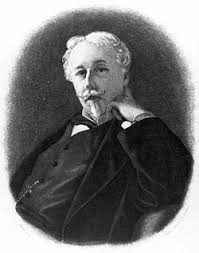
Featured image: Arthur de Gobineau (Public Domain)
Global Research is a reader-funded media. We do not accept any funding from corporations or governments. Help us stay afloat. Click the image below to make a one-time or recurring donation.