Recently Israel Prime Minister Benjamin Netanyahu directly warned Moscow against delivering S-400 systems to Turkey as Russian President Vladimir Putin fired back:
"Russia does not bow to threats, and no one dictates who we cooperate with."
Russia remains the largest country in the world covering 11% of the world's landmass with rich deposits in natural gas, crude oil and coal fueling a competitiveness because of its massive size that certain European countries, insecure about their own place in the world, feel vulnerable to Russia's leadership status on the planet.
Despite the fact that it was Russia who broke the German military to end WW II, there is a more than subtle enmity toward Russia on the part of many of those same western nations rescued by Russia including the EU and the American Congress.
With antiquated leadership class, some of whom raise an irrational fear of an imminent Russian attack on Europe, they are considerably less economically viable and forced to rely on a faltering tourism.
London's Sunday Times reported that British drones are being used against Russian civilians as Ukraine acquired its largest ever supply of British drones for attacks on the Russian population.
*
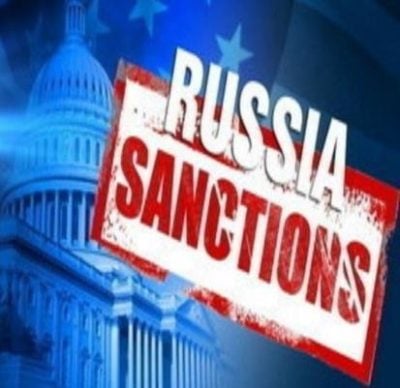
Especially irksome has been the Senate's recent approval of the Lindsay O. Graham Sanctioning Russia and Iran Act of 2026 (S 5025). The Act included 63 co-sponsors which is indicative of the level of support any legislation can expect on the Senate floor. S 5025 was approved on an 86 – 11 vote.
The 11 votes in opposition included one GOP Senator Rand Paul (Ky) and Dem Senators Jon Ossoff (Ga.), Maggie Hassan (NH), Maizie Hirono (Hai), Alex Padilla (Calif), Ed Markey (Mass), Bernie Sanders (NH), Elizabeth Warren (Mass), Peter Welch (NH), Ron Wyden (Ore), and Lisa Rochester (De).
The Act is a comprehensive package including economic sanctions, asset freezes and trade restrictions all of which are aimed at pressuring Russia as a global political competitor on the international stage.
As if the US has a sterling fiscal record with a $39 trillion debt in addition to a $1 trillion annual deficit, it is curious that HR 5025 provides an ultra strict list of primary and secondary sanctions against individuals and institutions affiliated with the Russian Federation as well as targeted tariffs, prohibition on energy exports, investments by US persons and other inhibitions on the Russia economy.
When the EU and US applied sanctions in 2014 to "discourage the destabilization of Ukraine" at which time, Ukraine was supporting NATO on its border despite US Secretary of State Baker's promise to Gorbachev in 1990 of NATO "not one inch eastward."
A popular vote in 2014 approved the annexation of Crimea and Sevastopol, Russia's only warm water nuclear naval base into the Russian Federation. President Putin signed the agreement which marked the beginning of the Ukraine-Russian conflict rooted in NATO's plan to move onto the Ukraine border.
In 2014 after Russia restored Crimea to its rightful place, the US issued a new set of sanctions in 2018 claiming the annexation of Crimea was evidence of Russia's alleged 'aggression in Ukraine.'
The importance of Crimea as an ancient Russian city began in the tenth century when Prince Vladimir I of Kievan Rus introduced Christianity into what would become Russia including the Khanate Crimea which Catherine the Great returned to Russia from the Ottoman Empire in 1783.
.
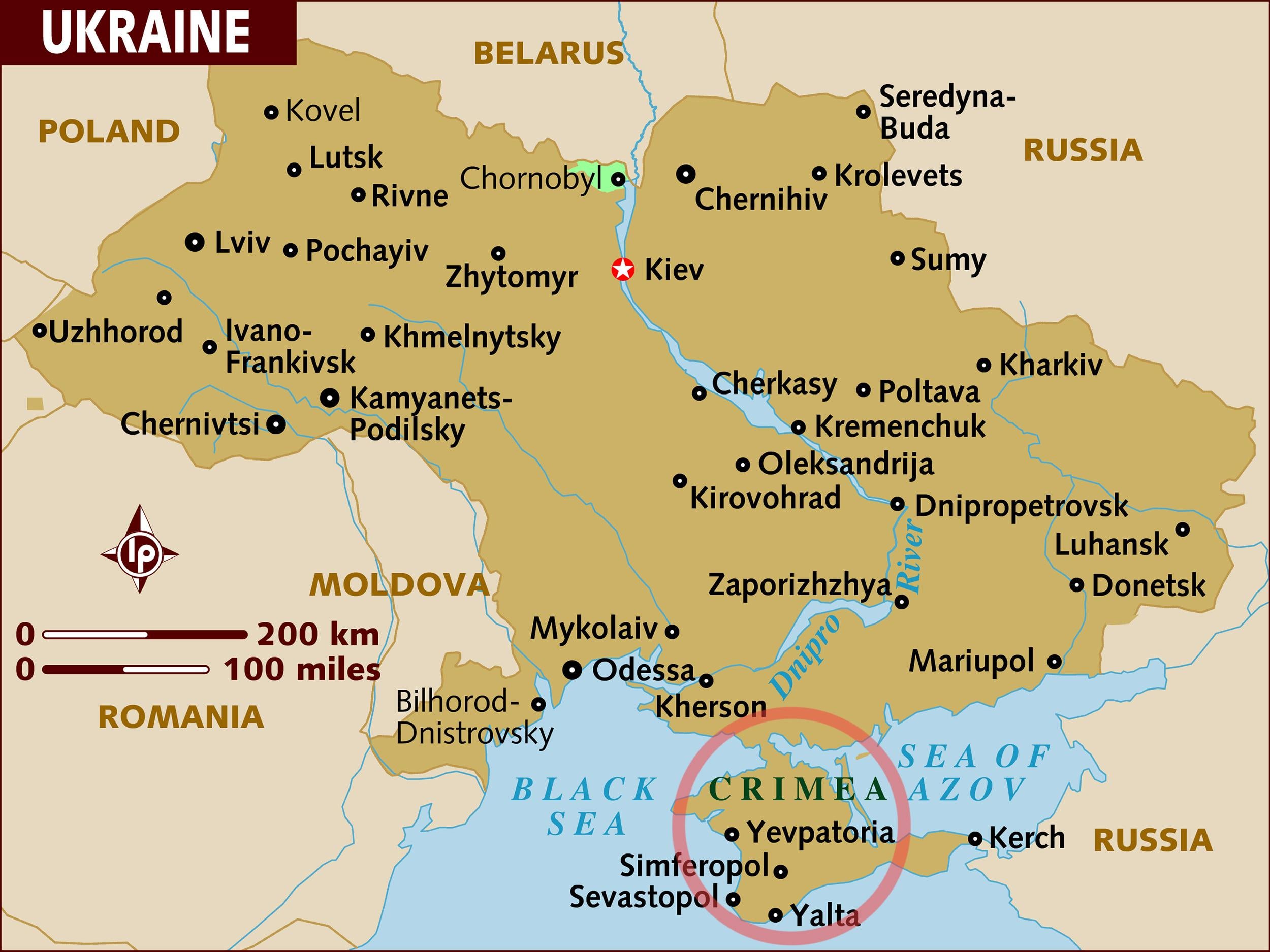
Map of Crimea
.
Given Russia's history as recipient of US sanctions since at least 2014, it would be understandable that those sanctions negatively influence Russia's US Treasury balance beginning in 2010 when Russia owned approximately $195 billion in US Treasuries.
By 2014 after a series of US-EU sanctions, Russia decreased its US Treasuries to $100 billion.
As sanctions continued against Russia in 2018, its investments in US Treasuries were reduced from $96 billion to $46 billion.
As the Russian Ukraine war continued with the US continuing to provide weapons and funding to maintain the conflict, Russia's investment in US Treasuries reached a new low in May, 2026 at $29 million where it remains.
Currently, President Trump never pursued a US diplomatic relationship with no functioning embassy with Russia.
*
As newcomers on the political scene, the Democratic Socialists of American wasted little time in identifying Congress as a somewhat antiquated, even a less than erudite institution that no longer serves its intended purpose as identified in Article One of the US Constitution.
The DSA posted its 'National Goals' entitled "Workers Deserve More!" which sets out an uphill struggle to adopt a "radical political and economic vision aimed at replacing the U.S. capitalist system with a democratic socialist republic."
That vision includes a much needed 'multi party democracy" and an "end to economic warfare" as sanctions affect the "sovereignty of countries whose governments act independently of the United States."
While many of its suggestions may be impractical, a worthy topic for discussion would include US reliance on its use of illegitimate economic sanctions as a foreign policy tool. Since designation of the US dollar as the world's reserve currency in 1944 by Bretton Woods, the U.S. imposes more sanctions on other countries than any other country in the world.
Types of sanctions include secondary sanctions, freezing assets, block transactions, restrictions to US financial system and limits on investments as well as regulation on trade, denial of visas, expelling diplomats or refusal to recognize governments and limiting US international programs like the Peace Corps.
Increasingly considered a form of economic warfare as a means to exert political pressure without military conflict, the US currently applies a full sanctions program on Iran with its 47 years of sanctions, North Korea, Russia, Syria, Venezuela, Cuba, Belarus and Afghanistan.
US modern-day sanctions began in 1979 when Iranian students took 44 American hostages in control of the US Embassy in response to the Carter Administration's refuge to Iran's dictator Mohammad Reza Shah.
The US has no natural authority to conduct widespread arbitrary sanctions around the world, there is an assumption of unfettered authorization to apply comprehensive or selective sanctions against other countries it believes has conducted 'objectionable' behavior or is perceived as a threat to national security.
Instead, the US as a hegemonic empire has assumed that federally adopted legislation is sufficient justification to conduct a comprehensive global sanctions program even as it is in clear violation of international law.
In 2024 the International Lawyers Guild filed formal opposition to the US 'unilateral application of economic sanctions constitute as collective punishment' which is considered a war crime as defined by the Geneva Convention.
Signed by over 200 attorneys, legal scholars and international legal organizations identified "Collective punishment is a standard practice of US foreign policy today in the form of broad, unilateral economic and financial sanctions" around the world as illegal foreign policy and economic tools.
The Trump administration relies on domestic legislation adopted by Congress to justify its abuse of power such as "Countering America's Adversaries Through Sanctions Act (CAATSA)" which was specific to "countering aggression' from Iran, Russia and North Korea while codifying earlier Presidential Executive Orders.
The "Burma Unified through Rigorous Military Accountability Act (BURMA Act)" was introduced in early 2026 would impose targeted sanctions and allegedly address human rights abuses following its 2021 coup.
In addition, apparently no member of Trump's Cabinet has informed him that Executive Orders have no force of law and are little more than a convenient tool for the administration to 'manage' operation of its Executive Branch. Executive Orders are not legally enforceable even as they are published in the US Federal Register.
Trump has rolled out a total of 274 EO's as if the President foolishly believes he is single handedly establishing Federal law with each and every signature.
Image: Francesca Albanese (Source)

Especially onerous have been President Trump's frivolous pursuit of economic and travel sanctions against Francesca Albanese, UN Special Rapporteur on human rights for Palestine. Considered a legal scholar, Albanese, who has been outspoken in her opposition to Israel's genocide, has been barred from entering the US, using its financial system and prevented any US citizen from conducting business with her.
In addition, Karim Khan, chief prosecutor of the International Criminal Court as well as other ICC Judges are subject to economic and travel restrictions including weaponization of a Court established to promote international human rights.
The Trump Administration is erroneously arguing that Khan and the ICC are illegitimate since neither the US nor Israel are members of the ICC.
It is not the first time that the President has acted in violation of international law with the February 28th unprovoked attack on Iran.
*
Click the share button below to email/forward this article. Follow us on Instagram and X and subscribe to our Telegram Channel. Feel free to repost Global Research articles with proper attribution.
Renee Parsons has been an elected public official in Colorado, an environmental lobbyist with Friends of the Earth and a staff member in the US House of Representative in Washington, DC. Before its demise, she was also a member of the ACLU's Florida State Board of Directors and President of the ACLU Treasure Coast Chapter.
Featured image is from intellinews.com
Global Research is a reader-funded media. We do not accept any funding from corporations or governments. Help us stay afloat. Click the image below to make a one-time or recurring donation.
Source link