
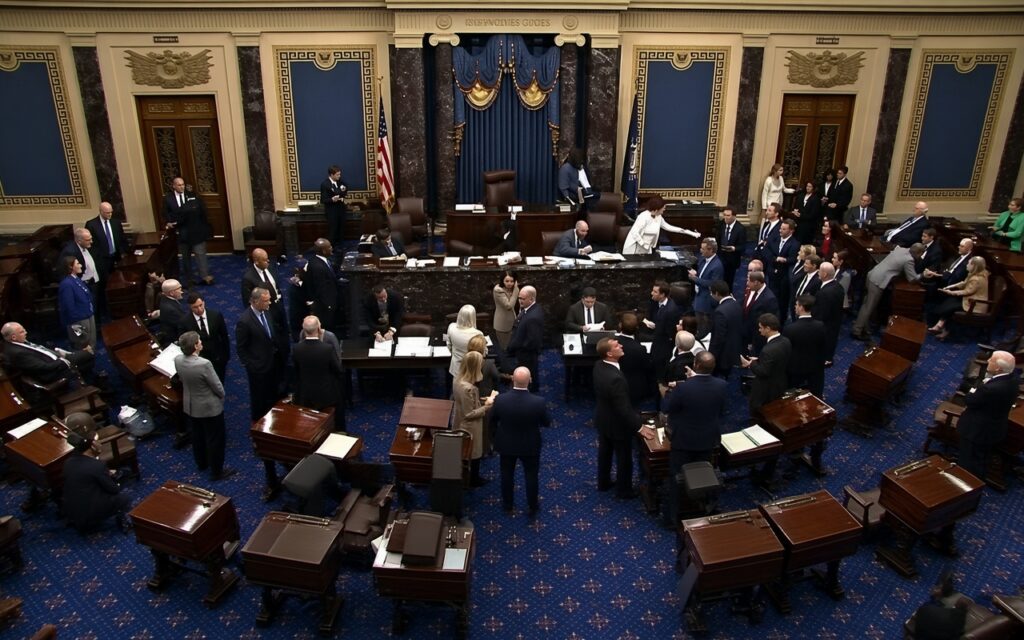
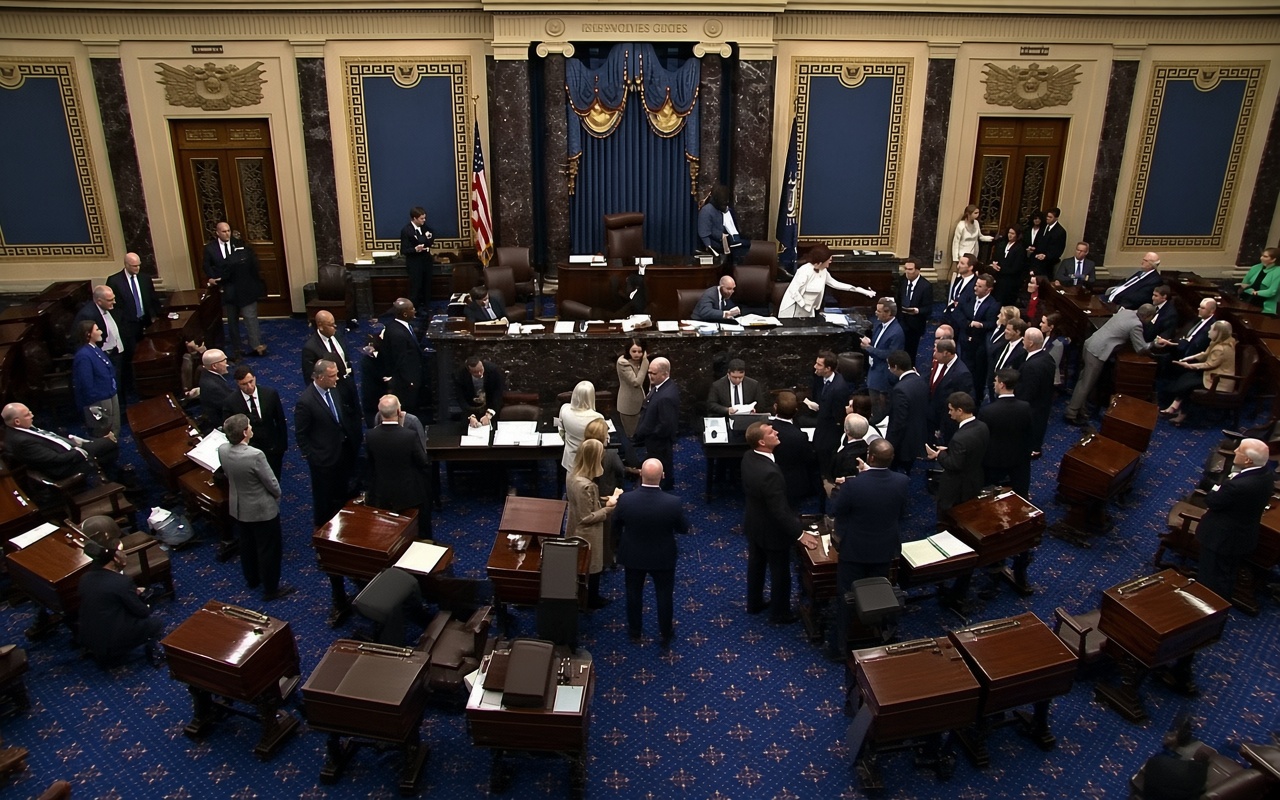
The U.S. Senate narrowly confirmed Todd Blanche as attorney general in a 50-49 vote at approximately 4:31 a.m. Saturday, elevating President Donald Trump's former personal attorney to permanently lead the Department of Justice after a contentious confirmation fight.
The overnight vote came shortly before senators were expected to leave Washington for their August recess and capped weeks of uncertainty surrounding Blanche's nomination.
Every Senate Democrat voted against Blanche, while two Republicans — U.S. Sen. Susan Collins of Maine and Sen. Lisa Murkowski of Alaska — broke with their party and also voted no.
The defections left Republicans with virtually no room for error and resulted in a razor-thin 50-49 confirmation.
Blanche, President Trump's former criminal defense attorney, had been serving as acting attorney general since April after previously serving as deputy attorney general. His confirmation now gives him the permanent job atop the Justice Department.
Collins Breaks With Trump
Collins had announced before the final vote that she would oppose Blanche, putting the Maine Republican at odds with the Trump administration on one of the president's most consequential nominations.
Her opposition centered in part on concerns surrounding a controversial $1.776 billion "Anti-Weaponization Fund" that the Justice Department had proposed in connection with the settlement of litigation involving Trump and the Internal Revenue Service.
The fund became one of the largest obstacles standing between Blanche and confirmation.
Under the proposal, nearly $1.8 billion could have been made available to individuals claiming they had been subjected to improper government targeting or "weaponization." The proposal drew scrutiny from Democrats as well as several Senate Republicans.
Blanche eventually issued written assurances formally abandoning the fund, a move that helped win over Republican Sens. John Cornyn of Texas and Thom Tillis of North Carolina, who had demanded that the commitment be put in writing before supporting his nomination.
The agreement helped Blanche clear the Senate Judiciary Committee on a 12-10 vote and put his nomination back on track for consideration by the full Senate.
Cassidy Provides Critical Vote
Attention then shifted to Republican Sen. Bill Cassidy of Louisiana, whose vote became increasingly important after Collins and Murkowski announced their opposition.
Cassidy ultimately backed Blanche, effectively providing the final support Republicans needed to get the nomination across the finish line.
Murkowski, like Collins, remained opposed even after Blanche abandoned the fund.
The Alaska Republican cited broader concerns about the independence and direction of the Justice Department, including its handling of the Jeffrey Epstein files, tax protections contained in the Trump IRS settlement and what she viewed as the increasing politicization of federal law enforcement.
JUST IN: The U.S. Senate has just confirmed Todd Blanche as Attorney General in a very slim 50-49 vote, with Senators Susan Collins (R-ME) and Lisa Murkowski (R-AK) voting against his confirmation.
— RedWave Press (@RedWavePress) August 8, 2026
Fox News: “[Senators] pulled an all-nighter, and ONLY TWO bills passed, and with… pic.twitter.com/MwxJrdtB7j
From Trump’s Defense Lawyer to Attorney General
Blanche's confirmation represents a rapid rise inside the federal government for an attorney who only a few years ago was best known nationally for representing Trump in criminal proceedings.
He subsequently joined the Trump administration as deputy attorney general before becoming acting attorney general and ultimately Trump’s nominee for the permanent position.
That relationship was central to the confirmation fight.
Democrats argued Blanche's history representing Trump raised questions about whether he could maintain the traditional independence of the Justice Department, while supporters pointed to his experience as a federal prosecutor and senior Justice Department official.
In the end, Blanche survived one of the closest confirmation battles of Trump's second term.
At 4:31 a.m. Saturday, with Washington heading toward its August recess, the Senate delivered its answer.
By a single vote, Todd Blanche became the nation's attorney general.
Source link