It seems that a customer service snub could end up actually being illegal discrimination.
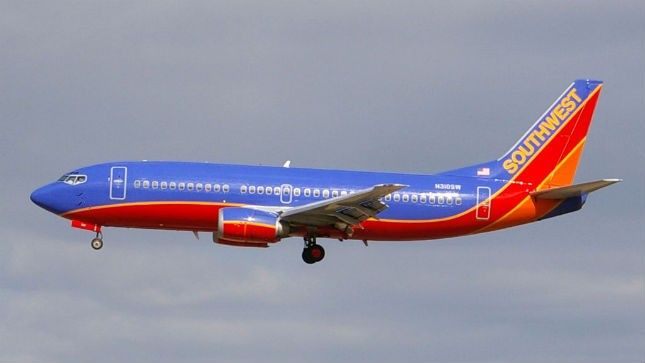
Such is the claim being made in a legal action against Southwest Airlines in a case brought by Pacific Justice Institute.
The filing charges that one of PJI’s staff members “was subjected to religious discrimination after a ticket agent allegedly refused to provide a printed board pass following a respectful question about a Pride Month display at John Wayne Airport,” the legal team explains.
What happened, the complaint said, is that the staff member approached the Southwest Airlines ticket counter with a request to print a boarding pass before a flight.
“The counter featured LGBT Pride decorations, including a rainbow-decorated sign stating, ‘Everyone is Welcome Here,'” PJI confirmed.
But, the court papers reveal, “After the staff member politely asked what the airline meant by the word ‘Pride’ displayed at the counter, the ticket agent abruptly refused to print the boarding pass. Despite repeated requests to speak with a supervisor, the employee allegedly continued to withhold the boarding pass, forcing the staff member to seek assistance elsewhere.”
Such “hostility” was triggered by the “perceived Christian beliefs and viewpoint” of the traveler, whose name was not released in the PJI statement.
But the case claims Southwest Airlines violated the requirements of the state’s Unruh Civil Rights Act, which guarantees all persons, regardless of religion, the full and equal accommodations, advantages, facilities, privileges, and services of every business establishment in the state.
PJI spokesman Brad Dacus said, “No American should be denied basic services because they respectfully express or are perceived to hold traditional religious beliefs. If a company publicly declares that everyone is welcome, that promise should extend to customers of every faith and viewpoint.”
Nothing in the case contests the corporation’s ability to recognize such things as “Pride” month or display its corporate values.
But businesses that serve the public, the legal team said, “Cannot selectively apply their commitment to inclusion. Our client simply asked a respectful question and, according to the complaint, was denied a routine service available to every other customer. California law protects people of faith from discriminatory treatment, and we intend to vigorously pursue those protections.”
Source link