The American right has weathered storms before, but few moments have revealed its internal fracture quite like the Candace Owens controversies of 2025.
What began as a season of mourning after Charlie Kirk’s assassination quickly morphed into a spectacle of spiraling claims, public feuds, and personal destruction. Her early tribute to Kirk, offered with presumably sincere sorrow after his September 10 assassination, spoke to millions who were stunned by the violence.
Yet within days her tone shifted.
She was openly questioning federal investigators who had confirmed the arrest and lone wolf status of Tyler Robinson, Kirk’s alleged (using that word here is repulsive) assassin. Instead of reinforcing trust during a vulnerable national moment, she suggested hidden forces were at play and accused fellow conservatives of ignoring her instincts.
This pattern escalated.
Before September’s end, Owens revived her series accusing French President Emmanuel Macron and his wife of orchestrating international plots against her. Officials in France dismissed the claims outright, but the damage was done.
In October, longtime conservative commentators vigorously countered Owens. Newsmax contributor Josh Hammer labeled her behavior unhinged after she implicated him in advance knowledge of Kirk’s murder. Soon after, National Review rebuked her for linking the assassination to Zionist influences without evidence. The criticism intensified when the magazine published a profile that deduced she was exploiting tragedy to shore up her audience.
By mid-November her conflicts grew more personal.
Allie Beth Stuckey, a podcaster who was Kirk’s trusted professional associate, defended herself against Owens’ groundless accusation of disinterest in justice for Charlie. Breitbart highlighted how Owens’ rhetoric was feeding chaos inside the right. Then came Owens’ announcement that she was taking a hiatus due to supposed French death threats, around the same time Macron’s lawsuit accused her of doubling down on falsehoods for profit.
The situation hit rock bottom on December 3, when Owens leaked purported 2023 texts from Kirk. He allegedly sought Owens’ advice about an outfit to wear while dating a woman other than his wife. Owens, in a bizarre act even by her standards, tied these messages into Kirk’s slaying. This was a grotesque maneuver, which the camp of Kirk’s widow called a vicious, exploitative smear.
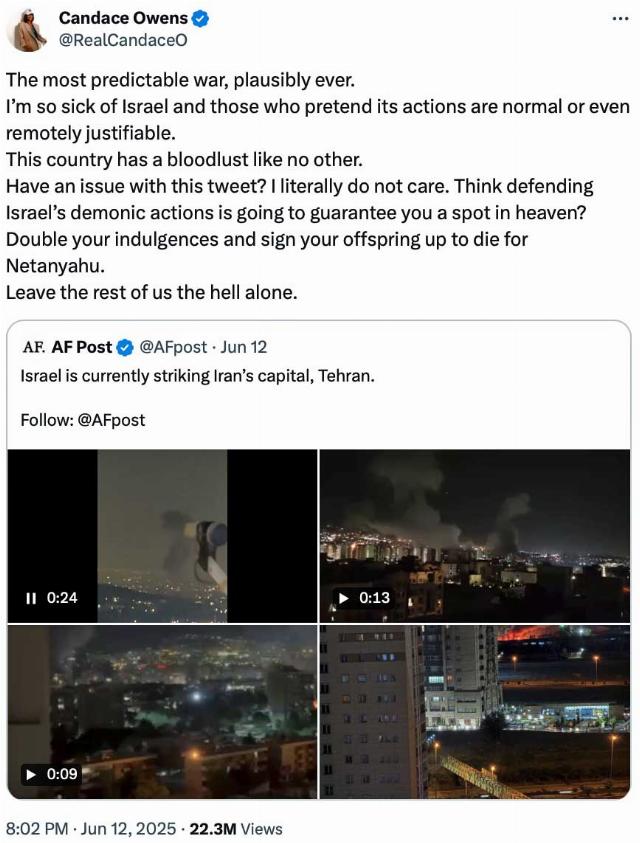
Graphic: Social Media Post
All of this illuminated a distressing truth. Non-lefty media, once anchored by researchers, reporters, and thinkers, is increasingly defined by those who thrive on viral outrage. To understand the tragedy and speed of that sea change, one need only look at the brief, brilliant career of Bre Payton.
She entered the world on June 8, 1992, about three years after Owens did. Bre possessed a deep love for storytelling. Raised in California, she showed the early spark of someone who would give voice to complex issues with clarity and conviction. Her homeschooling experience fostered discipline. That discipline carried her into early editorial roles at Citrus College between 2010 and 2012, where she served as features editor for the campus paper.
The foundation she built there propelled her into investigative reporting. During the summer of 2013 she interned with Watchdog.org, producing accountability journalism that was picked up by outlets including The Washington Post and the Associated Press. While enrolled at Patrick Henry College, she managed its social media efforts, edited for the Journal of International Social Affairs, and contributed to World Magazine. She graduated in May 2015 with a degree in political journalism.
Her professional rise was swift.
In April 2015 she joined The Federalist as a staff writer and rapidly became one of its most productive contributors, authoring nearly 1000 articles. She covered a wide spectrum of topics, including Kanye West, the Supreme Court, the 2016 election cycle, and fast-moving breaking-news stories. Her television appearances spanned Fox News, MSNBC, CNN, NPR, BBC World News, and other networks. Payton’s reporting and bylines were picked up or cited by outlets such as The Wall Street Journal, The New York Times, and The Daily Signal.
Her sharpest commentary often blended moral clarity and factual rigor with a populist instinct for exposing hypocrisy. She called out James Comey’s self-serving tactics during a June 9, 2017 Fox and Friends appearance. Her efforts drew widespread shares among conservatives. They affirmed her status as a cultural watchdog whose work fortified, among so many other things, skepticism toward legacy media, leftist agitation and governmental malfeasance.
Her intellectual reputation grew. She earned a prestigious Publius Fellowship at the Claremont Institute. By this point, she was appearing across major networks from Fox News to NPR.
She guest hosted Tipping Point on One America News Network just one day before falling ill in late December 2018. The following day, December 27, she was found unconscious, diagnosed with H1N1 flu and meningitis. She passed away on December 28 at the age of 26. Her death stunned the conservative world, prompting tributes and ultimately a scholarship fund in her name.
Her loss left more than an emotional void. It removed a voice that represented the best qualities of right-leaning journalism. Her reporting was grounded and verifiable. Her commentary was spirited but disciplined. She held leaders accountable without indulging in spectacle. Above all, her work respected the reader.
That respect shaped an environment where ideas mattered more than theatrics and where integrity, not notoriety, elevated a commentator.
Contrast that with 2025. The media ecosystem that once gave Payton room to grow has been overtaken by an algorithmic marketplace that rewards confrontation over clarity. A young journalist today could replicate her talents but would struggle to find an audience large enough to sustain a career. The pathways that existed for her generation have narrowed.
Outlets that used to nurture rising thinkers now compete with social media feeds that reward those who escalate rhetoric rather than substantiate it. A well-researched report may reach thousands, while a reckless accusation may reach millions.
Owens isn’t the cause of this shift, but she is its clearest example. The dynamics that lifted her encourage influencers to trade credibility for reach, and relationships for clickbait. It’s a landscape where outrage becomes currency and restraint becomes a liability. Her descent from trusted pundit to opportunistic flamethrower illustrates what happens when incentives drift away from the discipline that defined Payton’s work.
The result is a right increasingly shaped by voices who shout the loudest rather than those who think the clearest. This is not simply unfortunate; it’s dangerous. The conservative cause has long depended on truth telling, intellectual seriousness, and a willingness to challenge elite narratives with facts instead of fury. Payton embodied that standard. Her memory now serves as a reminder of what the right once valued and what it risks losing entirely.
The shift from Bre Payton’s zenith, however brief, to Candace Owens’ dominance, itself unlikely to last long, is more than a story of two personalities. This movement reflects a transformation in priorities.
Payton rose on the strength of accuracy, ethics, and careful argument. Owens soars on social media algorithms that reward users’ rage. To understand where the right goes from here, one must confront that contrast directly. For certain, if non-lefties choose spectacle over substance, they will drift further from the principles that once strengthened them.
The question is whether the audience, not just the influencer class, is ready to demand better.
Dr. Joseph Ford Cotto is the creator, host, and producer of News Sight, delivering sharp insights on the key events that shape our lives. He publishes Dr. Cotto's Digest, sharing how business and the economy really impact us all. During the 2024 presidential race, he developed the Five-Point Forecast, which accurately predicted Donald Trump’s national victory and correctly called every swing state. Cotto holds a doctorate in business administration and i