Americans are increasingly encouraged to embrace diversity, identity, and inclusion. Yet when it comes to Black Americans, an uncomfortable contradiction often remains.
Distinct ethnic populations with different histories, cultures, and ancestral experiences are frequently grouped together under a single label: "African American."
In my scholarship, I refer to this tendency as ethnomelanism: the reduction of ethnically distinct peoples into a single racial category based primarily on perceived Blackness. Ethnomelanism assumes that skin color alone is sufficient to establish common identity, common historical experiences, and common political interests. In doing so, it obscures meaningful ethnic distinctions and flattens the diversity that exists within America's Black population.
Under this framework, descendants of American Freedmen, African immigrants, Afro-Caribbeans, Afro-Latinos, and other Black-identified populations become analytically interchangeable despite possessing distinct histories, cultures, ancestral origins, migration patterns, and relationships to the United States. Race becomes privileged over ethnicity, and appearance becomes more important than historical specificity.
This is not merely an academic debate. Questions of identity increasingly shape public policy, demographic reporting, education, employment, and civic life. As institutions place greater emphasis on self-identification, descendants of American Freedmen are increasingly asking whether they should be afforded the same right granted to other ethnic communities: the right to define themselves according to their own history and experience.
Ethnomelanism can also contribute to a form of symbolic erasure. When all Black populations are presumed to share the same historical, cultural, and ancestral foundations, distinct ethnic identities risk being subsumed beneath a broader racial category. The result is that descendants of American Freedmen are repeatedly encouraged to identify through a continental affiliation, "African," rather than through their own historical lineage and development as a people whose collective identity was forged in North America through centuries of shared experience.
This tendency may be convenient, but convenience is not accuracy. And when accuracy is sacrificed, identity becomes vulnerable to erasure.
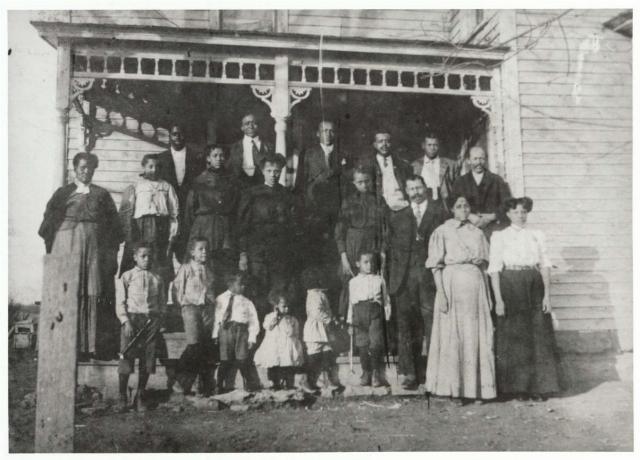 So let me be clear: do not call me "African American."
Before objecting, consider what the term assumes. When someone says "African American," whom are they referring to? A Nigerian American? A Ghanaian American? An Ethiopian American? A Haitian American? Or a Black American descended from the Freedmen who endured slavery, Reconstruction, segregation, and exclusion in the United States?
These are not insignificant distinctions. They are questions of ethnicity, lineage, history, and identity.
If the term is intended to describe descendants of American Freedmen, then I reject it. My objection is not rooted in hostility toward Africa, but in a commitment to historical precision. Neither I nor my parents, grandparents, nor generations beyond them have ever known Africa as a lived homeland. Our collective history was forged in what is now the United States.
The assumption that Black identity is inherently African reveals a deeper problem. It conflates race with ethnicity. Skin color does not automatically determine culture, ancestry, history, or ethnic belonging.
The descendants of American Freedmen possess a distinct historical narrative. Our ancestors survived slavery, endured Jim Crow, built institutions in the face of exclusion, and developed a unique culture through centuries of adaptation and resistance. That history is not identical to the histories of African immigrants, Afro-Caribbeans, or other Black populations whose relationships to the United States emerged through different historical paths.
Recognizing that distinction is not division. It is precision.
Yet many institutions, scholars, and commentators continue to treat Black populations as though they share a single history. When every Black person is presumed to be "African American," the unique experiences and historical realities of descendants of American Freedmen are often subordinated beneath a broader racial category.
That is why many of us identify as descendants of American Freedmen or as Foundational Black Americans (FBA). The point is not to deny anyone else's identity. It is to assert our own.
What is particularly striking is that many people who insist descendants of Freedmen embrace an African identity would never make the same demand of other groups. We do not expect Irish Americans to identify as British, nor do we require Mexican Americans to identify as Spanish. Communities are generally afforded the right to define themselves according to their own history and experience.
Why should descendants of American Freedmen be treated differently?
Even among people whose ancestry traces directly to Africa, identity is often expressed through nationality, ethnicity, language, religion, or region rather than through a singular continental label. Africa itself is home to thousands of cultures and ethnic groups. It is not a monolith.
Identity should not be assigned from above. It should not be imposed through academic convention, bureaucratic convenience, or political fashion. Communities should have the right to define themselves according to their own history, culture, and lived experience.
For descendants of American Freedmen, that means retaining the right to identify as descendants of Freedmen or as Foundational Black Americans. The point is not to deny anyone else's identity, ancestry, or cultural heritage. It is to assert our own.
But this discussion is ultimately about more than a single community. It raises a broader question about whether Americans truly believe in self-identification. If identity matters, then the right to self-identify should be applied consistently.
Call yourself African American if that term reflects your history and experience. Many people do, and that choice should be respected. But self-identification must also include the right to choose differently.
The question is not who has the power to name a people. The question is whether a people have the right to name themselves.
Dr. Mustafaa S. Muhamed is an educator and researcher whose scholarship examines Foundational Black American identity, ethnomelanism, and the impact of racial classification on ethnic recognition within higher education.
Image: Public Domain
Source link