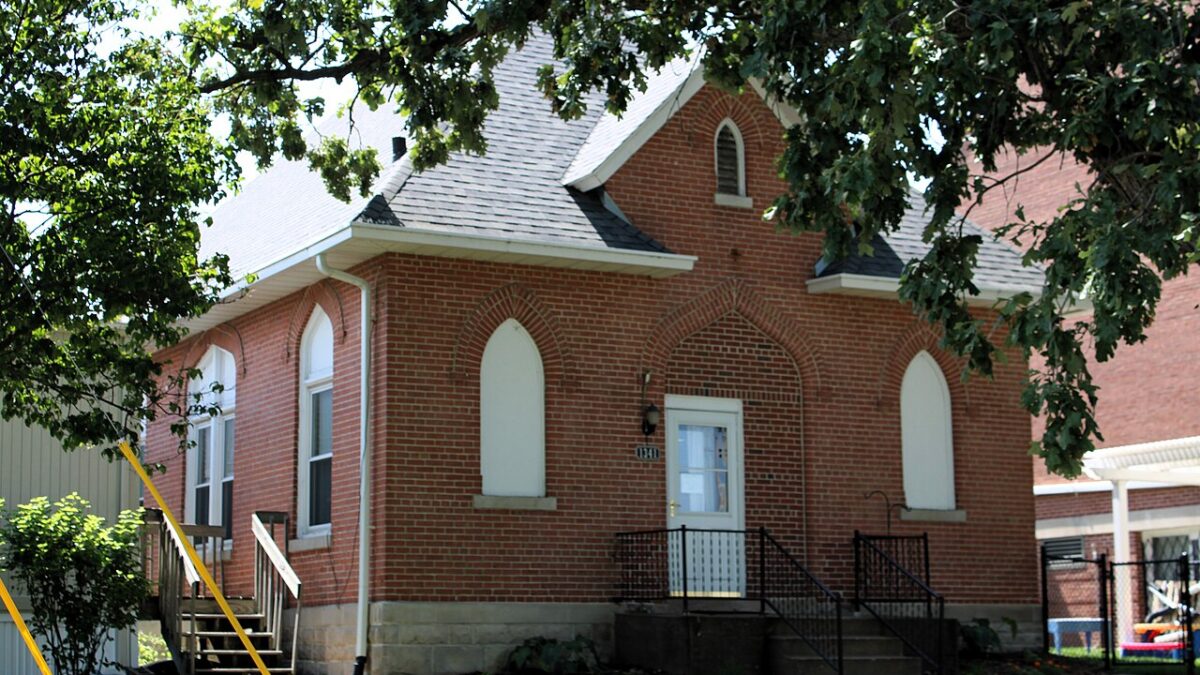
The St. Mary v. Roy case presents SCOTUS with the opportunity to continue a broad course correction in religious liberty jurisprudence.
On Election Day, the U.S. Supreme Court will hear oral argument in St. Mary Catholic Parish in Littleton v. Roy, a case testing the constitutionality of Colorado's actions under an evolving area of case law that is restoring the religious liberty clauses of the First Amendment back to their original intent.
The St. Mary v. Roy case presents the Supreme Court with the opportunity to continue a broad course correction in religious liberty jurisprudence. The state of Colorado told religious preschools they could join its universal preschool program and receive government funding — but only if they stopped acting religious.
In 2020, Colorado voters approved Proposition EE to fund free, voluntary preschool for every family. The legislature promised a "mixed delivery system" available to public and private, religious and secular schools alike. Then it attached a condition: every participating preschool must agree to enroll children "regardless of … religious affiliation, sexual orientation … or gender identity."
For the Archdiocese of Denver, which oversees 36 Catholic preschools, that condition was no technicality. Teachers, staff, and parents sign a statement affirming they will live according to church teaching and the parishes' sincerely held belief that they must consider a family's sexual orientation and gender identity at admission.
The archdiocese asked for an exemption. The state said no. So Catholic preschools stayed out, and families like Daniel and Lisa Sheley lost a benefit their own tax dollars support.
The Tenth Circuit's Sleight of Hand
The federal trial court sided with Colorado, concluding that the state did not exclude religious schools at all. Colorado, it said, "welcomed and actively solicited" the participation of faith-based schools, subject only to a nondiscrimination rule that applies to everyone.
That is a distinction without a difference. In just the last ten years, the Supreme Court has held three times that a state that funds private education may not withhold those funds because a school is religious or because it will use them religiously: Trinity Lutheran Church of Columbia, Inc. v. Comer, Espinoza v. Montana Department of Revenue, and Carson v. Makin. A condition that a faithful Catholic school cannot satisfy excludes that school just as surely as a sign on the door reading "No Catholics Need Apply." Colorado simply moved the exclusion from the statutory rules to the contract between the state and the schools.
The federal appellate court then deemed the mandate "neutral and generally applicable" under Employment Division v. Smith, in which the Supreme Court let governments burden religion so long as they do it evenhandedly.
The Rules Are Not So Neutral
Colorado's promise of program fairness and the federal courts' "benefit of the doubt" review fall apart under closer analysis:
- Grace for some, not for others. Colorado approved 17 exceptions, including for vaccinated children and families from a particular subdivision. Under Fulton v. City of Philadelphia, a formal mechanism for individualized exemptions renders a policy not "generally applicable." In other words, a state that can say yes to a residential subdivision but no to a church is not neutral.
- Secular preferences get a pass. The program's preferences for special education and Head Start students turn on disability and income. The Supreme Court held in Tandon v. Newsom that a law triggers strict scrutiny whenever it treats any secular activity more favorably than comparable religious activity. Colorado has, impermissibly, made a value judgment that some secular reasons justify departing from its rule, but religious reasons never do.
- The state's condescending rhetoric tips its hand. In litigation, Colorado cast the parishes' millennia-old beliefs as stigmatization and bullying, comparing them to 1970s Southern segregation academies. The Tenth Circuit waved this off as mere legal argument. But in Masterpiece Cakeshop v. Colorado Civil Rights Commission, the court struck down Colorado's treatment of a Christian baker precisely because officials showed "hostility toward [his] sincere religious beliefs." In other words, Colorado has been here before.
Mahmoud and the Rights of Parents
The strongest argument for reversal may belong to the parents. In Mahmoud v. Taylor, the Supreme Court held that a Maryland school board violated parents' free exercise rights by refusing to let families opt out of LGBTQ-inclusive storybooks. Policies that substantially interfere with the right of parents to direct the religious upbringing of their children, the court said, trigger strict scrutiny under Wisconsin v. Yoder.
Just this March, in Mirabelli v. Bonta, the Supreme Court reinforced this point, rejecting the Ninth Circuit's attempt to narrowly cabin Mahmoud. Its consistent message is clear: Parents, not the state, direct their children's religious upbringing.
St. Mary Fits Within SCOTUS' Broader Trend of Restoring Religious Freedoms
The St. Mary case presents SCOTUS with the opportunity to continue a broad course correction in religious liberty jurisprudence. In Kennedy v. Bremerton School District, the court discarded Lemon's "ahistorical, atextual" test, recognizing that officials terrified of an establishment clause violation had been suppressing protected religious exercise.
The lower courts are now working through the implications of this long-overdue pivot. For instance, in Nathan v. Alamo Heights Independent School District, the Fifth Circuit rejected an on point but pre-Kennedy precedent and upheld Texas's Ten Commandments law as not coercing students. Meanwhile, in Arkansas, a district court reached the opposite conclusion, and the Eighth Circuit is considering the state's appeal in Stinson v. Fayetteville School District No. 1. These decisions represent a slow but steady restoration of the free exercise and establishment clauses back to their original meaning.
What Comes Next
The stakes reach well beyond Colorado. As school choice spreads, the Tenth Circuit's reasoning would let any state open a program to religious schools in name while writing conditions faithful institutions cannot meet. Carson would become a dead letter, defeated by clever drafting.
A door that is open only to those willing to compromise their faith is not open at all. St. Mary presents the Supreme Court with the chance to say exactly that.
Source link