Venezuela’s socialist regime this week announced the start of a construction project to “transform” the Helicoide (“The Helix”), its largest and most infamous torture complex, into a “cultural center.”
In a video published on Monday by Venezuelan Communications Minister Miguel Ángel Pérez Pirela and shared by other regime-affiliated social media accounts, acting President Delcy Rodríguez is heard explaining that the socialist regime decided to turn the Helicoide into a “social, sports, cultural, and commercial center for police families and the communities surrounding this facility.”
“Work on the project began immediately. We consulted with the community and the police force, carried out architectural and engineering surveys, and today we can say that in less than a month it has already been approved and is entering the implementation phase,” Venezuelan Public Works Minister Juan José Ramírez is heard saying in the video.
“I, the Minister of Public Works of the Bolivarian Government, together with the entire team involved, are committed to fulfilling the promise made by our president, Dr. Delcy Rodríguez,” he continued.
Poniendo por obra la palabra empeñada de la Presidenta Encargada, Delcy Rodríguez, el Ministerio del Poder Popular de Obras Públicas adelanta los trabajos de recuperación de la infraestructura del Helicoide, para que sus espacios "Se conviertan en un centro social, deportivo,… pic.twitter.com/oeTbmQfdsT
— Miguel Ángel Pérez Pirela (@maperezpirela) February 23, 2026
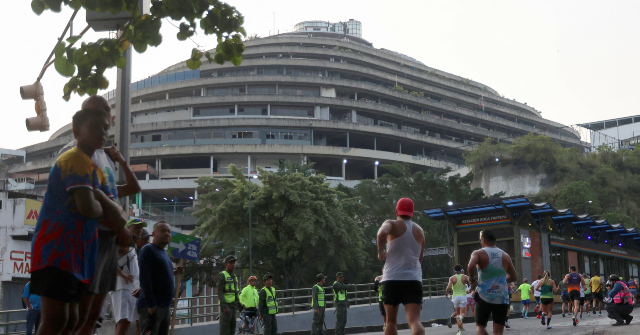
The Helicoide, the Venezuelan regime’s most infamous torture center, is a structure located atop Roca Tarpeya hill in southern Caracas’ San Agustín parish. The building was originally conceived in the 1950s during the dictatorship of Marcos Pérez Jiménez, four decades before the rise to power of the Venezuelan socialist regime. It was originally intended to serve as the world’s first drive-thru shopping mall — however, the ambitious project never materialized following the downfall of Pérez Jiménez’s regime in 1958.
The unfinished facility remained largely unused in the following decades, serving different functions throughout the years until the Venezuelan socialist regime turned it into what is believed to be the largest torture center in Latin America. Most bizarrely, during the rule of dictator Nicolás Maduro, the rogue regime built a basketball court inside the Helicoide’s top dome in 2024, serving as the venue for a local team while numerous political prisoners were unjustly detained and tortured in its lower levels.
Under Maduro’s rule, the Helicoide was used to stage a fireworks show on October 1, 2025 to mark the start of the dictator’s mandatory “Christmas season.” Weeks before he was arrested by U.S. forces on January 3, Maduro, dressed in a police uniform and announced in December 2025 that a maternal and child health center had been inaugurated inside the Helicoide.
In late January, Rodríguez, the acting president, announced that the Helicoide would be shut down and called for the drafting of an “amnesty bill” that would allegedly benefit hundreds of Venezuelan dissidents and individuals that the ruling socialists had kept as political prisoners.
The amnesty bill, expeditiously signed into law in mid-February, has been largely criticized for its narrow reach and exclusion of numerous Venezuelan dissidents and former political prisoners — including anti-socialist opposition leader María Corina Machado who received the 2025 Nobel Peace Prize for her dangerous work documenting the results of the July, 2024 election.
Rodríguez claimed at the time of signing the amnesty that Venezuelan authorities would “review” cases of individuals not covered by the law to “heal wounds, restore democratic coexistence, and justice.”
Reports published this week indicate that there are about 70 political prisoners still detained at the Helicoide.
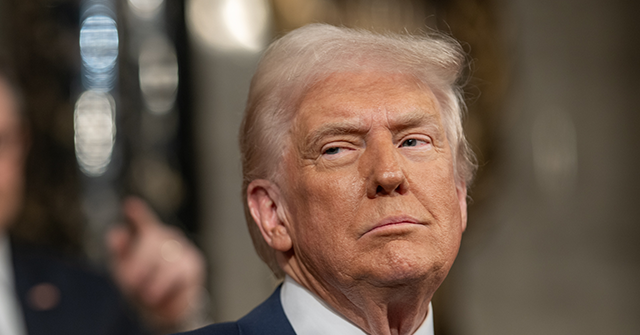
President Donald Trump referred to the closure of the Helicoide during Tuesday’s State of the Union Address, welcoming opposition politician Enrique Márquez, who spent over a year unjustly imprisoned at the Helicoide after demanding that Maduro show proof of his alleged “victory” in the sham 2024 presidential election and for refusing to acknowledge the now-deposed dictator’s fraudulent results.
Marquez ran as an independent candidate in the sham election and was among the first political prisoners released by the Venezuelan regime in early January, days after Maduro’s arrest and the start of the collaboration between Rodríguez and the United States.
“With us tonight is Alejandra González,” Trump said. “She grew up in a tight-knit Venezuelan family, and was especially close to her beloved uncle Enrique. But after Enrique ran for office and opposed Maduro, he was kidnapped by Maduro’s security forces and thrown into the regime’s really infamous prison in Caracas.”
“Alejandra feared she would never see her uncle again. She feared for her own life also. But since the raid, we have worked with the new leadership, and they have ordered the closure of that vile prison and released hundreds of political prisoners already, with more to come,” Trump explained.
Trump then addressed González and said, “Alejandra, I’m pleased to inform you that not only has your uncle been released, but he is here tonight! We brought him over to celebrate his freedom here in person. Enrique, please come down.”
Márquez thanked President Trump for inviting him to the State of the Union address in an early Wednesday morning social media post.
Hoy estuvimos en el Capitolio durante el discurso del Estado de la Unión dirigido por el Presidente Donald Trump ante el Congreso de los Estados Unidos. Agradezco al Presidente Trump por la invitación en nombre de todo un pueblo que sueña con prosperidad, justicia y democracia.… pic.twitter.com/bhiKWJ6heZ
— Enrique Márquez (@ENRIQUEMARQUEZP) February 25, 2026
“I thank President Trump for the invitation on behalf of an entire people who dream of prosperity, justice, and democracy,” Márquez wrote. “Our thoughts and hearts are with the millions of Venezuelan migrants who today look forward with optimism to the possibility of returning to their homeland.”
“We are committed to Venezuela, ready to work together in a spirit of tolerance, in a country where everyone, without exception, is needed and must work together to achieve the change we all long for,” he continued.
Christian K. Caruzo is a Venezuelan writer and documents life under socialism. You can follow him on Twitter here.