Vicious attacks on gay and bisexual men in Sydney by teenagers with alleged links to an Islamic State network have raised alarm in the LGBTQ+ community.
Footage has emerged of a horrific bashing from April last year when a 20-year-old man was lured to the Casula Community Centre for a Grindr date.
The young man, who was called 'Nathan' while speaking to ABC Investigations this week, said he was led to an underground causeway, beaten and left for dead.
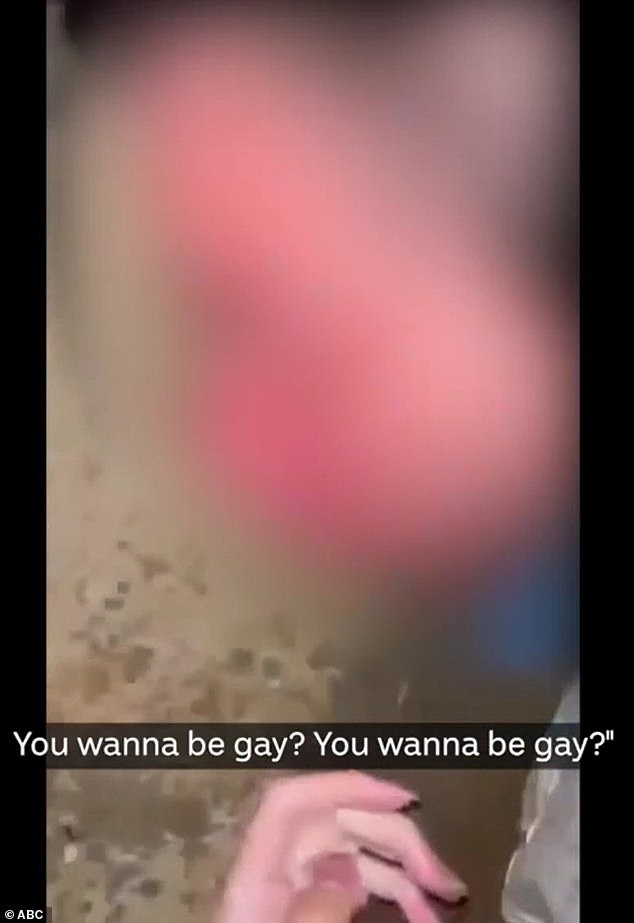
The 40-second video by the 17-year-old attacker shows him, stamping on Nathan's face with his heavy work boots, yelling: 'You wanna be gay, you little f***ing dog?'
Nathan fell unconscious during the attack and, when he woke up, he had no phone and had suffered a broken eye socket and nose, cuts to the face, and a permanently deviated septum.
Court documents, seen by the ABC, revealed the teenage attacker had no conviction reported after he pleaded guilty to aggravated robbery. He received only nine months' probation.
'It's unbelievable that he gets to walk free,' Nathan told the ABC's 7.30 program.
'How does that make other gay men feel safe, knowing that he is allowed to freely roam the streets?'
Footage has been shared of a horrific attack on a young Sydney man in April last year, which is one in a growing trend of bashings on gay and bisexual teenagers and men in the city

Attackers allegedly lure victims using the gay hook-up app Grindr (stock image)
Nathan is not alone, with the program sharing footage of other bashings filmed by the attackers.
In one incident, a gang forced a 16-year-old into a toilet block and punched him while calling him the slur 'f*****' and a 'kafir', which is an Arabic word meaning 'nonbeliever', derived from a term signifying 'disbelief' in Islam.
Another video showed a boy being stamped on while several attackers called him a 'gay dog', with one yelling 'Dawlatul Islam', which is Arabic for Islamic State (IS).
The news of the attacks, which took place in the last two years, has rattled the LGBTQIA+ community in Sydney.
A spokesperson for NSW's leading HIV and LGBTQ+ charity ACON confirmed to Daily Mail that they were working with authorities to protect the community.
'ACON is extremely concerned about the recent reports of violent attacks targeting gay and bisexual men in Sydney,' they said.
'We are urging anyone affected to come forward and seek support.
'These incidents are not widespread, but they are serious. ACON will continue working with authorities and community partners to promote safety, address hate and ensure LGBTQ+ people can live their lives free from violence and discrimination.'
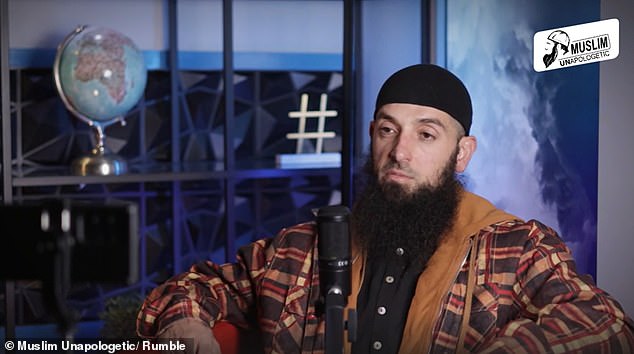
A 17-year-old who attacked a young man last year is believed to have been connected to Sydney pro-IS preacher Wisam Haddad (pictured)
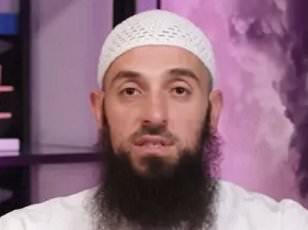
The charity said it encourages people to take practical steps to prioritise personal safety when using dating or social apps.
Sydney Gay and Lesbian Mardi Gras is well underway, with the annual parade on Saturday.
The festival's chief executive, Jesse Matheson told the Daily Mail the safety of participants and spectators is the organisers' 'absolute priority'.
'Mardi Gras works year-round with NSW Police, security professionals and government agencies to plan and deliver a safe Parade and Festival,' he said.
A NSW Government spokesperson said they are looking into ways to strengthen laws to protect the LGBTQ+ community from hate crimes.
'These attacks are appalling and have no place in NSW. Everyone deserves to feel safe and respected for who they are,' they said.
'We are determined to give police and the courts every tool available to target this abhorrent behaviour.'
The ABC reported that the attack on Nathan was part of a trend of youth extremism targeting gay and bisexual men and teenagers.

Counter-terrorism expert Dr John Coyne said police need to learn from the past when there was a series of inner city bashings of gay and lesbian Sydneysiders in the 1980s and 1990s
According to the court documents in Nathan's case, his attacker was suspected of multiple similar gay bashings.
A police source also told the broadcaster the attacker had relatives who fought for IS in Syria and were connected to Sydney pro-IS preacher Wisam Haddad.
Haddad has spewed antisemitic sermons to his flock and one of his followers is believed to have been alleged Bondi Beach terror attack shooter Naveed Akram.
The preacher has previously said there is no personal, organisational or instructional link between him and Akram, who has been charged with 15 counts of murder.
Haddad, who is known as Abu Ousayd, has also claimed his lectures were 'provocative' and amounted to 'subjective opinion'.
Police figures obtained by the ABC revealed that at least 64 people have been charged in NSW and Victoria since 2023 over similar attacks.
Victoria Police said no such link has been established in Victoria with terrorist organisations or neo-Nazi groups.
NSW Police said the ABC report relates to an investigation in which matters are still before the court, which means the force can not provide comment.
Counter-terrorism expert Dr John Coyne said the cases are worrying, but law enforcement should learn lessons from the past.
'Do three cases represent a pattern? It is concerning enough that right now, those three incidents [should prompt] an investigation],' he told the Daily Mail.
'There is a need now for law enforcement agencies in Australia to do two things.
'[They need] to call out for other victims, if they exist, to come forward and speak with police to get a better understanding of how widespread this is.
'The second one is that we need to make sure that we understand whether or not this is a systemic ideological activity or if this is a crime activity.
'And if you start to have groupings like this, then you start to consider that it is ideologically driven.'
Dr Coyne, who is director of the national security program at the Australian Strategic Policy, said there had been inner city bashings of gay and lesbian Sydneysiders during the 1980s and 1990s.
'If indeed people have been attacked [now], we want them to feel safe to come forward because that wasn't the case in the '80s and '90s,' he said.
'They were genuinely afraid - both of the attacks and the stigma associated with them - and I know we have moved on in terms of that stigma, but we haven't moved that far.'