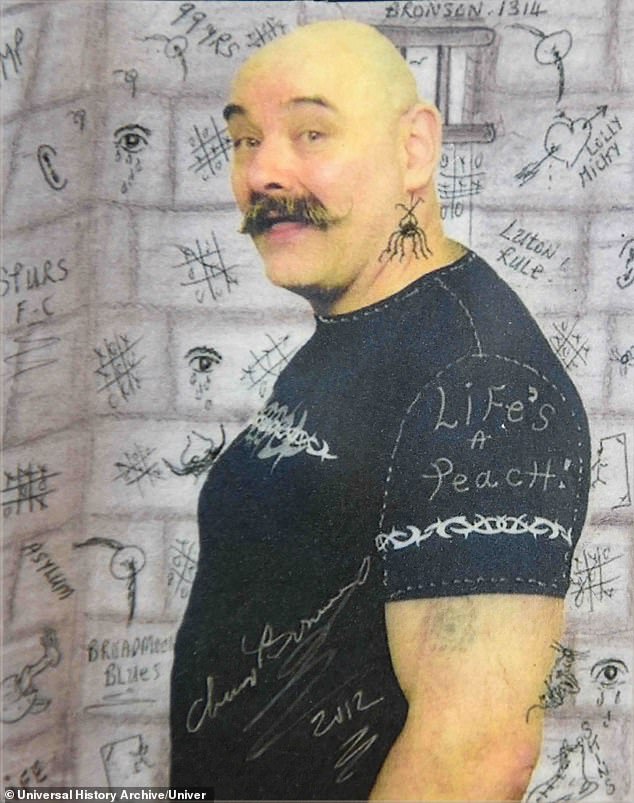
Britain's most dangerous prisoner has pledged to 'expose his unlawful sentence' as it is confirmed he will have his ninth parole hearing.
Charles Bronson, now 73, has spent over five decades in custody, after being first jailed back in 1974 aged 21 for armed robbery and regularly making the national headlines for his dramatic prison escapades.
Now, the Parole Board have confirmed that Bronson will be given an oral hearing in the coming months, where he could be invited to make his plea for freedom.
Bronson has told Sky News in a letter that he intends to 'expose this unlawful sentence and treatment', saying: 'It's now gone on for far too long, it's become a total joke.'
The confirmation is a hopeful development for Bronson, one of Britain's longest-serving and infamous prisoners, as it will mean a fuller examination of his suitability for release.
Bronson, from Luton, had his sentence extended to life after repeated violent events, including hostage-taking, prison escapes, and grievous bodily harm.
In one notorious incident in 1997, he was jailed for seven years on top of his existing sentence after he took three prisoners hostage at Belmarsh high security prison in south east London.
After barricading himself in with them, Bronson threatened to eat one and then demanded a helicopter to Cuba - as well as an axe, a sub-machine gun, a cheese sandwich, and an ice cream. The siege only ended after he cut himself with a razor.
Charles Bronson (pictured) has spent periods detained in various high-security psychiatric hospitals including Rampton, Broadmoor, and Ashworth
The 73-year-old (pictured), from Luton, has spent most of the past 50 years behind bars - and largely in solitary confinement - since he was first jailed aged 21 in 1974
But it has now been 12 years since Bronson last received a violent conviction, and Bronson has said he feels that his treatment under the justice system has been 'unlawful' and 'denies (him) progress'.
In his letter, Bronson also wrote: 'I am 23 years over my tariff. I am forever denied progress.
'I am forever kept in solitary. They won't even take me off Cat A.'
The most recent review into Bronson had been under consideration 'on the papers' - a stage where written evidence is assessed by the parole board and collects reports from prison officials, psychologists and probation staff.
This week however, the Parole Board concluded that the case should progress to an oral hearing, where evidence will be tested in person and look more thoroughly at Bronson's current risk levels before determining whether he can be safely released into the community.
Alternatively, Bronson could be moved to an open prison or a lower category wing with other prisoners to see how he copes. It would be a stark difference for the prisoner, who has been in solitary confinement for 23 hours a day for 37 years on and off.
Gurdeep Singh, Bronson's solicitor, told Sky News: 'Mr Salvador is delighted with the fact he has been progressed to a full hearing but he is under no illusions - this is just the start of the fight for his release.
'He wants to show the world he is not the person he was, he hopes to convince the panel that he is a changed man intent on living a simple life in the outside world.
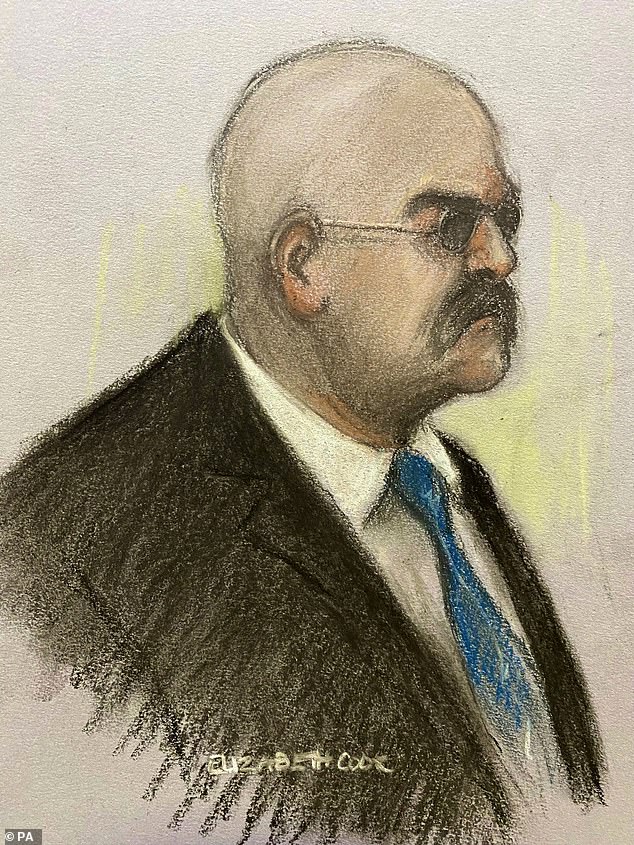
Bronson (pictured), born as Michael Gordon Peterson, was initially only handed a seven-year sentence - but has since done more time for a series of violent offences inside
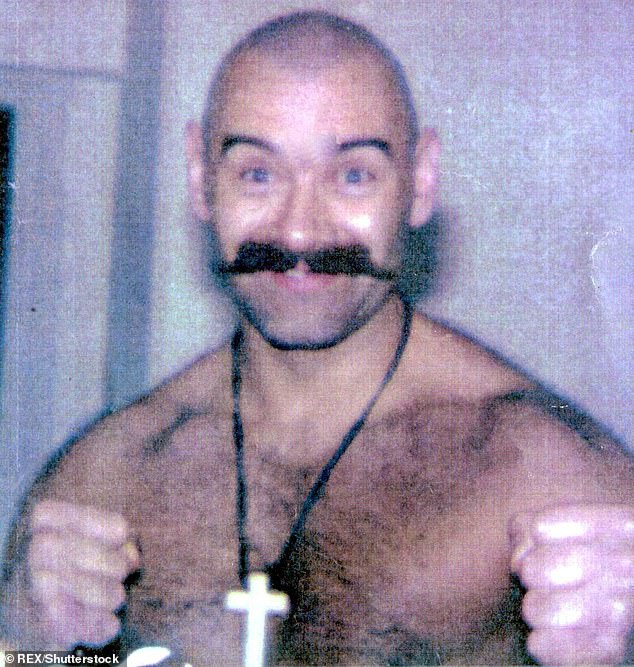
Over the years, the convict (pictured, in 1997) has taken 11 hostages in nine different confrontations with guards, which culminated in him holding a prison art teacher captive for 44 hours in 1999 - and saw him handed a discretionary life sentence
'He has high hopes he can see his 95yr old mother this year.'
Bronson, born as Michael Gordon Peterson, was initially only handed a seven-year sentence in 1974 - but has since done more time for a series of violent offences inside.
Over the years, he has taken 11 hostages in nine different confrontations with guards, which culminated in him holding a prison art teacher captive for 44 hours in 1999.
It saw him handed a discretionary life sentence, with a minimum term of three years, in 2000 - and it is this which he is still serving now.
During this time, the Parole Board, the independent body in charge of determining if prisoners can be released, has repeatedly refused him freedom.
Throughout his more than half century of imprisonment, he has undergone a staggering eight parole reviews, with the latest taking place in 2023.
Bronson was the first prisoner to formally ask for a public hearing after rules changed in 2022 in a bid to remove secrecy around the parole process.
His solicitor made the application on his behalf in February last year.
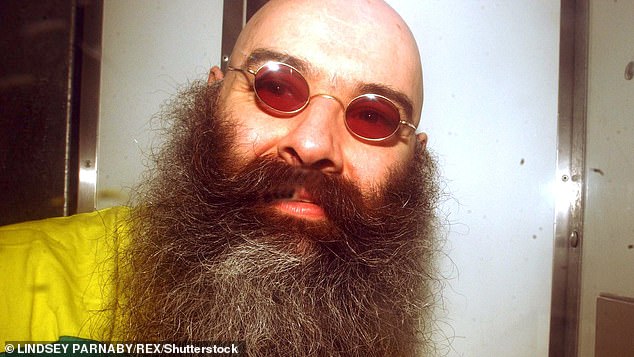
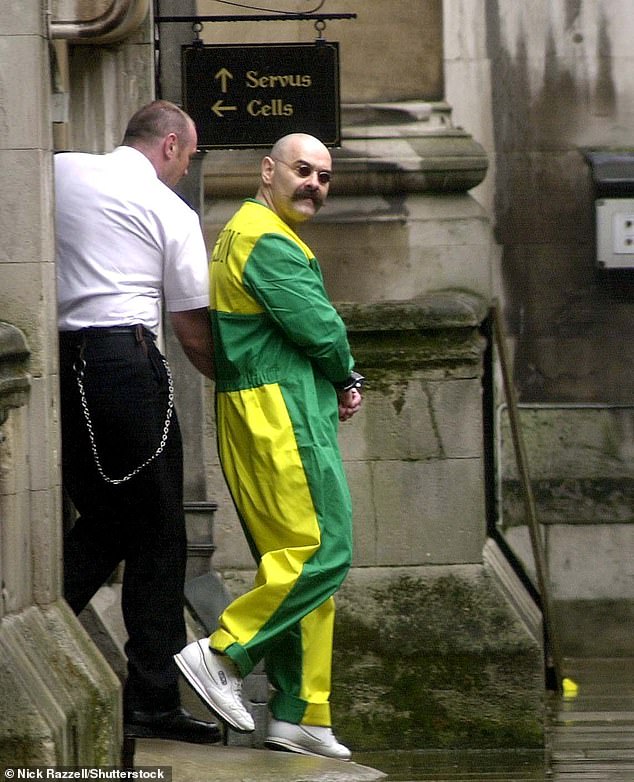
This week, in a potentially historic move, the panel is evaluating the latest application for release by Britain's most violent prisoner. Pictured: Bronson arriving at court for an appeal in 2004
He said Bronson felt 'directly responsible' for this rule change, after having long fought for it, giving him a 'legitimate expectation' of a public hearing.
But the Parole Board refused in May last year, saying this 'does not give him any legitimate expectation that his subsequent hearings will be held in public'.
Bronson's solicitor had also argued a private hearing, contrary to his client's desires, could cause the prisoner 'undue emotional stress' - but the board disagreed.
The lawyer also said 'there is a public interest in increasing understanding' in the Parole Board's work.
The board acknowledged the introduction of public hearings would help do that.
But it said they are 'expensive and time-consuming', adding: 'Unless and until the board is provided with the necessary funds to carry them out in more cases it must be selective in the holding of a public hearing only where it is likely to increase public understanding of the process or will benefit the public or victims in some other way.'
Bronson reacted to the board's decision at the time by saying he would have nothing to do with 'the farcical jam roll', meaning 'parole'.
'What are they afraid of? The truth getting out?,' he said, adding: 'Sacked the legal team!'.
A new solicitor appears to have achieved the rescheduling of the review to this week.