Britain's supermarkets are facing shortages of several popular fruits and vegetables on the shelves after months of torrential rainfall in the UK and Europe.
Strawberry crops have been particularly badly hit with gaps noted in the fresh aisles at Tesco, Lidl, Sainsbury's and Asda in recent days, according to Assosia data.
Raspberry shortages have also been reported at Morrisons and Lidl, as well as lower supply of avocados and peppers in stores, based on the analysis by The Grocer.
This follows an extremely wet start to the year across areas of Spain and Morocco which supply a large amount of fresh produce to the UK at this time of year.
Supply constraints have been exacerbated by the extreme downpours in Britain, with UK growers battling with saturated ground and major flooding in recent weeks.
Abel & Cole said low light levels were also impacting production, with smaller-than-expected crops of purple sprouting broccoli, January King cabbages and bok choy.
The UK firm's fresh produce and quality control buying manager Caroline Dodds said Spanish oranges and clementines will also 'finish earlier this year' due to the rain.
Industry insiders fear the supply issues will only get worse if the incessant rain continues because this would make it harder to plant crops for the next season.
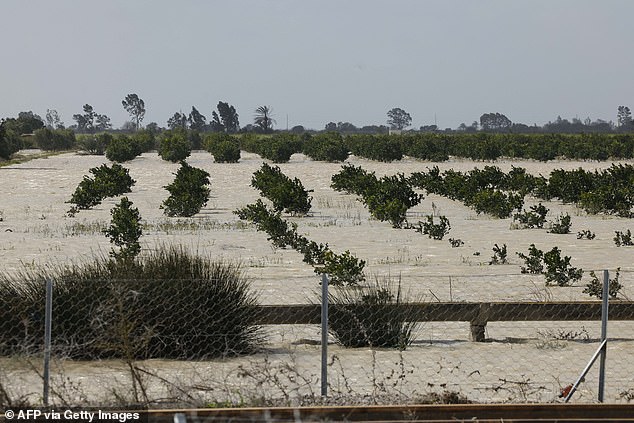
A field submerged in floodwater in the Sidi Slimane region of Morocco on February 13
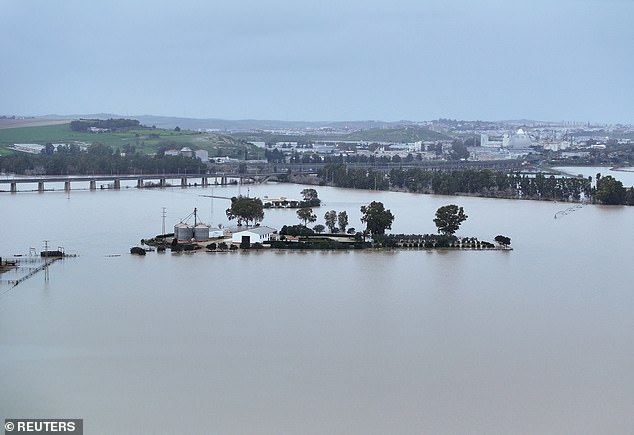
A farm surrounded by flooding after Storm Marta hit Jerez de la Frontera in Spain on February 8
Up to 40,000 hectares of farmland have been hit by storms and floods across the two countries, leading to an estimated £30million of losses for farmers in Spain alone.
Strawberry producing association Freshuelva believes exports could be down by half year-on-year after the storms affected crops, production and handling infrastructure.
Spain has faced a series of big storms, including Marta, Kristin and Leonardo which brought deadly flooding and major damage after all hitting in the space of two weeks.

A UK Fresh Produce Consortium spokesperson said: 'Shoppers may see price increases as the market adjusts to limited supply. We urge consumers to be aware, but panic buying will only make matters worse.'
Nicholas Marston, chairman of industry body British Berry Growers, told the Daily Mail: 'Extreme weather in key sourcing regions such as Spain and Morocco is a stark reminder of just how exposed the UK berry supply chain can be at this time of year.
'When almost all of our winter strawberries are imported, disruption on this scale inevitably tightens availability, increases costs and creates real challenges for retailers and shoppers alike.
'For British growers, it underlines both the importance of building greater resilience in our domestic production and the need for the right policy environment to support investment in protected cropping, labour and energy.
'With the UK season still some months away, the immediate pressure will be on maintaining consistent supply, but longer term this is a clear signal that strengthening home-grown capacity is critical for food security, price stability and ensuring consumers can continue to access fresh British berries.'
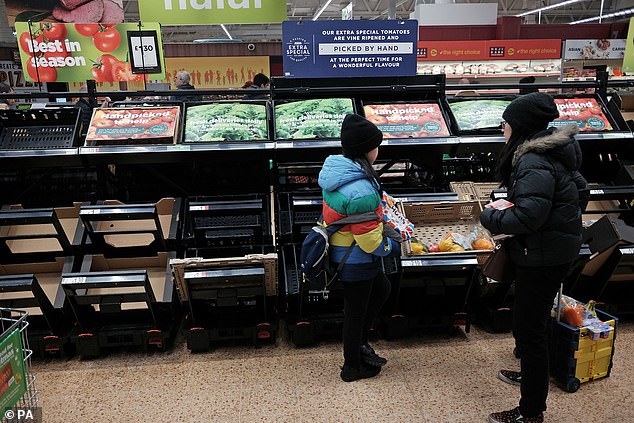
Empty fruit and vegetable shelves at a UK supermarket during a previous shortage in 2023
Edward Velasco, managing director of Kent-based fresh produce importer Rodanto, told the Telegraph: 'It's a complete disaster.
'We've got farmers who would normally be loading multiple lorries' worth a day, but some of them haven't been loading anything at all.'
The Environment Agency had 52 flood warnings and 121 flood alerts in place for England today following weeks of torrential rain since the start of this year.
It has been an extremely wet winter in the UK, with rainfall above the average for the last 30 years, but for some it has been much wetter than others.
The Met Office said eastern Scotland has experienced 114 per cent of its rainfall for meteorological winter so far, while northern and north-western Scotland have had just 60 per cent.
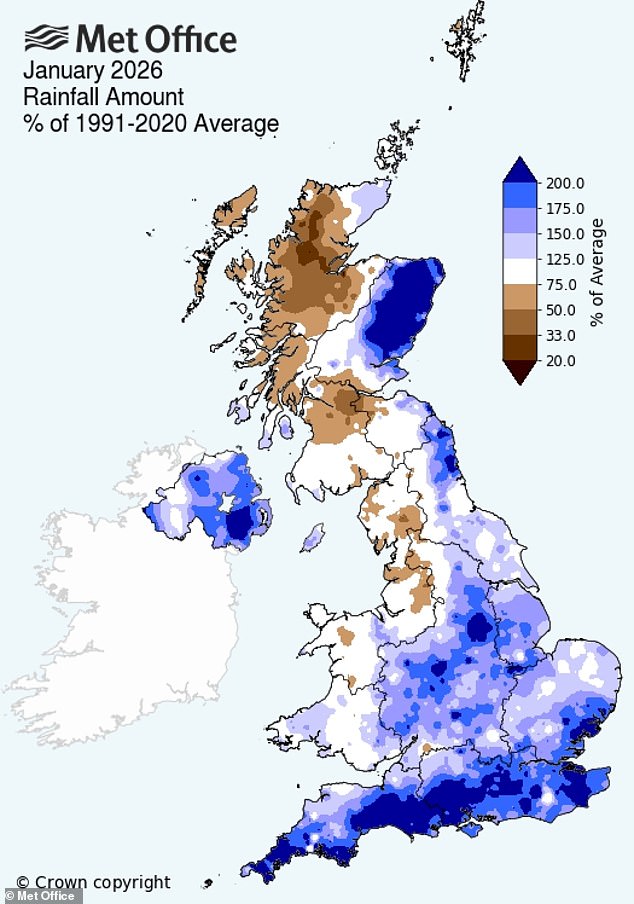
The Met Office has said last month was one of the wettest Januarys on record for Britain
Similarly, the Midlands is on 140 per cent of its expected rainfall while North West England is on 90 per cent.
The Met Office previously said that last month was one of the wettest Januarys on record in Britain – with 17 per cent more rain than usual.
Andrew Opie, director of food and sustainability at the British Retail Consortium, told the Daily Mail: 'Difficult weather conditions in southern Europe and northern Africa have impacted the harvest for some crops.
'However, food retailers are adept at managing disruption and will take all necessary measures, including sourcing from alternative sources, to minimise any impact on customers.'
The Mail has contacted all the named supermarkets for comment.