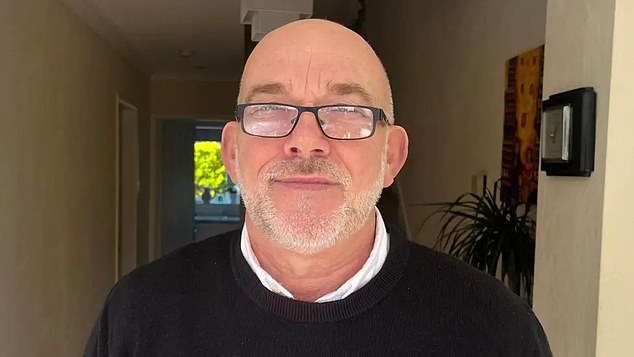
An innocent grandfather was wrongly accused of being a thief after facial recognition technology suggested he had stolen items.
Ian Clayton, 67, said he was told to leave a Chester Home Bargains shop after the technology claimed he was involved in a theft he said had nothing to do with him.
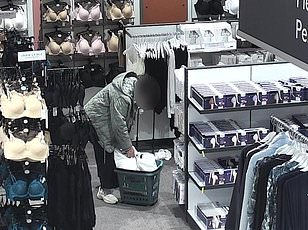
After being asked to leave, Mr Clayton contacted security company Facewatch, which sent him his photo with words saying he had put items into a bag and stolen them.
The facial recognition technology flags suspicious movements such as goods being stuffed into bags and sends a message to workers with footage and where the behaviour is happening.
It also sends an alert to staff if a so-called subject of interest on a watchlist enters a shop.
But Facewatch admitted Mr Clayton should not have appeared on its system, saying it had permanently removed his image and 'the associated record'.
Home Bargains has been asked for comment.
The grandfather said he thought he was 'going to be sick' when he was asked to leave in front of a group of people.
Ian Clayton said he was told to leave a Home Bargains shop in Chester after facial recognition technology claimed he had stolen items
'That feeling didn't go away all day and it didn't go away the next day,' he said.
Mr Clayton told the BBC his experience made him feel 'helpless'.
'I've got a perfect clean record - always have had, pride myself in that,' he said.
'I'm not a shoplifter and I really resent being targeted as one and having my face on a system that I can't even have removed.'
Mr Clayton has also been in touch with police and Home Bargains asking to view any CCTV footage, saying he just wanted 'to feel safe' going into shops again.
He has also asked for an apology.
A Facewatch spokesperson said Home Bargains had 'completed a full review of the incident' and that it took its system's accuracy extremely seriously, acting promptly where a record did not meet the required standard.
Mr Clayton's experience came as figures last month revealed facial recognition cameras were flagging record numbers of crime suspects in the UK, including more than 2,000 a day in the week leading up to Christmas.

Mr Clayton was accused in Chester's Home Bargains shop (pictured)
But campaign groups have warned of invasions of privacy and wrongful 'blacklisting' of innocent people accused of shoplifting.
Privacy campaign group Big Brother Watch has raised concerns about cases including a 64-year-old woman accused of stealing less than £1 worth of paracetamol and blacklisted from shops in her area and a man alleged to have shoplifted from a store in Cardiff before being cleared by a CCTV review.
And last year Danielle Horan, from Manchester, was ordered out of two separate shops after being falsely accused of stealing toilet roll - prompting her to call for a ban on AI anti-theft technology.
She told ITV's Good Morning Britain how she was accused of taking items worth £10, with a description added to a facial recognition watchlist.
The alert said: 'Female enters store pushing a trolley. She picks items put them inside the trolley including multi packs of tissue papers. She heads to the till declares items to pay but fails to pay for the two packs of papers which are still inside the trolley. Crime committed. Leaves with items.'
Ms Horan had bought and paid for the toilet roll on a previous visit.
Facewatch said of her case: 'Let's be clear, Danielle did not commit a crime.
'But we were informed by a member of staff that a crime has been committed. We're now making inquiries with the member of staff and their manager.'
Big Brother Watch director Silkie Carlo told the Daily Mail: 'Shoplifters should be held to account but the proper way to do that in a democracy is through the criminal justice system rather than private AI systems that are dangerously faulty, putting the general public at risk.
'Members of the public are now being put on secret watchlists, without their knowledge and without being shown any evidence, and then electronically blacklisted from their high streets.'
Last July Facewatch sent 43,602 alerts to subscribed retailers, more than double the 18,564 sent out in the same month of the previous year.
It has previously defended its role in helping crack down on shoplifters, with chief executive Nick Fisher saying last year: 'We only store and retain data of known repeat offenders, of which it's been deemed to be proportionate and responsible to do so.
'I think in the world that we are currently operating in, as long as the technology is used and managed in a responsible, proportionate way, I can only see it being a force for good.'
The company has also insisted its 'sharing of images is only of witnessed and evidenced offenders and complies with the principles of data minimisation and proportionality' and that 'only individuals reasonably suspected of having committed offences are on the database, not regular shoppers'.
The Daily Mail contacted Facewatch for further comment.