
Officials have said that Mexico located and killed drug cartel boss 'El Mencho' after a visit from a romantic partner, as speculation is mounting over the fate of his ex-wife narco queen Rosalinda Gonzalez Valencia.
Mexican Defense Minister Ricardo Trevilla revealed on Monday that the information leading to his capture and death stemmed from someone who he was involved romantically with.
El Mencho, whose real name is Nemesio Ruben Oseguera Cervantes, was the boss of one of the fastest growing criminal networks in Mexico, notorious for trafficking drugs to the US and staging brazen attacks against government officials who challenged it.
He was killed during a shoot-out in his home state of Jalisco as the Mexican military attempted to capture him on Sunday.
In the aftermath of the military operation on Sunday, violence has surged and authorities have tightened security across the region, while attention has also turned to his wife, a central figure in the Jalisco New Generation Cartel whose whereabouts remain unknown.
According to Mexico’s Secretariat of the Interior, Gonzalez, nicknamed 'La Jefa' ('The Boss'), oversaw the cartel’s financial and legal operations including more than 70 businesses linked to the group.
Authorities have described her role as administrative and financial, helping run operations while other members managed enforcement and territorial control.
She was arrested several times in connection with her involvement.
Born in 1963 into a poor family of avocado farmers in Anguililla, Michoacan, Gonzalez was one of 18 siblings.
By the 1970s, her family had turned to cultivating and trafficking marijuana and opium poppy to the United States, forming what became known as the notorious Milenio Cartel.
The cartel grew powerful and by the early 2000s they were working with synthetic drugs and operated in at least six Mexican states.
Army troops detained Rosalinda Gonzalez Valencia (pictured) of the Jalisco Nueva Generación Cartel
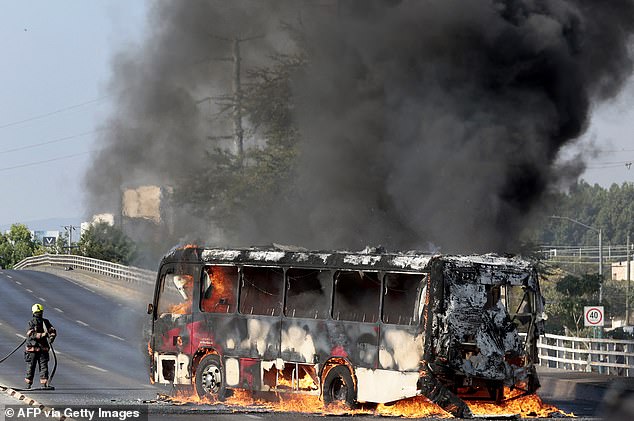
Fiery chaos has erupted throughout the Mexican state of Jalisco, leaving some tourists stranded. A bus set on fire by cartel members in the state is pictured
Gonzalez was heavily involved in the trade, and security forces believe she was married to her uncle and cartel leader Armando Valencia Cornelio.
Through this network, she met Oseguera, also known as 'El Mencho', whom she later married after separating from Cornelio.
The couple had three children, including Ruben Oseguera Gonzalez, known as ‘El Menchito’, who rose to become his father’s second in command.
Security agencies have said that Gonzalez’s family, nicknamed Los Cuinis, played a key role in managing shell companies, luxury hospitality businesses and real estate holdings believed to funnel illegal funds.
Authorities have previously accused her of helping structure financial networks that supported cartel logistics, with Mexican and US enforcement agencies tracking properties and corporate entities linked to her network over the years.
Despite her prominence, Gonzalez has seemingly vanished since being released from prison approximately one year ago.
Her disappearance has fuelled speculation, including rumours circulating online that she may be suffering from a secret terminal illness.
She was first detained in 2018 on money laundering and organised crime charges, though the latter was later dropped, and she was released after paying $1.5 million in bail.
She was arrested again in 2021 after being identified as the chief of the cartel’s financial operations.
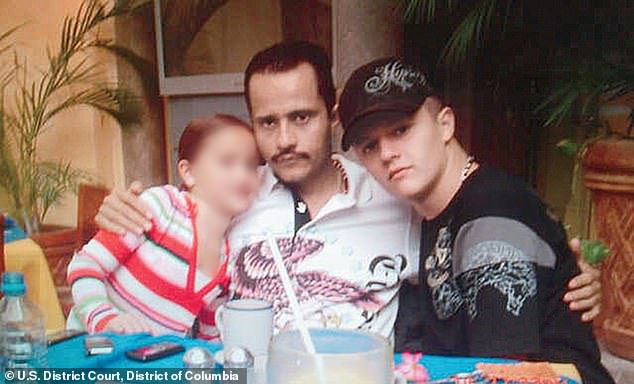
El Mencho pictured with his son and daughter
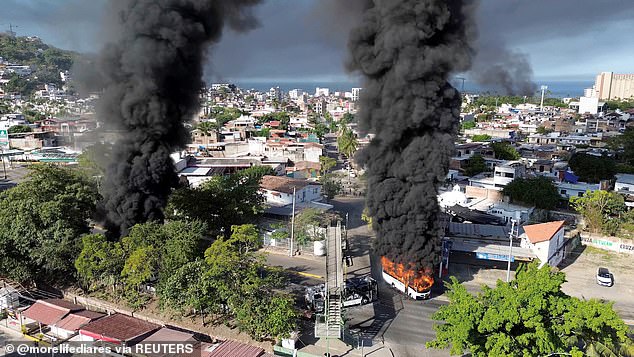
Smoke billows amid a wave of violence, with torched vehicles and gunmen blocking highways in more than half a dozen states
On 17 December 2023, she was sentenced to five years in prison after being convicted of failing to disclose transactions related to a car wash she owned in Puerto Vallarta, Jalisco.
In February 2025, she was released early from prison due to ‘good conduct.’ She has not been heard from since.
Gonzalez's absence comes at a critical moment for the cartel, as questions grow over who will take on its leadership following El Mencho’s death.
The pair’s son, El Menchito, who had been a primary target for American drug enforcement agencies, is now serving a life sentence in a high security prison in the US after being convicted in September 2024 for drug trafficking and firearms offences.
Their other two children, daughters Jessica Johanna Oseguera González, nicknamed ‘La Negra’ (‘The Black One’) and Laisha Oseguera, are also unlikely to lead his cartel, due to Jessica’s previous arrests and Laisha’s bid to remain out of the spotlight.
Experts say that El Mencho’s stepson, Juan Carlos Valencia González, could be up for the position.
Speaking to El Pais, Víctor Manuel Sánchez Valdés, professor and researcher at the Autonomous University of Coahuila specializing in organized crime, said:
‘The most logical successor now is Juan Carlos Valencia González, his stepson.’
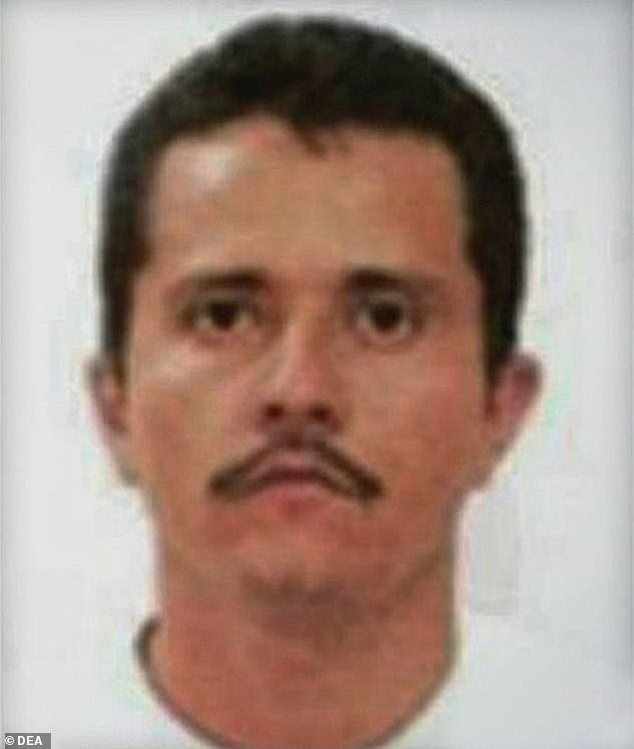
Nemesio 'El Mencho' Oseguera Cervantes was killed by Mexican federal forces on Sunday, according to high-ranking officials who spoke with local publications. The chaos across Mexico is thought to be in response to his death
Valdés said other figures who could compete for the position include Audias Flores Silva, another major figure in the cartel who oversees operations in Michoacán, Zacatecas, and Nayarit, as well as Gonzalo Mendoza Gaytán, who manages the ports.
Ricardo Ruiz Velasco, who is identified in the press as the leader of the cartel’s Elite Group could also be a candidate.
Mexico erupted into fiery chaos yesterday after its army killed El Mencho, the country's most powerful cartel leader, sparking violence across the nation just four months before it prepares to host the World Cup.
Catastrophic images emerging from tourist hotspot Puerto Vallarta showed buses exploding into flames and homes being torched after the killing of Jalisco New Generation Cartel leader Nemesio Oseguera Cervantes on Sunday.
Following the death of the 59-year-old, gunmen unleashed violence across the country barely 100 days before Mexico City hosts the opening game of the World Cup between Mexico and South Africa.
Cars burned out by cartel members blocked roads in 20 Mexican states and left smoke billowing into the air, with explosions and shootouts reported erupting between the cartels and security forces in the streets.
People in Guadalajara, a host city for four FIFA World Cup group games this summer, locked themselves in their homes, and tourists stranded in the area were warned to shelter in place, avoid crowds, and minimise their movements.
On Monday morning, the UK Foreign Office warned: 'Authorities in Puerto Vallarta have issued a public advisory to stay indoors. Routes to airports may be blocked. You should exercise extreme caution, follow local authorities' advice, including orders to stay indoors and avoid non-essential travel in affected areas.'
Similar sentiments were echoed by the United States Embassy in Mexico, which urged Americans to 'shelter in place'.
The kingpin was eliminated in a joint Mexican military and US-backed operation in Tapalpa, a town of 20,000 people in the Sierra Madre mountains. He was flanked by loyalists armed with heat-seeking grenade launchers capable of piercing tank armour.
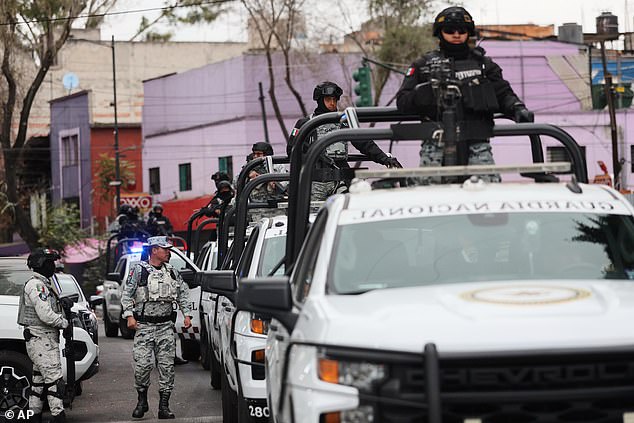
National Guards patrol the area outside of the General Prosecutor's headquarters in Mexico City, February 22, 2026
Cervantes was the head of the Jalisco New Generation Cartel (CJNG), one of Mexico's most powerful drug cartels that plays a key role in trafficking methamphetamine and fentanyl to the US.
Cervantes' brutal control of the drug-trafficking routes from Latin America to the US, using speedboats and submersibles to ship cocaine and methamphetamine from Colombia and Ecuador via the Pacific, is thought to have made him billions.
He was linked to several beheadings, and last year an 'extermination ranch' was discovered in Jalisco that featured underground cremation ovens and 200 pairs of shoes.
Videos circulating on social media from Sunday show vehicles ablaze as residents of Puerto Vallarta have also reported armed thugs on motorcycles and the sounds of their gunfire.
Clips of Mexican forces exchanging fire with cartel members have also been shared on X and Instagram.
Footage emerging from Guadalajara International Airport in Jalisco has also been widely shared, showing smoke rising from runways and people running in a panic.
Other videos show people hiding inside the airport and lying on the ground.
Mexico is slated to host 13 games across three cities - Guadalajara, Mexico City, and Monterrey - including the curtain raiser in Mexico City on June 11.
Guadalajara is set to host four of the games, including a potential match in the city between Ireland and South Korea if they get through the qualifiers.
Residents in the neighboring state of Guanajuato have said they watched pharmacies and convenience stores get torched to the ground throughout the region.
Public transportation in Puerto Vallarta has been suspended, and hotels across the city are advising guests to remain indoors. Some businesses have temporarily closed.
Britons stranded in Mexico were advised by the Foreign Office to monitor local media and follow guidance from authorities amid the destruction.
'If you do decide to travel, we recommend intercity road travel during daylight hours,' the official advice read.
'Security incidents have also been reported in other parts of Mexico. As the situation develops, wherever you are in Mexico, you should stay alert and follow local security advice.'
Authorities have said they are actively working on containing the cartel's reactions and reinforcing security following Cervante's killing - the highest-profile blow against cartels since the recapture of former Sinaloa cartel boss Joaquín 'El Chapo' Guzmán a decade ago.
Cervantes, who was also one of the United States' most wanted fugitives, was killed during an attempt to capture him, as his followers attempted to fight off Mexican troops.
Mexico's Defense Department said in a statement that the army launched an operation in the southern part of Jalisco state to capture Cervantes, involving the Mexican Air Force and special forces.
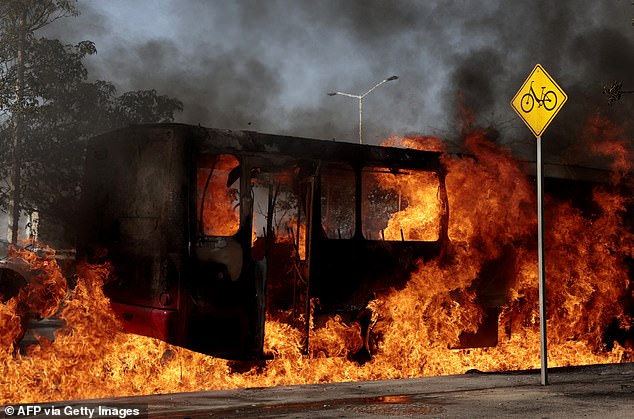
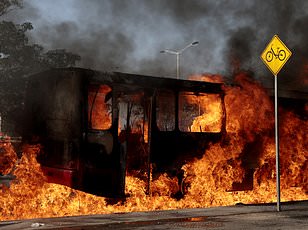
A bus set on fire by organised crime groups in response to an operation in Jalisco to arrest a high-priority security target, burns at one of the main avenues in Zapopan, state of Jalisco
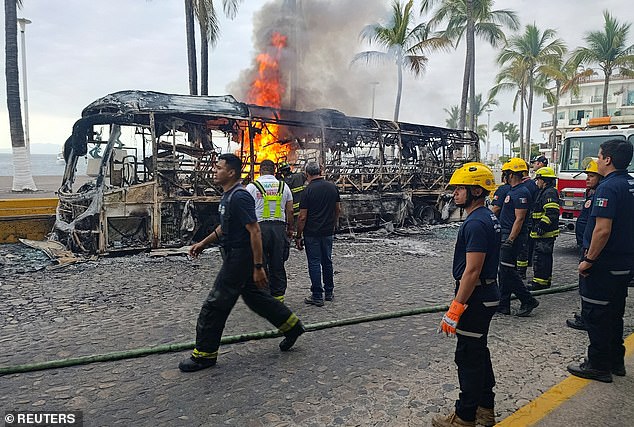
Videos circulating on social media from Sunday show vehicles ablaze as residents of Puerto Vallarta have also reported armed thugs on motorcycles and the sounds of their gunfire
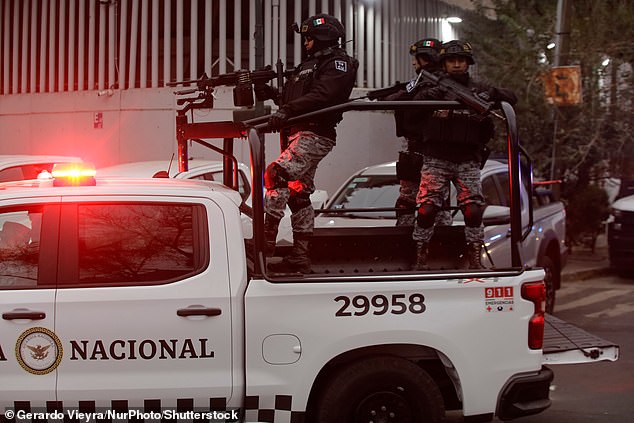
A National Guard convoy in Mexico City, Mexico, on February 22, 2026, escorts a Rhino, an armored tactical vehicle used for high-impact operations and critical security situations
The cartel counterattacked, and in the ensuing confrontation, federal forces killed four members of the criminal group and wounded three others, including its leader, who died later during transfer by air to Mexico City, according to the statement.
Three soldiers were injured, and two people were detained in the action. Rocket launchers capable of shooting down aircraft and destroying armored vehicles were seized at the scene.
On Sunday morning, Jalisco Governor Pablo Lemus Navarro announced on X: 'Federal forces carried out an operation in Tapalpa a few hours ago, which has led to confrontations in the area.
'Also, as a result of this operation, in various points of that region and in other parts of Jalisco, individuals have burned and blocked vehicles to hinder the action of the authorities.
'I have given the instruction to immediately set up the security committee with authorities from all three levels of government and to activate the red code in order to prevent acts against the population.
The killing could give the government a leg up in its dealings with the US Trump administration, which has been threatening tariffs or unilateral military action if Mexico does not show results in the fight against the cartels.
Cervantes was originally from the western state of Michoacan. His ties to organised crime went back at least three decades.
In 1994, he was tried for trafficking heroin in the US and sent to prison for three years. Upon returning to Mexico, he quickly rose through Mexico's drug trafficking underworld.
Around 2009, he founded the Jalisco New Generation Cartel, which became Mexico's fastest-growing criminal organisation, moving cocaine, methamphetamines, fentanyl, and migrants to the United States, and innovating in violence with the use of drones and improvised explosive devices.
The Jalisco cartel had carried out daring attacks on the Mexican army, pioneering the use of drones and even going into battle with the state armed with helicopters.
In 2020, it assassinated the head of Mexico City's police force using grenades and high-powered rifles.
It recruited aggressively, experimenting with new ways to reach potential members online, and generated revenue through fuel theft, extortion, and timeshare fraud, among other activities.
Oseguera Cervantes was facing multiple indictments in the United States, and the US State Department had offered a $15 million reward for information leading to his arrest.
The Trump administration designated his cartel and other foreign terrorist organisations a year ago.
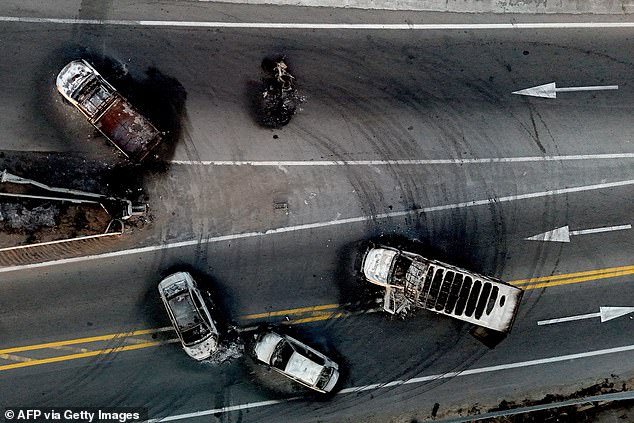
Burned cars and trucks, allegedly set on fire by organised crime groups in response to an operation to arrest a high-priority security target, on a highway near Acatlan de Juarez, Jalisco state
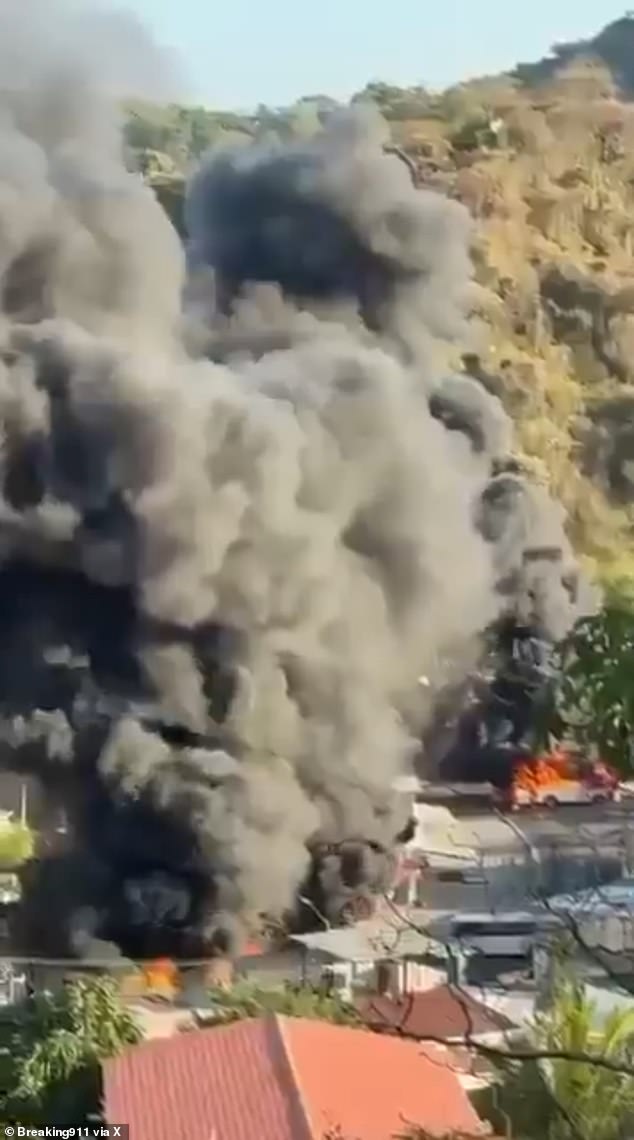
Chaos and destruction have exploded in the Mexican city
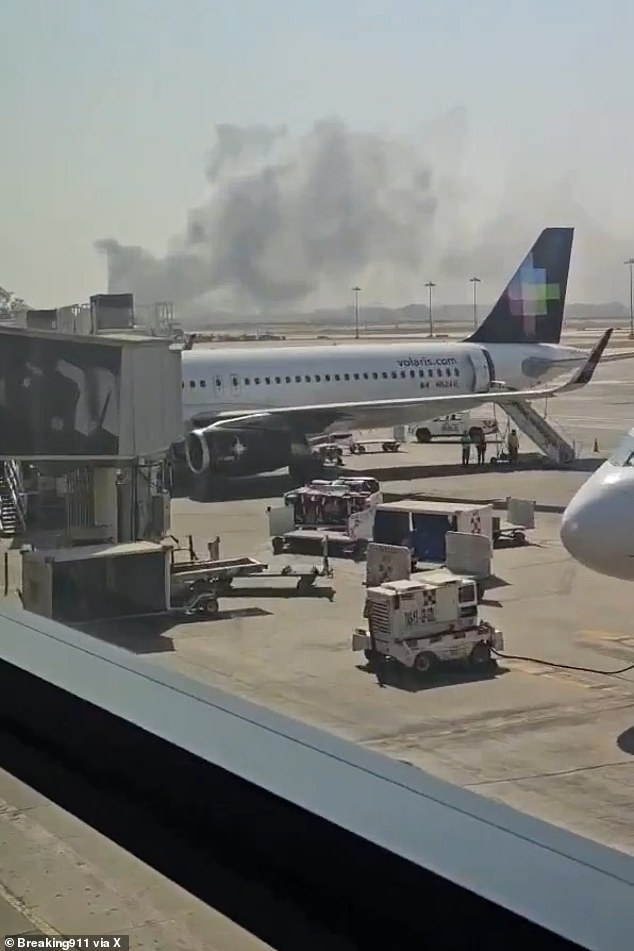
Videos taken by travelers at Guadalajara International Airport in Jalisco show smoke rising from the runways
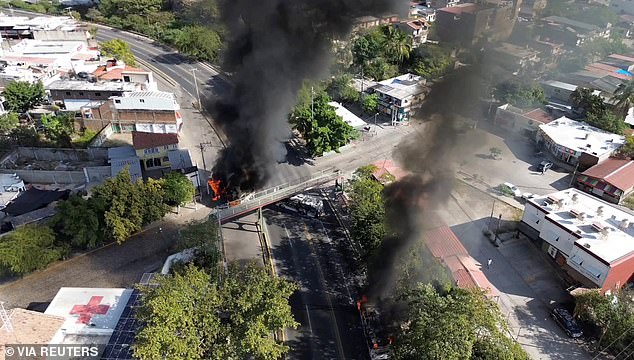
Columns of black smoke are pictured rising from Puerto Vallarta, a city popular with tourists. The chaos is thought to be in response to federal authorities killing a prominent cartel leader
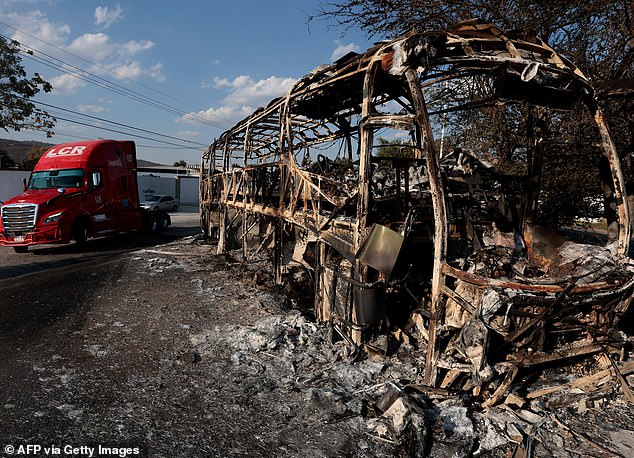
A bus used as a roadblock by organized crime burns following a federal operation in which a government source said Mexican drug lord Nemesio Oseguera, commonly known as 'El Mencho,' was killed
US Deputy Secretary of State Christopher Landau, who was US ambassador to Mexico during the first Trump administration, applauded the operation via X, writing 'The good guys are stronger than the bad guys. Congratulations to the forces of law and order in the great Mexican nation.'
Mike Vigil, former chief of international operations for the DEA, said Mexico had sent a 'strong message to Donald Trump's administration that they are fighting aggressively and effectively' against the most powerful cartels.
He added that 'the majority of the information came from the Mexican armed forces and all credit goes to Mexico.'
It's not clear who will succeed Oseguera Cervantes, or if any one person can.
The Jalisco cartel has a presence in at least 21 of Mexico's 32 states and is active in almost all of the United States, according to the US Drug Enforcement Administration. But it is also a global organisation, and the loss of its leader could be felt well beyond Mexico.
'El Mencho controlled everything; he was like a country's dictator,' Vigil said.
His absence could slow the cartel's rapid growth and expansion and leave it initially weakened against the Sinaloa cartel on several fronts where they or their proxies are fighting.
The Sinaloa is locked in its own internal power struggle, however, between the sons of 'El Chapo' and the faction loyal to Ismael 'El Mayo' Zambada, who is in US custody.
Vigil said Mexico should seize the moment to launch 'an effective frontal assault based on intelligence.'
'This is a big opportunity for Mexico and the United States if they work together,' he said.
Security analyst David Saucedo said that if relatives of Oseguera Cervantes take control of the cartel, the violence seen Sunday could continue.
If others take power, they could be more willing to turn the page and continue operations.
The greatest fear would be that the cartel turns to indiscriminate violence.
They could decide to 'launch narcoterrorism attacks... and generate a scenario similar to what Colombia lived in the 1990s,' a full-on attack against the government, 'car bombs, assassinations, and attacks on aircraft.'