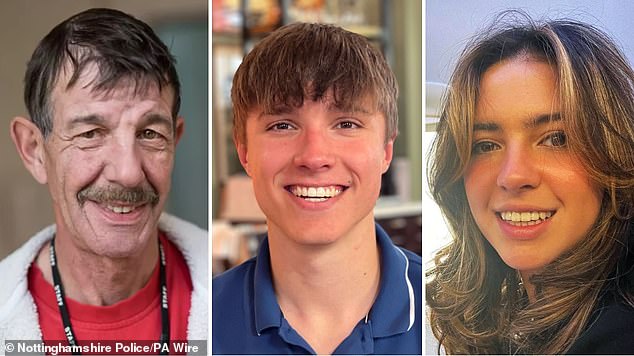
The Nottingham massacre that left three dead and others seriously injured was the 'culmination of decades of unconscionable but entirely predictable structural, systemic and individual failure', an inquiry heard.
Mentally ill Valdo Calocane was free to fatally stab university students Barnaby Webber and Grace O'Malley-Kumar, and caretaker Ian Coates, after a series of blunders by officials.
Paranoid schizophrenic had been sectioned four times in the three years before he struck on June 13 2023, but he was repeatedly released back into the community despite concerns about his deteriorating behaviour.
He had a history of violence and reportedly assaulted two colleagues at the factory where they worked just weeks before he struck.
Yet Leicestershire Police called to the scene did not realise Calocane already had an outstanding warrant for his arrest by Nottinghamshire Police for allegedly assaulting an emergency worker - something the inexperienced officer called to the scene admitted was an 'operational mistake'.
The inquiry also heard police evidence went missing, with information not properly shared, while Mr Coates' family first discovered he was killed through social media.
Calocane repeatedly misled medical professionals in Nottingham, refusing to take a certain type of medication because of his supposed fear of needles - despite getting Covid jabs.
He was discharged from his specialised mental health team, or his GP, for around nine months before he struck, after failing to engage with them.
Ian Coates, Barnaby Webber - known as Barney - and Grace O'Malley-Kumar were killed in Nottingham in a series of supposedly random knife attacks by one man
And it was revealed the mental health team previously flagged concerns about sectioning Calocane, who is originally from Guinea-Bissau in West Africa, in case it was seen as racist.
Calocane, now 34, pleaded guilty to manslaughter on the grounds of diminished responsibility and is currently serving an indefinite hospital order.
The bereaved family members of those he killed today told inquiry chairman, senior retired judge Deborah Taylor, the months-long probe must deliver change after so many false starts.
In an opening statement, Tim Moloney KC on behalf of the group, said: 'Whilst this inquiry must necessarily and unavoidably consider the circumstances in which Barney, Grace and Ian were killed, the events of 13 June were not merely ones of great personal loss and tragedy.
'They represented the culmination of decades of unconscionable but entirely predictable structural, systemic and individual failure.'
He asked the inquiry chair: 'Were there tragic and predictable flaws in the healthcare and criminal justice responses to (Calocane's) deteriorating presentation from at least May 2020?'
He said the victims' families 'live with the raw horror of that day, today and every day'.
'This inquiry is only happening because the families we represent refused to just move along,' he said.
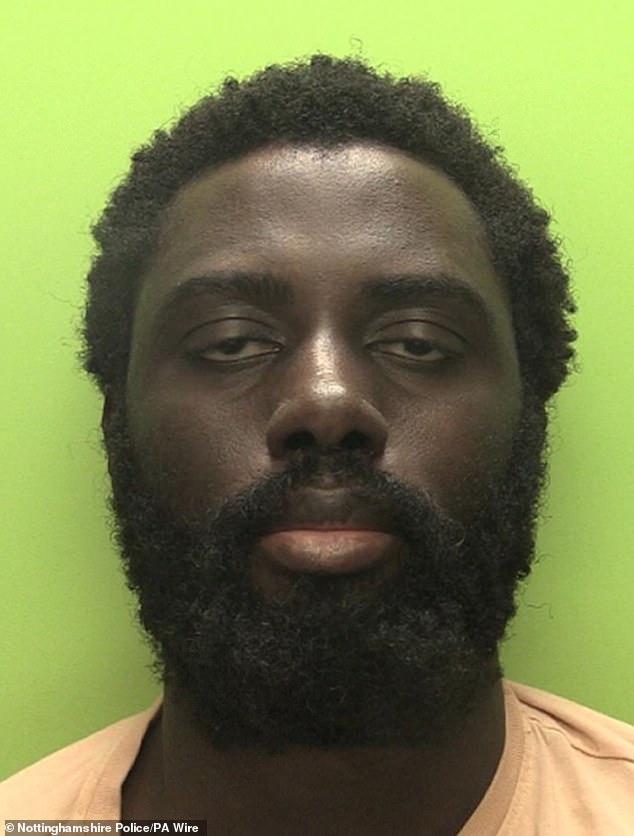
Valdo Calocane, now 34, has been jailed for manslaughter on the grounds of diminished reponsibility
'They refused to accept that there is nothing to see here and the issue of the role of poorly managed, untreated mental health homicides is now back in focus for the umpteenth time because of their refusal to move along.
'It would be tragic if this inquiry was another missed opportunity.'
Three others were left with serious injuries when Calocane stole Mr Coates' van as he lay dying, and drove into members of the public.
One of them, Wayne Birkett, told the inquiry that while he was lucky to be alive, he 'wished his life had been taken rather than those of Grace, Barney and Ian'.
Calocane's mother, Celeste, and brother, Elias, said the 'tragedy was preventable'.
They said they had 'a number of concerns about the conduct of the health services police and the University of Nottingham and the systems that were in place, outline those concerns in a moment', and accused police of failing to link complaints about Calocane, or refer them to the NHS.
They said the triggers for Calocane falling ill in 2020 were 'stress' from his engineering degree course work, sleep deprivation, and the isolating impact of lockdown.
'It was very important that his illness was properly treated and managed,' they said, but claimed 'a number of risk factors' and signs of him having a relapse were not properly acted upon by medical professionals.
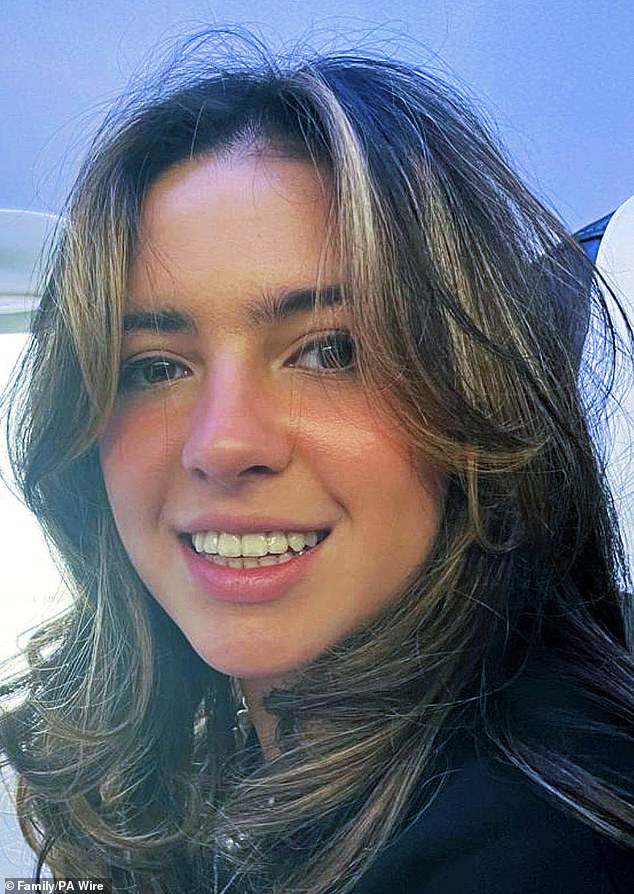
Grace O'Malley-Kumar was a university student in Nottingham
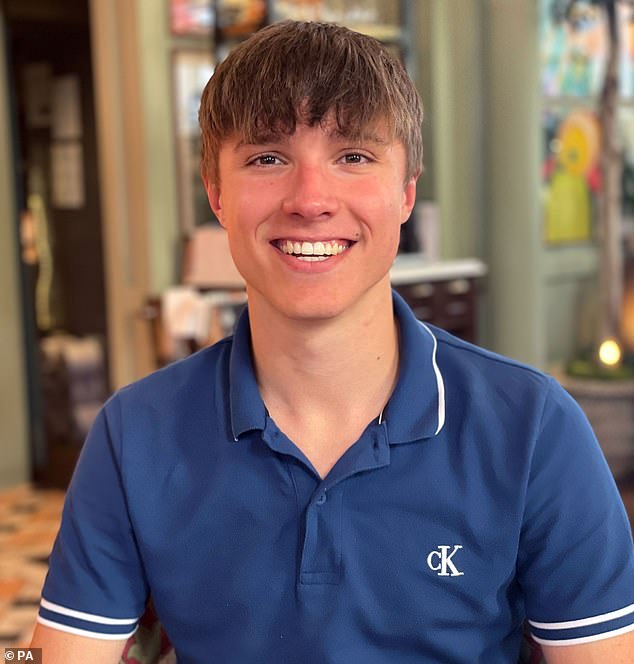
Barnaby Webber - known as Barney - was walking with his friend, fellow 19-year-old Ms O'Malley-Kumar when they were attacked
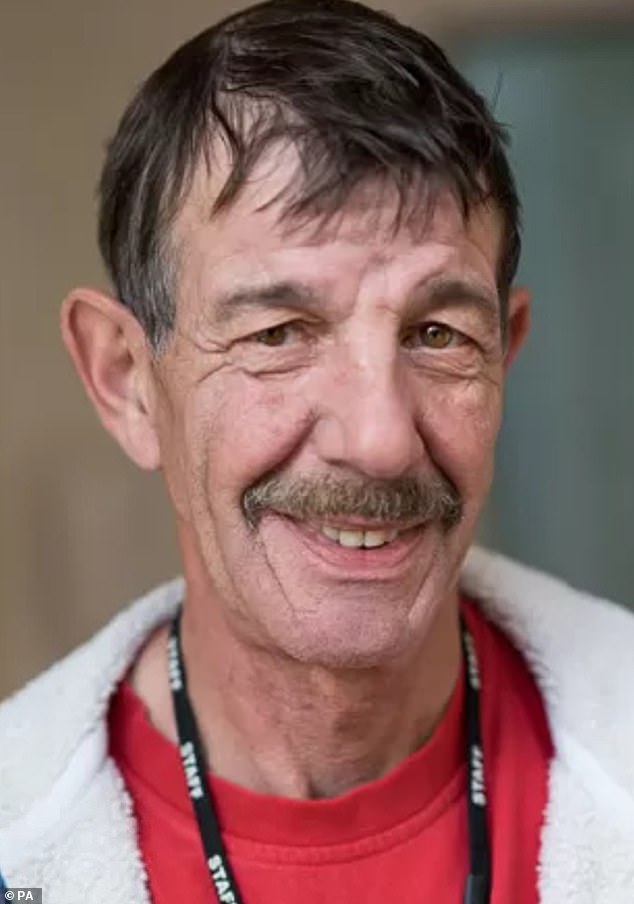
Ian Coates, a caretaker, was ambushed and killed in another attack
Calocane's family said he should have been on slow-release anti-psychotic injections, 'whether or not Valdo liked it'.
The inquiry is expected to last for four months, with a final report due back in May next year.