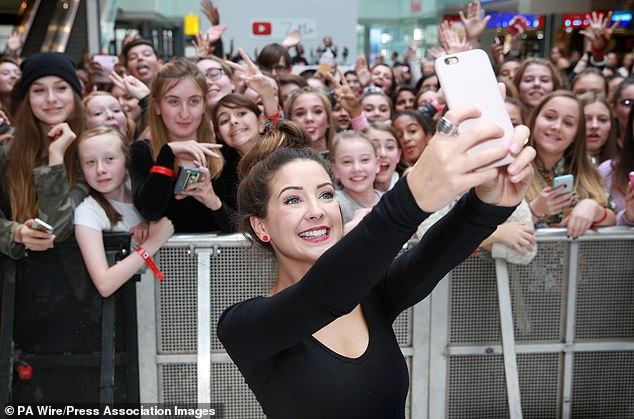
Zoella is smiling at the camera, her bedroom softly glowing with fairy lights. It’s 2012 and the Brighton-based beauty influencer – real name Zoe Sugg – is one of the most powerful forces on social media. But this is not just another make-up or hair tutorial. This, the 22-year-old warns, is something new.
Hinting that she is about to reveal a side of herself we rarely see, she jokes about her ‘scary alter ego’, before admitting: ‘I’ve never really addressed this issue in front of hundreds of thousands of people.’ She takes a deep breath and confesses to millions of subscribers that she suffers from… anxiety.
Zoella talks frankly about over-thinking, suffering panic attacks and anxiety so overwhelming she sometimes cannot get out of bed. That 20-minute video has since had more than four million views.
Back then, more than a decade ago, it felt like the beginning of a whole new side to online fame: Influencers being vulnerable.
Today, girls share everything online. On TikTok, they give tours of their messy ‘depression rooms’, showing dirty underwear and plates of half-eaten food (‘it started to smell six months ago lolz’).
They share traumatic childhood ‘storytimes’ about sexual abuse and suicide attempts while styling their hair and applying skincare: ‘Get ready with me while I tell you about the time my nan tried to kill me, my mum and my dad.’
Some set up cameras to record live panic attacks, others post pictures from their mental health diagnosis reveal parties: ‘Cutting the cake… it’s pink and blue! Bipolar 2 and OCD.’
For teenagers today, this sort of sharing isn’t shocking. It’s everywhere. But women my age – mid-twenties – have watched it unravel gradually.
Zoella, popular for her shopping haul and hair tutorial videos on YouTube, posted a 20-minute monologue about her anxiety that has since received more than four million views
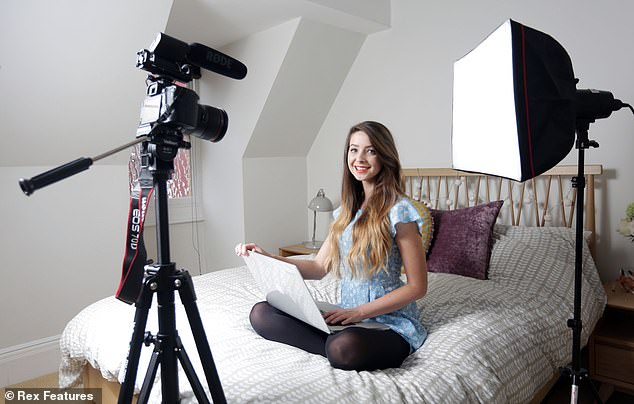
‘I’ve never addressed this issue in front of hundreds of thousands of people,' she told fans
Something has gone terribly wrong for Gen Z. The generation speaking loudest about self-love and body positivity is suffering from record rates of eating disorders, battling body dysmorphia and driving demand for cosmetic surgeries.
The generation most open about its feelings is facing the worst mental health crisis on record.
The generation with infinite dating options is having the least sex, dating far less and losing faith in love itself. Young women raised on slogans like ‘the future is female’, and told they could achieve anything are anxious, risk-averse and afraid of the future.
It’s too easy to think this is all about the evils of social media – though Instagram, TikTok and the rest play their part.
What dawned on me as I began thinking and writing about this during the pandemic was that although the insecurities girls suffered from and shared with me – about love, their looks and their future – were age-old, they were unfolding against a backdrop that was unbelievably abnormal.
Girls’ anxieties are not just being amplified but being exploited like never before. Every experience of girlhood is intruded upon by the market – the solution to every anxiety is a purchase. Girls are being taught that they can buy their way out of bad feelings, buy their way into belonging and buy their way to empowerment.
Their entire lives have been commodified. The second a girl feels anxious, insecure or alone, corporations rush in. They convince her that the only way to understand herself is through the guidance of experts, the instruction of influencers, the payment of professionals.
She is made to feel ugly and worthless and sick, before being sold a conveyor belt of solutions that only trap her in a cycle of dissatisfaction and consumption. She is being made to feel broken so she can become a lifelong consumer.
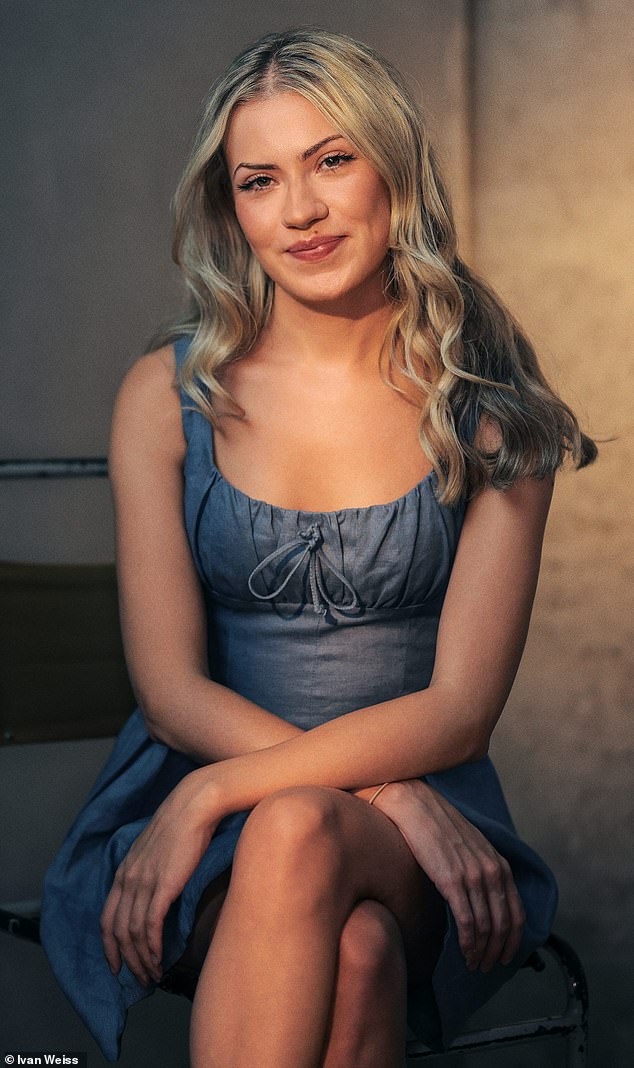
Even bad habits are being medicalised, such as being rude, messy or lazy, writes Freya India
A lot of people are making a lot of money out of exploiting our vulnerabilities – and it’s time it stopped. We need to take back our privacy, to take power away from the advertisers and predatory corporations that exploit young women on social media, even selling them medication if they express anxiety.
My hope is that young women refuse to be treated like a product, to be rated and reviewed through ‘likes’ that purport to assess our beauty or popularity.
Most urgently, we need to stay away from social media companies encouraging us to ‘open up’, knowing the more shocking the content we post, the more likely it is to gain traction. It has been disastrous for our mental health.
Since the early 2010s, Generation Z (those of us born between roughly 1996 and 2011) has been falling apart.
Rates of anxiety disorders, depression, self-harm and eating disorders have soared. In the US, nearly one in three teenage girls seriously considered suicide in 2021, up from 19 per cent a decade earlier, and double the rate for boys. Suicide rates for girls as young as ten have also risen in recent years.
I grew up watching teenage girls sharing images of their skeletal bodies online under hashtags like #bonespo and #thinspiration, and graphic pictures of cuts on arms and legs.
And so young! A 14-year-old girl was behind ‘depression and disorders’, one of Tumblr’s biggest self-harm blogs a decade ago. She shared personal stories about cutting, suicide plans and even tips on how to self-harm, inviting followers to send in confessions.
One of the posts on her blog included an image of a wrist marked with dotted lines: One horizontal labelled HOSPITAL, and one vertical labelled MORGUE with text that simply read ‘cut deeper’. There was also photo of pills arranged with labels: One pill for ‘sleep’, two for ‘deep sleep’ and a pile for ‘morgue’.
In a typical TikTok from 2021 – which has had more than seven million views – a young woman paces up and down. ‘I’m having a panic attack, uh, currently,’ she says breathlessly. ‘I’m literally shaking.’
Piano music starts to play. ‘Like, hi, I don’t know how to calm myself down… and I’m sweating, um, really bad.’ She shows her armpits to the camera. ‘I don’t know what to do.’ It’s accompanied by the hashtags #crying, #shaking, #anxietyattack.
In 2020, TikTok launched its #SpeakYourMind campaign for Mental Health Awareness Week, with the aim of ‘encouraging people to share day-to-day challenges’ and send ‘virtual hugs’ to those struggling. That same year, two powerful forces collided. As lockdowns forced us to stay home, TikTok exploded. In the first quarter of 2020, TikTok was downloaded more than 315million times, a record for any app.
Meanwhile, in-person therapy was becoming harder to access and was in much higher demand. That gap glimmered with opportunity. Soon every type of mental health influencer imaginable was on TikTok and the more extreme they were, the more engagement – and revenue – they got.
Complex conditions were suddenly reduced to clickable content. Videos with titles like ‘signs a girl might be autistic’ and ‘seven signs you may have ADHD teenager edition’ started trending, and symptoms became vaguer.
Popular videos often ‘diagnose’ ordinary problems and personality traits. Feel misunderstood? TikTokers suggest you might have ADHD. Bad at eye contact? Could be autism. Watch the same TV shows over and over? That might be an anxiety disorder. Replay the same songs in your head? Sounds like neurodivergence.
Some influencers make these conditions sound fun and quirky. Neurodivergent has become ‘neurospicy’ or ‘neurosparkly’, while ‘neurotypicals’ are boring. TikTokers call themselves ‘hotistic’ (hot and autistic).
Even bad habits are being medicalised. Being rude, lazy or messy can be seen as symptoms, out of our control. Companies have picked up this sort of messaging as a sales strategy. In 2019, around 7,700 women in the UK took one healthcare provider’s online test for ADHD. By 2021, that number had soared to 254,400 – an increase of 3,200 per cent.
Algorithms can drag girls down different paths. Imagine you are a teenage girl who starts watching TikToks about healthy eating. Maybe you start with ‘what I eat in a day’ videos, where influencers share recipes and meal plans. But soon TikTok starts recommending videos on how to restrict calories, before giving you tips on how to hide bulimia.
Keep scrolling and you can end up watching influencers like Eugenia Cooney, a YouTuber who seems to be slowly starving herself in front of millions and is so dangerously thin that her fans have called the police.
Or maybe you go from finding out what gender identity is to being told by TikTokers that being ‘forgetful’ and ‘always tired’ are symptoms of gender dysphoria (yes, an actual TikTok), all the way to watching influencers showcase their mastectomy scars, post videos about their vaginoplasty ‘journeys’, and wonder whether you need surgery (‘Signs a labiaplasty might be right for you’).
As far back as the 2010s, the problem wasn’t only that mental health issues became online trends. Personal struggles were also commodified, used to sell us products and services.
‘I experience it. I’m very normal. And like, I understand you. Like I can connect with you,’ says Kendall Jenner, sister of Kim Kardashian, in a 2021 post. The big reveal – which fans guessed was a major mental health battle – turned out to be nothing but an ad. Kendall’s ‘brave and vulnerable’ story was that she had acne as a teenager. And her major announcement, a sponsorship deal with skincare brand Proactiv.
Kardashian herself has advertised an appetite suppressant lollipop to her 110million Instagram followers – and was condemned as sending a ‘toxic’ message to girls.
While mental health influencers were on the rise, other influencers realised that vulnerability got views, and raising awareness could be a sales strategy. Personal struggles segued into paid sponsorships.
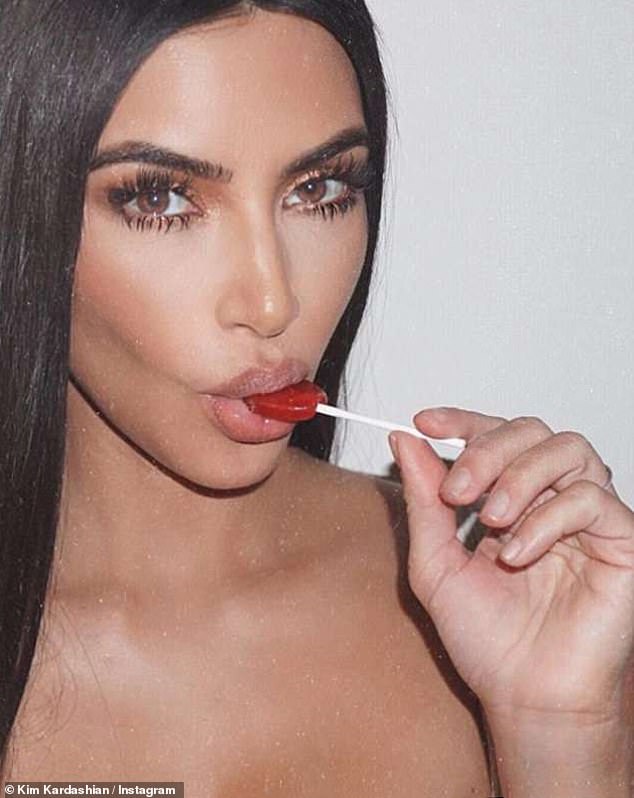
Kim Kardashian promotes her appetite-suppressing lollipops in an Instagram post
Stories about bad days and struggling to get out of bed became ads for make-up (‘What I’m discovering during this rough patch that I’m going through is that there are a lot of really awesome things happening at the same time… one of those things is that I am working with bareMinerals…’).
Influencers even started selling mental health merch. In 2016, Detroit-based Demetrius Harmon, who has more than a million followers on Instagram, launched his $60 (£45) ‘You Matter’ hoodies to help people ‘speak up about their feelings and be heard’. The sleeves were embroidered with the words: ‘Although I feel weak I known I am strong’ written across the wrists to cover self-harm scars.
Us teenage girls were inundated with influencers sharing their life-changing diagnoses, selling solutions to our anxiety, telling us that this product, this app, this fitness routine would fix us.
For anxious girls like me, getting help became scrolling through a stream of short-term, superficial solutions: Anxiety blankets, calming crystals, manifestation candles, positive affirmation apps, CBD bath bombs, anxiety gummies and ‘mindful breathing’ necklaces.
This soon went beyond mindless consumerism. Around ten years ago, once girls had been convinced something was wrong with them, influencers began selling more serious solutions. While some girls were pushed towards cosmetic procedures and skincare by beauty influencers, others were being funnelled towards therapy – therapy that was more accessible, more convenient and less reliable than ever before.
The first wave of therapy platforms began to come online. Talkspace, founded in 2012, began as a website providing therapy via email. In 2014, it launched a mobile app, allowing users to access therapy via text, video and voice messaging. The following year, it introduced a service enabling users to message a therapist 24/7 from the comfort of their rooms.
Another platform, BetterHelp, founded in 2013, began by offering therapy via email, before expanding to video calls and texting. By 2016, it had more than 800 licensed therapists and 200,000 users. It later launched its own mobile app and introduced a 24/7 ‘therapy room’ where you ‘can message your therapist at any time’.
Therapy platforms partnered with influencers to drive sign-ups and now, ads for online therapy feel impossible to escape.

Cooking tutorials, political shows and chatty podcasts frequently featured BetterHelp sponsorships. Reasons to go to therapy are also increasingly vague. What used to be regarded as common life stressors have become reasons to consult a professional.
In recent years, there has also been a rapid rise in AI therapists. Girls can open up to the likes of Wysa, the AI penguin ‘happiness buddy’ which is both a ‘friendly and caring chatbot’ and ‘everyday therapy in your hands’, or to large language models like ChatGPT.
By early 2025, there were 16.7million posts on TikTok about using ChatGPT as a therapist, with girls confessing that they give it ‘literally all the details as if I were yapping to a girlfriend’ and feel like it’s ‘the only person’ they can reveal their ‘deepest feelings to’.
Companies and influencers also began putting us on a conveyor belt toward mental health medication – that we might not actually need. As I entered my teens, girls on Tumblr were romanticising pills and prescriptions. Within a few years, medications like antidepressants felt less like a last resort and more like accessories. And, while previous generations may have hidden their pills, mental health influencers encouraged girls to post theirs.
Dr Alex George, a former A&E doctor and contestant on the reality TV show Love Island, started a campaign in 2010 called #PostYourPill, urging fans to post a picture of their mental health medication on the first day of every month. ‘If you feel you can, join me,’ he told his followers, ‘to take a stand against medication stigma'.
#PostYourPill was hugely popular. Thousands shared the hashtag, posting selfies with pills on their tongues and filming their medication. Within a month, videos with the hashtag had more than 500,000 views on TikTok.
But it’s hard to find the stigma Alex is fighting against: On TikTok, girls casually refer to their SSRIs (Selective Serotonin Reuptake Inhibitors, a common form of antidepressant) as ‘silly little pills’, call brain zaps – a side-effect of SSRI withdrawal, often described as feeling electric jolt sensations in the head – ‘the zappies’ and put their mental health medication in Disney-themed sweet dispensers and advent calendars.
They use phone cases saying ‘Little Miss Sertraline’ (a widely prescribed antidepressant) and ‘hot girls take their psych meds’, while on marketplaces like Etsy, girls can buy Prozac-shaped pillows and ‘stay sexy, take sertraline’ artwork.
All while there are ongoing debates about the safety, and even effectiveness, of antidepressants as the theory that depression is caused by an imbalance of neurotransmitters like serotonin is controversial.
Even if they do help some girls, SSRIs still come with serious risks. These drugs carry a ‘black box’ warning – the US’s Food and Drug Administration’s strongest caution – due to increased risk of suicidal thoughts and behaviours, especially among adolescents. (I think about this as Dr Alex assures his TikTok followers that ‘medication stigma is stupid and it’s old-fashioned’.)
Even here in the UK, a survey by a mental health charity in 2022 found that 37 per cent of teenagers aged 12 to 18 had been prescribed antidepressants at some point in their lives – roughly one in three.
There are signs that some girls and young women are beginning to break free, to push back against over-diagnosis. Online, criticism of the mental health industry and the commodification of our inner lives is mounting. Backlash against platforms like BetterHelp is growing and young women are speaking out about the dangers of antidepressants and other psychiatric medications.
Some are realising that social media convinced them they were mentally ill, others that the drugs they thought would help only made things worse. More are refusing to be boxed in by labels, recognising, at last, that the only problem they ever had was being human. I hope girls and young women will come to see that their struggles make sense and will stop punishing themselves for feeling unhappy.
I want them to know the truth: That many of us have been misled, manipulated and exploited in our most vulnerable and formative years, and that the companies behind this do not care about our empowerment or wellbeing or connection – they care about profit.
Taking a long, hard look at the situation, it seems the messaging my generation grew up with was more focused on selling us solutions than genuinely helping. Yes, we have more treatment options available than ever before. Yes, we are thinking more about our mental health. But now some of us can’t stop.
© Freya India, 2026 l Adapted from Girls®: Gen Z And The Commodification Of Everything by Freya India to be published by Swift Press on February 26, priced £20. To order a copy for £18 (offer valid to March 7; UK p&p free on orders over £25) go to mailshop.co.uk/books or call 020 3176 2937.