Anthony Albanese has dined with a sour look on his face alongside King Charles III and Queen Camilla in the Caribbean as Australians reel from another interest rate rise, while his Finance Minister calls for credit for Labor's economic
'hard work'.
The jarring contrast comes as households confront soaring bills and a fifth rate hike this year, pushing mortgage repayments further beyond the reach of struggling borrowers.
Yet Finance Minister Katy Gallagher said the government deserved an 'acknowledgement of the hard work we have done over the last four years' to keep spending down.
For families desperately trying to balance their budgets before Christmas, the figures tell a punishing story.
Canstar modelling shows a borrower who took out a $600,000, 30-year mortgage when Labor came to power in May 2022 would initially have paid $2,399 a month.
Once the latest hike takes effect, that repayment will reach $4,056, an extra $1,657 every month, or $19,884 a year.
The blow from interest alone is even more confronting when calculated on an unchanged balance.
On a $600,000 mortgage, a rate increase from 2.5 per cent to 6.74 per cent adds $2,120 a month, or $25,440 a year, in interest alone. That comparison holds the balance steady and excludes principal repayments.
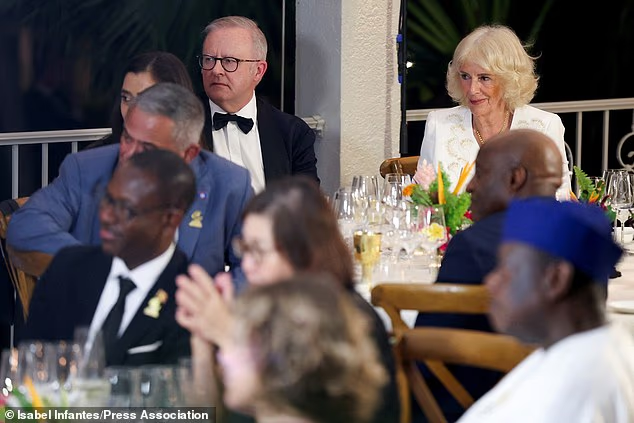
Anthony Albanese (left) was sitting with Queen Camilla (right) at a dinner on Wednesday
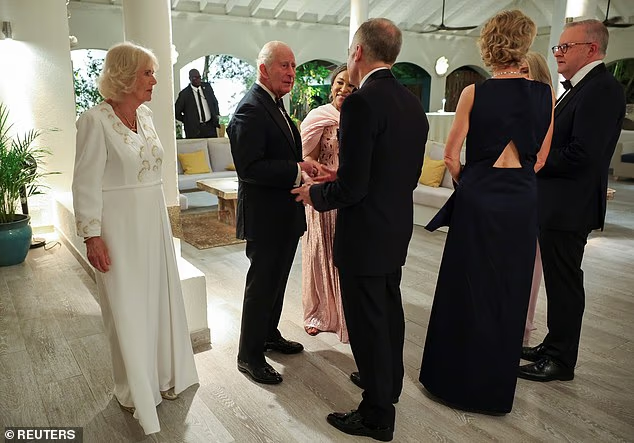
Albanese (right) is in Antigua attending the Commonwealth Heads of Government Meeting
As borrowers dig deeper to keep a roof over their heads, Albanese joined Commonwealth leaders for an official dinner and reception in Antigua.
Accompanied by his wife, Jodie Haydon, the Prime Minister met King Charles III and Queen Camilla at the Commonwealth Heads of Government Meeting, alongside leaders including Canadian Prime Minister Mark Carney.
Guests were served a carefully curated Caribbean menu, beginning with avocado, green beans, quail eggs and cherry tomatoes with pesto dressing.
The main course featured mahi-mahi cooked en papillote with local herbs and aromatics, accompanied by a butter sauce, seasonal vegetables and new potatoes.
An Antiguan black pineapple tarte tatin with vanilla ice cream followed, before hand-painted chocolates, paddling duck bush tea and coffee rounded out the meal.
Wines were sourced from across the Commonwealth, including the United Kingdom, New Zealand, Australia and Canada.
Back home, the government has repeatedly pointed to supply chain disruptions, overseas conflicts and energy price shocks as major drivers of inflation.
Judo Bank chief economic adviser Warren Hogan said under a worst-case scenario, six more interest rate rises may be necessary, taking the cash rate beyond six per cent.
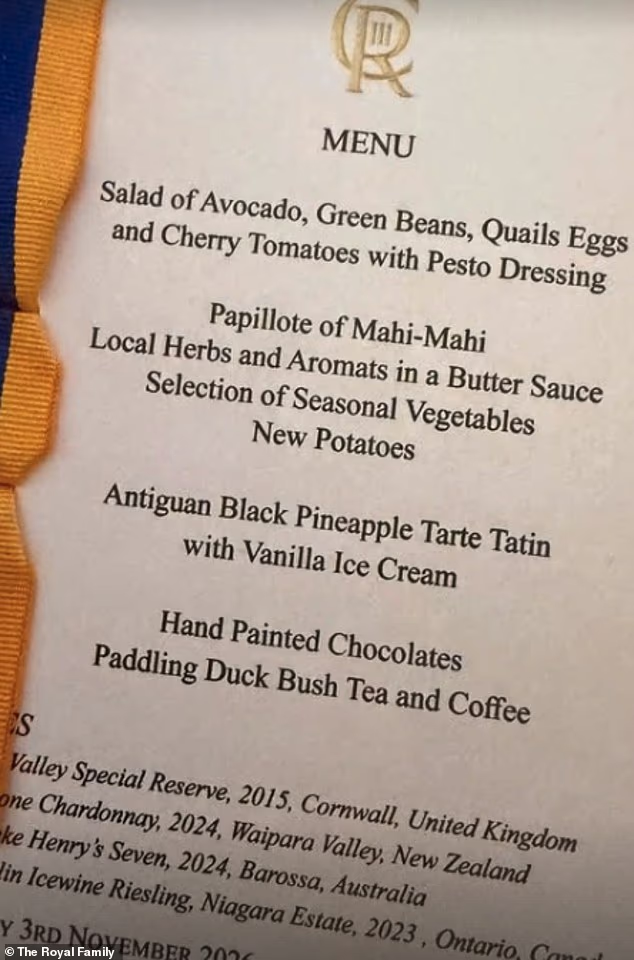
Guests at the CHOGM dinner were served a carefully curated Caribbean menu (pictured)
He told ABC's The Business interest rates may be too low to effectively combat inflation and said he was forecasting two further increases on top of the widely expected rate rise on Tuesday.
'If inflation remains stubborn, who knows how high we'll have to go,' he said.
'The worst-case scenario for us would be having to get the cash rate up to where the RBA took it just before the Global Financial Crisis when we last had an inflation problem, and that was a cash rate of 7.25 per cent.
'We'd definitely have a recession, there's no two ways about that.'
When pressed about his comments, Reserve Governor Michele Bullock declined to say how high rates could climb and said the RBA would continue tightening monetary policy for as long as necessary.
'Well, we will need to raise interest rates to the extent that we need to, to get inflation down,' she said.
'I don't know how high that is. I know we've done five hikes this year, and that has still got another 12 months to play through. As I've already said, that still has another 12 months to play through.'
When confronted about his comments by the Daily Mail, Bullock said economists remained divided over the future direction of the economy.
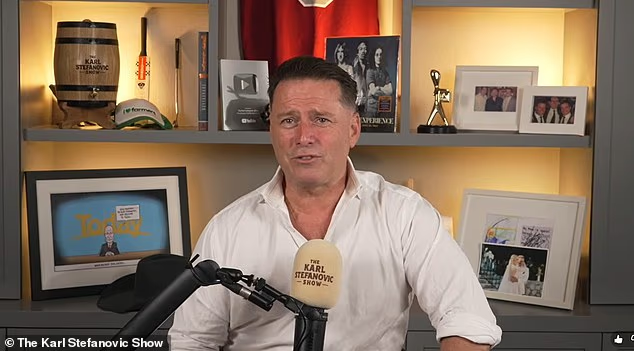
Broadcaster Karl Stefanovic called the latest rate rise a failure by our politicians
'So, will we need more? I don't know. Warren Hogan is one voice. There are other voices saying, actually, we're heading into recession territory and we're going to have to start dropping rates when we've overdone it.
'One thing all these people have in common is that they are all entirely certain. I am not, and I admit that.
'We do our best with our forecasts. We have to do forecasts because we don't want to be backward-looking. We have to be looking forward. But they're uncertain, and things change.
'Back in February, we weren't expecting a conflict in the Middle East. So things happen.
'I'm not going to respond directly to the question of how high interest rates can go. I'd only say that we will do what we need to do to get inflation down.'
The RBA acknowledged the economy is slowing but argued persistent inflation and mounting global risks, including the war in the Middle East and rising oil prices, warranted another increase.
'The economy is slowing, housing prices have fallen significantly and the unemployment rate has risen,' the RBA said in its statement.
'Employment is expected to continue to grow, but the unemployment rate is projected to rise by more than expected in the August forecasts.
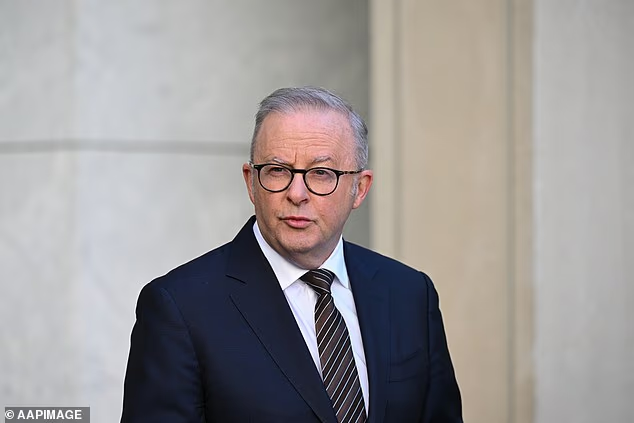
A borrower with a $600,000 mortgage who was paying 2.5 per cent when Anthony Albanese came to power in May 2022 would now be paying about $2,120
'Inflation is now forecast to remain elevated through much of 2027 and is not expected to reach the top of the 2-3 per cent target range until late 2027, around three quarters later than previously forecast.'
Those concerns are already showing up in the labour market, with the latest figures from the Australian Bureau of Statistics showing Australia's unemployment rate has reached 4.7 per cent, its highest level in five years.
Tuesday's rate rise decision was not unanimous, with Reserve Bank board members split 6-3 on whether to lift rates.
REIA's latest Housing Affordability Report, covering the June quarter of 2026, found that average home loan repayments absorbed 50.9 per cent of median family income, with monthly repayments up 12.4 per cent over the year.
Compare the Market economic director David Koch said the burden on homeowners was becoming increasingly difficult to bear and called on governments to stop spending.
'The Reserve Bank warned us that this could happen if inflation didn't show some sign of stabilising or easing - despite the fact that consumer confidence is almost at a record low, business confidence is at record lows and unemployment is increasing,' he said following Tuesday's decision.
'What is really hard to see is that homeowners are doing all the heavy lifting by shouldering these rate hikes, but to sympathise with the RBA, this is really the only lever they've got.
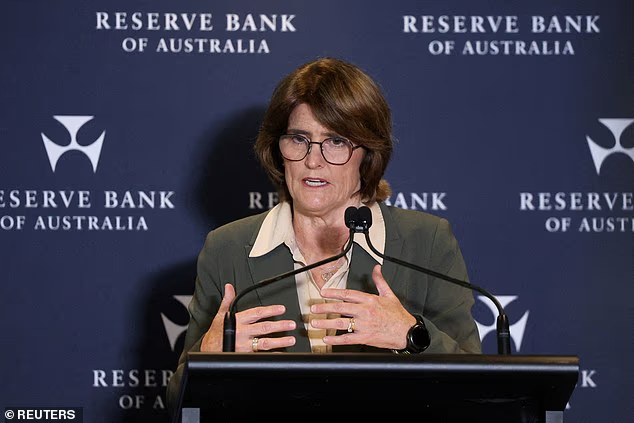
Michele Bullock (pictured) warned that inflation would remain outside of target till 2028
'That's why I think governments have got to get on board and start helping us fight inflation. They can't just continue being their own island, spending up big and fuelling demand. And that's governments at all levels: local, state and federal.'
Broadcaster Karl Stefanovic called the latest rate rise a failure by our politicians.
'The quality of life we've worked generations to build, the fair go that we've lived and breathed for generations is being systematically crushed and let's be frank about who got us here,' he said.
'Right now, not a single elected person in government can look any of us in the eye or hold their head high.'
While Stefanovic highlighted how inflation was being pushed up by international conflicts causing energy shocks, he said politicians had already borrowed to much, making it harder for ordinary Australians to weather the storm.
'The cold hard reality is that the last two governments, regardless of the colour of their political jerseys, have spent their way into an absolute abyss, states included,' he said.
'They've borrowed against our future to buy votes in the present, leaving us exposed to the elements when the economic cycle turned.'
Stefanovic said ordinary Australians and younger generations would be left footing the bill for the 'political cowardice and short-sightedness' of today's leaders.
'This road is downright brutal for a lot of good people,' he said.
'Let's drop all the jargon and spin coming out of Canberra and the Reserve Bank because if you're sitting at your kitchen table right now, looking at another rate hike, looking at a power bill you literally can't pay, and wondering how on earth you got here, you don't need an economics lecture.'
Source link