Party conferences are rock concerts for political anoraks. Gathering at a corporate arena or cultural venue to watch your leader put on a show.
Having to endure hit-and-miss warm-up acts in the form of promotion-seeking MPs with no trace of personality and MPs with too much personality to have a chance of promotion.
Members and activists can rub shoulders with the like-minded, whoop and clap for all the old hits, and there’s even a merchandise stall if they fancy remortgaging their semi-detached to pay for a party-branded reusable water bottle.
In short, it’s Hell – with worse parking arrangements. There are, however, some merits to these conclaves of the ambitious and the malicious and one of them is the opportunity to gauge the relationship between a UK party leader and their Holyrood equivalent.
There are tells: tone, body language, and word choice in speeches. Political hacks love nothing more than poring over the theatrics like Kremlinologists trying to figure out which comrade is next for a bump up the ladder and which is about to get dunted out the window.
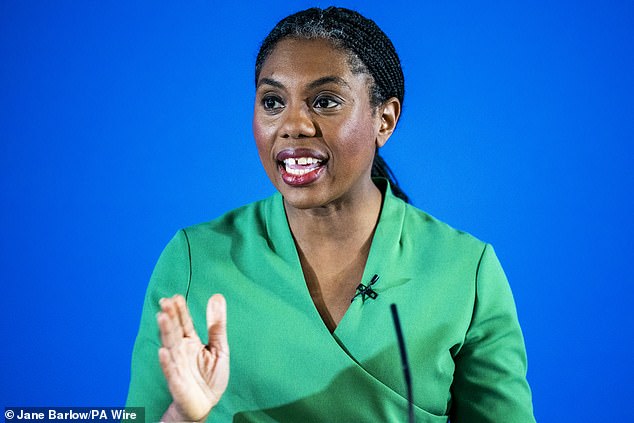
At the Scottish Conservative conference, it was hard to identify any splits between Kemi Badenoch and Russell Findlay. Both spoke with confidence, and in particular Badenoch who continues to demonstrate resilience in the face of daunting opinion polls.
To her critics, this is proof she doesn’t get it and should make way for someone able to capture the populist mood of the moment. (A bold proposal when your party isn’t exactly brimming with leadership material, populist or otherwise.)
To her admirers, though, she is made of sterner stuff than most and, far from oblivious to the dire fortunes of her party, it is her leadership that is holding the Conservative coalition together.
Kemi Badenoch rallied the troops at the Scottish Conservative Party conference
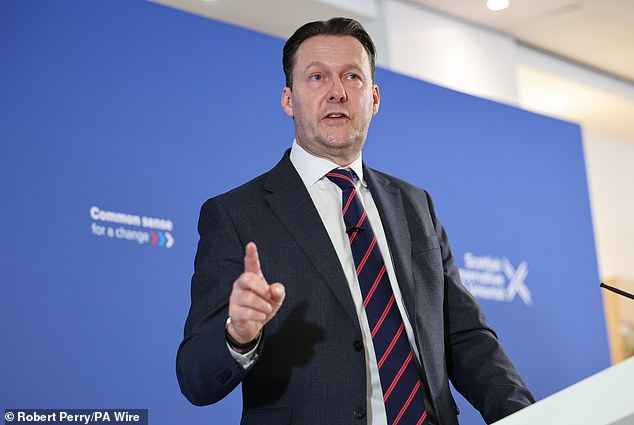
Russell Findlay has faced a tough run of polls since becoming Scottish Conservative leader
There are parallels with her Scottish leader. Findlay has faced a tough run of polls since he succeeded Douglas Ross.
A conscious decision by the Scottish party to elect its first right-of-centre leader since the late David McLetchie, Findlay’s pugilistic, blue-collar conservatism was meant to keep Reform’s tanks off the Tories’ lawns.
Like Badenoch, he has been hindered by the legacy of 14 years in government in which the Conservatives managed to alienate much of their core vote with rising taxes, insatiable spending, and levels of immigration (legal and illegal) that made Tony Blair look like a Fortress Britain hardliner.
Their common predicament has likely shaped what is a solid working relationship. No UK leader wants a Scotland problem and the surest way to acquire one is to disrespect the Scottish leader.
David Cameron and Theresa May enjoyed a good working alliance with Ruth Davidson in large part because they approached her as a colleague rather than an underling. This stood in sharp contrast to the state of play under Boris Johnson when No 10 regarded the Scottish party with imperious indifference, when it regarded it at all.
There was a similar dismissiveness within the UK Labour leadership towards Kezia Dugdale during the Jeremy Corbyn years. Badenoch and Findlay demonstrate the value of cooperation. The opposite is painfully true of Keir Starmer and Anas Sarwar.
Labour’s general election gains in Scotland are attributable to neither man. Voters were incandescent with the Tories and wanted them out but also scunnered with the SNP after the gender wars and the rolling – or should that be scootering – catastrophe of Humza Yousaf. Labour was a means to an end.
It was only inside No 10 that Starmer became relevant to Scottish Labour’s electoral standing. The Prime Minister is a truly terrible politician, a middling human rights brief and even more middling Director of Public Prosecutions who is simply in above his head.
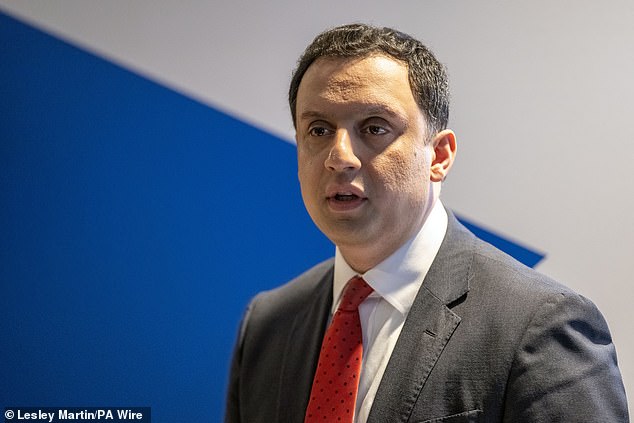
Scottish Labour leader Anas Sarwar recently called for the Prime Minister to step down
He is weak, indecisive, shifty, legalistic, and lacking in political vision or insight. He only won the leadership in the wake of the Corbyn disaster and only triumphed in the election because the Tories, having won an 80-seat majority in 2019, spent five years making the electorate sorely regret that decision.
His serial misjudgement, whether over the winter fuel allowance, accepting gifts from Lord Alli, or appointing Peter Mandelson US ambassador, has made him a liability for Labour, one the SNP is only too happy to exploit. (Labour partisans might object that anyone looking for awkward relationships between party leaders should start with John Swinney and the man who wants his job, Stephen Flynn. Unfortunately for Labour, their leader’s failings are on a magnitude several orders greater.)
Truth be told, not all of Scottish Labour’s difficulties can be ascribed to Starmer. If Sarwar was ever to obtain the keys to Bute House, he should have been able to establish a clear polling lead over Swinney’s SNP, something he has failed to do. Starmer might have sunk them, but the MV Scottish Labour was already taking on water.
Where Badenoch and Findlay project unity, Sarwar has called for Starmer to resign. His call weakened Starmer even further but it weakened Sarwar too: his intervention fizzled into nothing, proving his irrelevance within the Labour Party outside Scotland.
When Starmer and Sarwar stand together, the voters know they couldn’t be further apart. I doubt there will be much standing together between now and polling day. In Scotland as in most other parts of the country, Starmer costs votes and brings nothing.
Do these relationships really matter? Isn’t this all just personality politics and scuttlebutt?
No, these things do matter. A strong relationship between leaders can keep the ship steady, convince tired and pessimistic activists back onto the campaign trail, and better manage losses to head off panicked or precipitous responses. Mutual support can stiffen resolve and reignite determination.
With elections to Holyrood and English councils falling on the same day, there will be immense pressure on both Badenoch and Findlay to stand down.
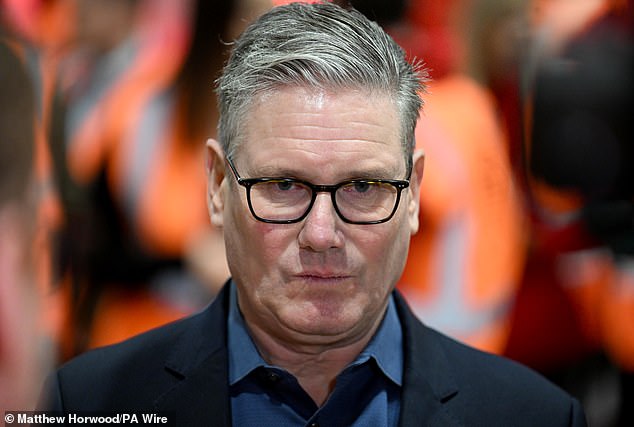
Keir Starmer weathered the crisis sparked by his appointment of Peter Mandelson as US Ambassador
If one has the guts to refuse and press ahead with party reform, it becomes easier for the other to do the same.
Sarwar and Starmer can offer each other no such solidarity or reassurance.
Within Labour, it will be every man for himself on the morning of May 8. Should Labour come third behind Reform, Sarwar’s position will be under threat and even if the party limps into second but with fewer seats than in 2021 the leader’s internal foes will sense an opening.
He can expect no favours from Starmer and nor can the PM hope for Sarwar’s backing if the local results in England prove especially bruising.
Leadership is a demanding vocation and it takes a certain calibre of person to meet the demands. Assertiveness, ideas, energy, stamina – these are all worthwhile qualities. But the ability to form relationships, to steer them through choppy waters, and make them mutually beneficial is an acutely valuable skill.
In managing ties between Westminster and Holyrood, a leader can prove themselves to be both self-sufficient and a team player, able to take their party where it needs to be taken but capable of taking others with them.
Despite gloomy poll numbers, the staunch allyship between Badenoch and Findlay gives the Tories some reasons for optimism. Things are bad but two leaders determined to turn the situation around offers some grounds for hope.
Sarwar and Starmer, on the other hand, serve only as a reminder that Labour is divided and cannot agree on the next steps for Britain. They might be at odds on leadership and strategy but in another regard they are as one: neither man can take Labour any further forward.