Four years ago today, on a cold wintery morning, the life of every person in Ukraine changed irreversibly.
And as Russian troops rolled into major cities and towns across the country, killing many civilians along the way, over seven million Ukrainians made the difficult decision to leave the country - and most of their possessions - and travel to safe countries elsewhere.
Many of those who left have settled in the UK using the Home for Ukraine scheme which allowed Ukrainians to move to Britain on a temporary visa.
Indeed, many of those who did choose to leave the country in 2022 believed the war would be short one especially after Volodymyr Zelensky's forces proved better than expected at repelling the advancing Russians.
But then a stalemate ensued and with that a trench warfare where soldiers from both sides fight deadly skirmishes over small areas of land and - while peace talks brokered by the USA are ongoing - an end to the conflict feels far away.
As the war has continued, those who left Ukraine have been rebuilding their lives abroad and for families with young children they now face a strange reality.
With little memories of their lives in Ukraine, Britain has become the only home many of these children have known leaving their parents with a conundrum that if the time should come to return to their homeland it will be a place many of them don't remember.
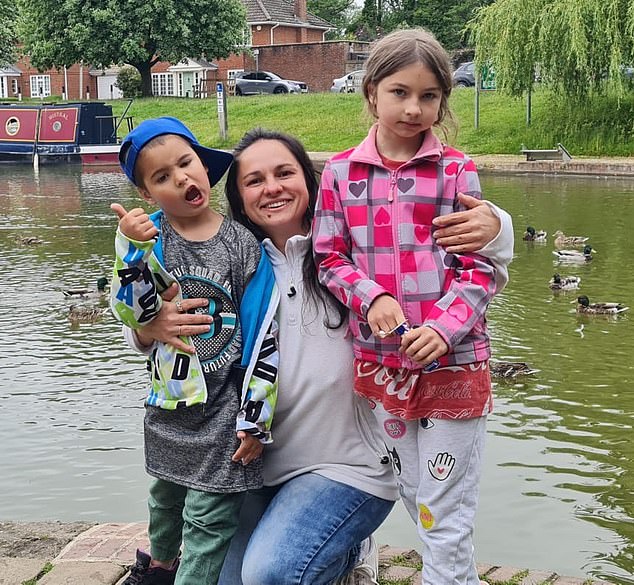
Yevgenia Ponomarova, a 37-year-old from Zaporizhzhia in southeast Ukraine who now lives in Hungerford, is one mother who would prefer to stay in Britain going as far to claim her children are now more British than Ukrainian.
Yevgenia Ponomarova with her two children: Nikita (left) and Sophia (right) in Hungerford, Berkshire, where the family settled after fleeing the war in Ukraine
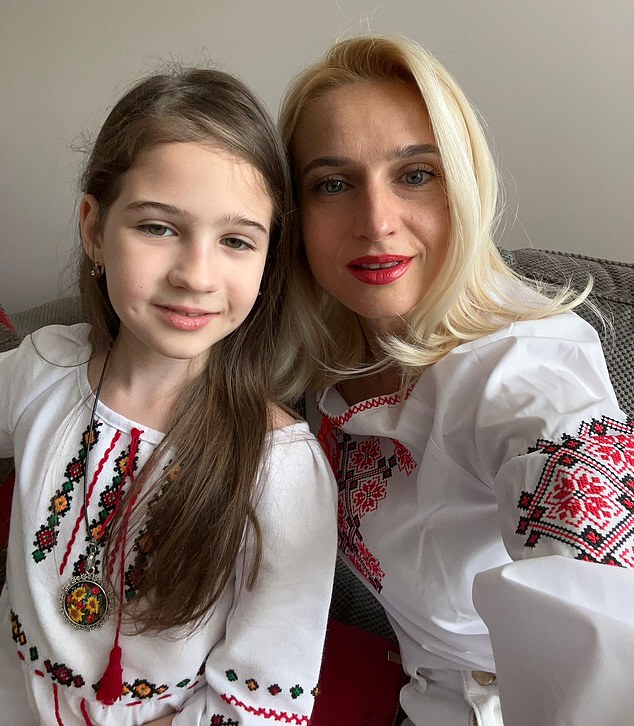
Kateryna Kolesnikovych - a 42-year-old business consultant and startup mentor - who moved from Kyiv to Hammersmith in May 2022 with her daughter Polina (left)
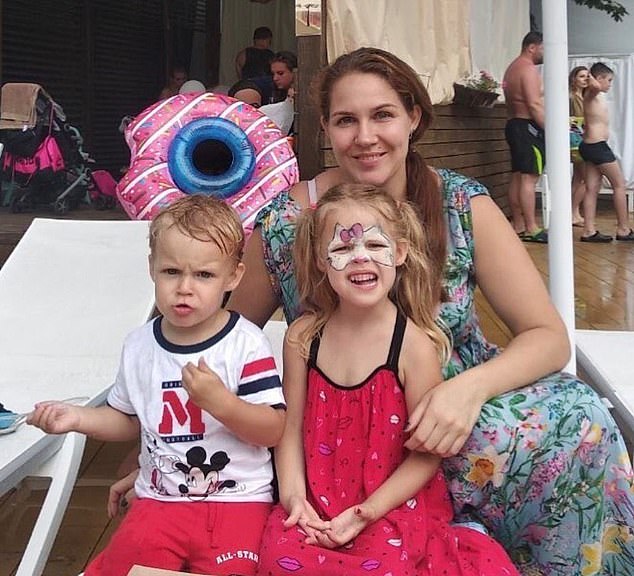
Iryna Rizak with her two children: Kateryna (right) and Boris (left) in Ukraine before the war. Before Russian invaded Ukraine, Mrs Rizak worked for the Ukrainian Parliament in Kyiv
At the start of the war Mrs Ponomarova accompanied by her husband Grisha and their two children - Nikita who was four at the time and Sophia who was seven - left their flat in Zaporizhzhia and travelled to stay with family on the outskirts of the city.
'When we travelled to my mother-in-laws and we thought this would be temporary because at the start of the war, like a lot Ukrainians, thought it was fake and not real but of course this was not the case,' she told the Daily Mail.
'On March 3 we made the decision to leave Ukraine and this all happened over the course of an hour because we had to make it to the last evacuation train from Zaporizhzhia. I remember my emotions at the time I was shocked and I had such brain fog trying to remember all my belongings.
'When we got to the train we had no idea where we were going and we said goodbye to my husband with no idea when we would see him again or if this would be the last time.'
While Mrs Ponomarova said the journey was 'like an adventure' for her two children she described the situation as 'surreal'.
'I couldn't believe it was real. I tried to be brave and face the situation because I had nothing but me and my children,' she said.
They travelled by train to Lviv, a safer city in western Ukraine, and then from there the family travelled by minibus to close to the Polish border before crossing into Poland by foot.
After three months living in Poland the family moved to the UK in June 2022. The family eventually settled in Hungerford where Mrs Ponomarova works at a local art gallery.
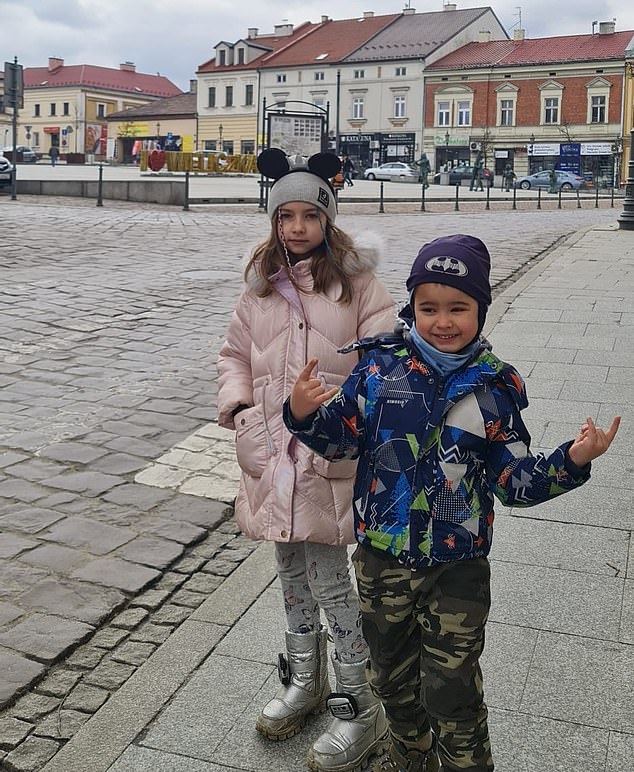
Mrs Ponomarova's children Nikita and Sophia in Poland where the family stayed for three months before they settled in the UK
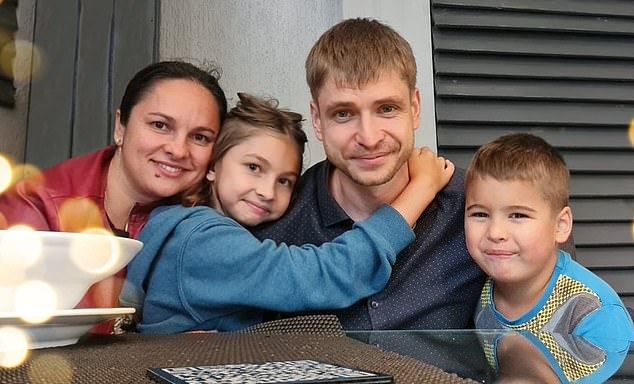
Pictured: Mrs Ponomarova with her two children and her husband Grisha who joined the family in Hungerford in 2023
While at first Sophia and Nikita struggled to fit in at school but with the help of a translator the children, now aged 11 and eight, are now trilingual speaking Ukrainian, Russian and English with Mrs Ponomarova joking they now speak better English than her.
After Grisha was reunited with his family in 2023, Mrs Ponomarova said they do not want to restart their life once again.
Sophia goes as far to say she 'loves' living in the UK while Nikita said he liked all the friends he had made here.
Mrs Ponomarova continued: 'They [Sophia and Nikita] have really settled into living in the UK. We still speak Ukrainian around the house but they are more British now than Ukrainian with their behaviour, their mentality, how they smile the whole culture.
'My heart and soul wants to be in Ukraine but because of my children I have to think about them and what future they will have there. So if we have the opportunity to stay here I would take it.'
Both the children have very little memory of Ukraine and have only returned to the country once in September 2022. Since then the family have remained in contact with their grandmother who lives in the now-Russian occupied region of Zaporizhzhia.
Sophia said: 'I remember my friends and family in Ukraine and I can remember playing on the playground close to our home. It was really fun.'
Mrs Ponomarova understands the reality of the family's situation and knows they may have to return to Ukraine.
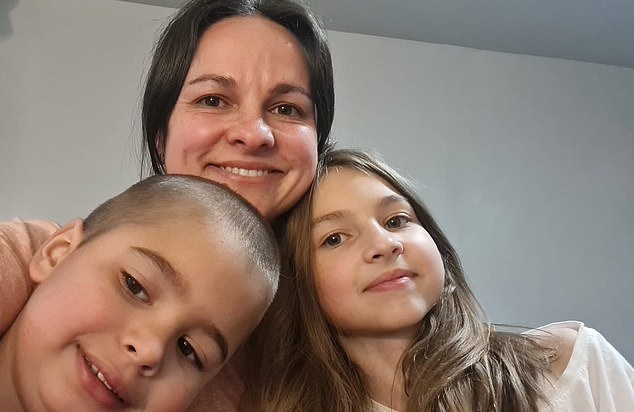
While at first Sophia and Nikita struggled to fit in at school but with the help of a translator the children, now aged 11 and 8, are now trilingual speaking Ukrainian, Russian and English
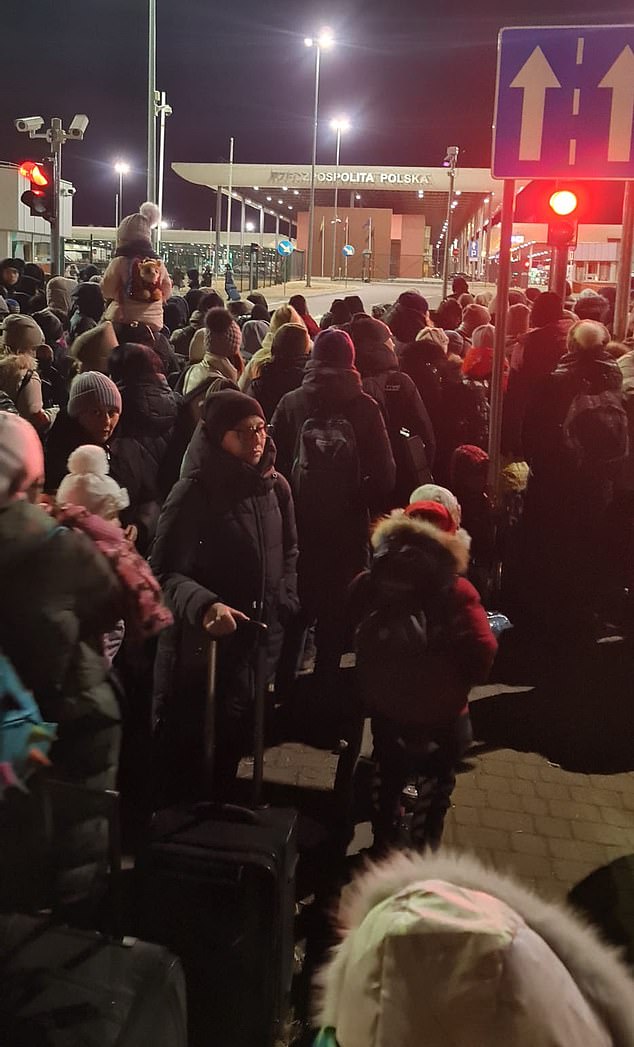
Mrs Ponomarova at the Polish border with fellow refugees in 2022. She said the journey was 'like an adventure' for her two children but she described the situation as 'surreal'
'It will depend on the government because our visa gave us two more years till 2028 but by then it will be six years since the war and a long time since we left Ukraine.'
Although Mrs Ponomarova would be keen to remain in Britain, Iryna Rizak is eager to eventually return to her homeland.
The 48-year-old is originally from Kyiv where she worked in the Ukrainian Parliament. She now lives in Amersham, in Buckinghamshire, with her two children - 10-year-old Kateryna and eight-year-old Boris.
Her husband, who Mrs Rizak wished not to be named, has remained in Ukraine for the duration of the war.
The family faced a long and turbulent journey to Britain after Mrs Rizak found herself separated from her then four-year-old son at the start of the war.
She said: 'My father has a hunting hobby and in February 2022 he took my son on a trip in the forest to the north of Kyiv and that's where they were when the war broke out.
'So while other families were trying to leave the city and were stuck in traffic jams we stayed at home.'
The grandfather and grandson faced a treacherous journey through the forests, while avoiding Russian troops, before they were eventually reunited with their family.
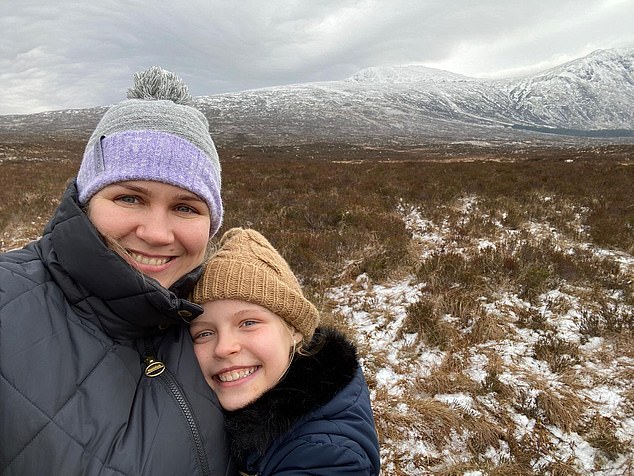
Mrs Rizak with her daughter Kateryna in the UK. The family faced a long and turbulent journey to Britain before they eventually settled in Amersham, Buckinghamshire
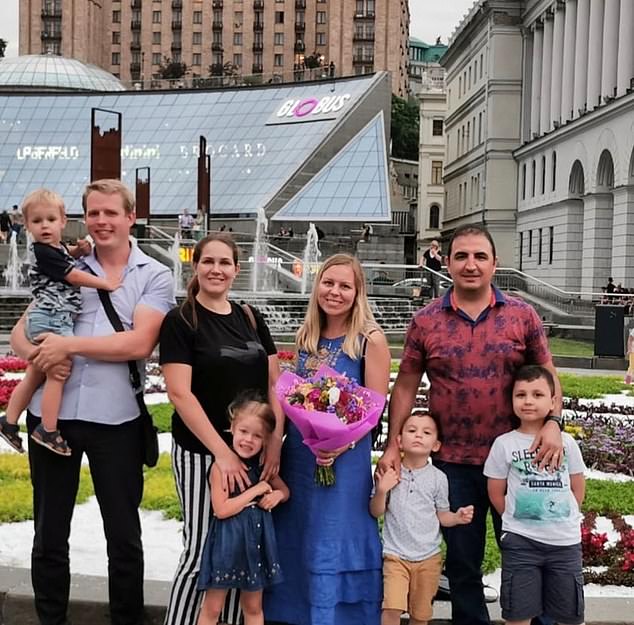
Mrs Rizak and her two children with family friends in Kyiv before the war. Mrs Rizak is eager to eventually return to her homeland
After that Mrs Rizak travelled to her summer house on the outskirts of Kyiv. Here the family lived in a makeshift underground bunker for a month with no electricity keeping the children entertained and distracted by reading fairy tales.
In March, Mrs Rizak made the difficult decision to risk travelling to Lyiv taking with her just a small bag of clothes and all her jewelry and valuables ready to barter for goods.
And from there, Mrs Rizak - accompanied by her children, her sister and her mother - said goodbye to her husband and boarded a train to Budapest.
'When we left Ukraine I had no emotion. I was just trying to survive,' she said.
From there the family first settled in the Netherlands before moving to the UK in August 2022.
Since they left Ukraine, Mrs Rizak and her children have been living apart from their father who stayed behind at the start of the war. They have kept in touch with in daily video calls.
'Of course they miss him a lot but they understand how lucky they are that their father is alive as we know families who have lost their fathers during the war,' the mother said.
Nearly four years on, Mrs Rizak said that her children remember little about their lives in Ukraine.
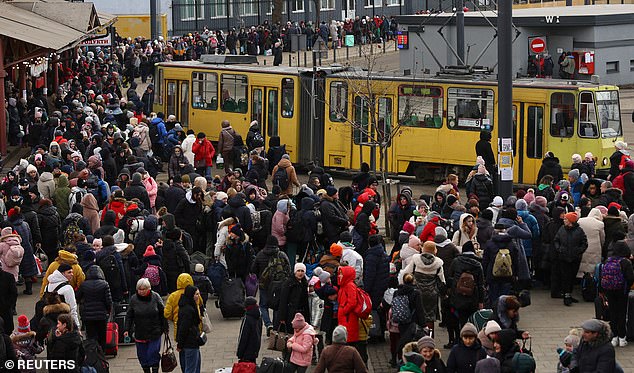
Refugees in Lviv in March 2022. That same month, Mrs Rizak made the difficult decision to risk travelling to Lyiv taking with her just a small bag of clothes and all her jewelry and valuables ready to barter for goods
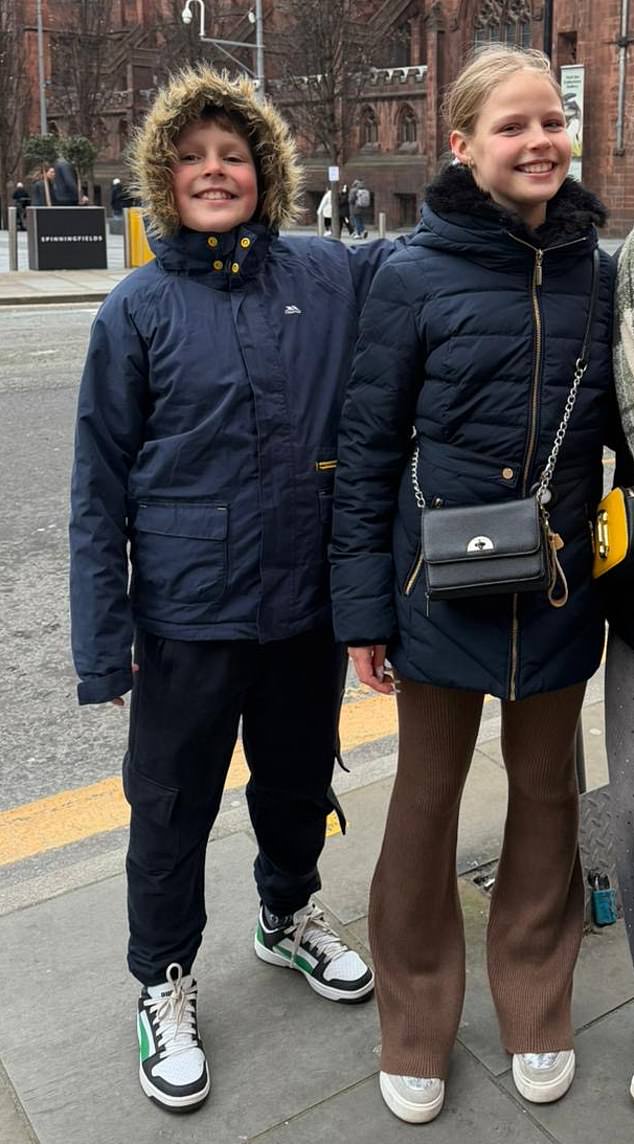
Boris and Kateryna in the UK. When the war ends, Mrs Rizak said she does eventually plan to return to Ukraine to be reunited with her husband. However, Kateryna and Boris are not so keen on moving back
Kateryna said: '[Ukraine] was really lovely. I remember we had our cousins who would come over and we had a big house and a garden and we would ride our bikes with our dad and we'd play fun games with him.'
Mrs Rizak said: 'My son doesn't remember much at all about Ukraine while my daughter remembers quite a lot from her time at school. They both know they are Ukrainian and they remember our home and their rooms and their relatives.
'They are both afraid to go back and still remember the danger of leaving Ukraine so it can be very stressful when we talk about going home.'
When the family first arrived in Amersham, Kateryna and Boris struggled to adapt to their new lives and most of all both children missed their father who still lives in Ukraine.
'When we first got here they didn't speak English at all and thankfully my daughter was helped by a girl in her class that speaks Russian so she could understand a little bit of Ukrainian.'
Mrs Rizak added: 'But now my son feels like he's a local he plays rugby and knows the culture very well.'
'I remember when we went to meet my husband near the western border with Ukraine my son began to speak English because he couldn't understand that people would speak Ukrainian outside of the house.'
Speaking about living in Britain, both Boris and Kateryna said their favourite thing was rugby.
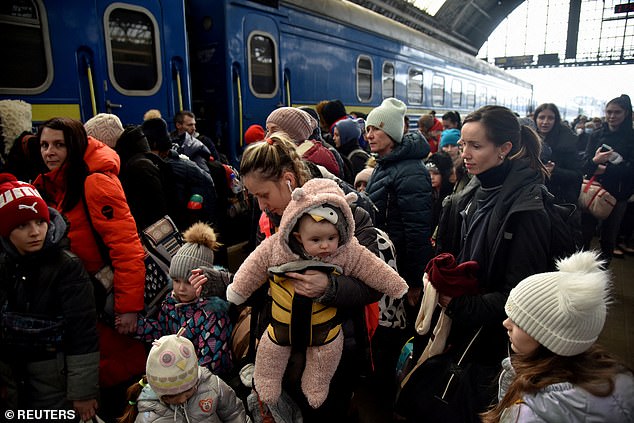
Refugees gather to board a train to Poland in Lviv in March 2022. While making their escape from Ukraine Mrs Rizak said: 'When we left Ukraine I had no emotion. I was just trying to survive'
Kateryna said: 'It's really nice here [in Britain] we have loads of friends who support us and we like going to clubs like rugby, cheerleading and playing piano. It's really nice to be in England.'
While her children have settled into life in Britain, Mrs Rizak admits the move was harder for her.
She said: 'I found the move to the UK much more difficult because I had a good job. I had a flat but here I am not a native speaker which made looking for a job difficult. Even though I am a trained lawyer in Ukraine, that degree is not the same in England.
'So the children have settled in much easier.'
When the war ends, Mrs Rizak said she does eventually plan to return to Ukraine to be reunited with her husband. However, Kateryna and Boris are not so keen on moving back.
She said: I'm planning to return to Ukraine eventually because it is our homeland but I do understand that my children don't want to return to Ukraine because they already left one country.
'And when we talk about returning it is very stressful for the children.'
Kateryna said: 'I don't want to [move back to Ukraine] but I'd like to visit Ukraine but I would like to live in England because it feels like home and I've been here for three years now.'
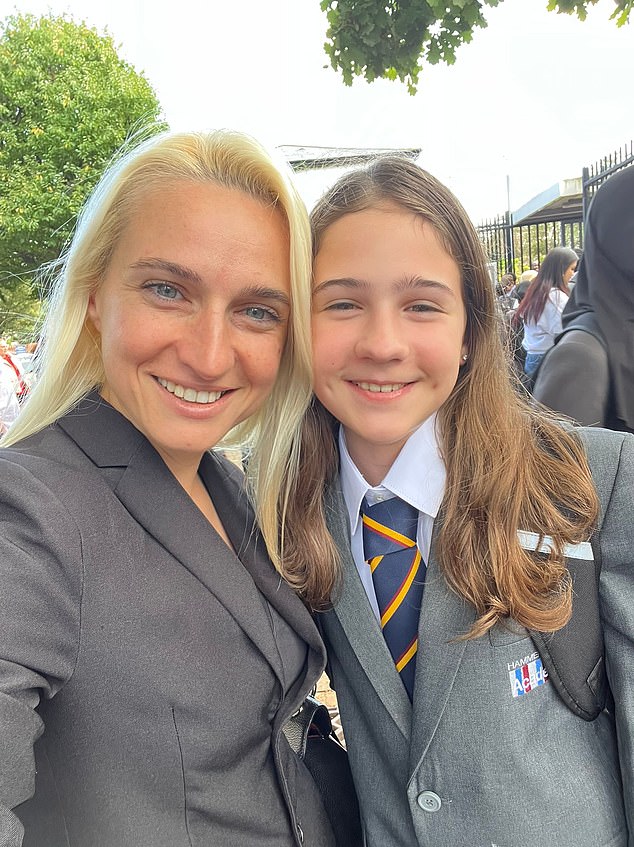
Mrs Kolesnikovych with her daughter Polina. When the war first broke out, Ms Kolesnikovych made the brave decision to remain in Kyiv despite her 'intense fear' for her and Polina's safety
For families with older children, the move from Ukraine proved more challenging.
That included Kateryna Kolesnikovych - a 42-year-old business consultant and startup mentor - who moved from Kyiv to Hammersmith in May 2022 with her daughter Polina.
When the war first broke out, Ms Kolesnikovych made the brave decision to remain in Kyiv despite her 'intense fear' for her and Polina's safety.
'Those days in Kyiv were very stressful and we lived in complete fear. We slept in mattress brought into the corridor between two walls because it was considered more safe,' she said.
'We always slept with our clothes on and with a backpack nearby with all our documents and money. It was very scary, but people were united and determined to resist the Russians in any way possible.'
By April 2022, when it became clear that Ms Kolesnikovych's Kyiv home could face the onslaught of advancing Russian Troops, the mother and daughter made the difficult decision to flee the city.
They travelled by train to the western city of Uzhorod situated on the border with Slovakia. From Ms Kolesnikovych reached out to a businessman she had worked with from the UK.
'On the third day of the war John texted me words I'll remember forever: 'Kate, I am not a religious person, but what I do for 3 days is pray for you and your family'. He also suggested then that we move to London and stay in his flat which he doesn't live in.
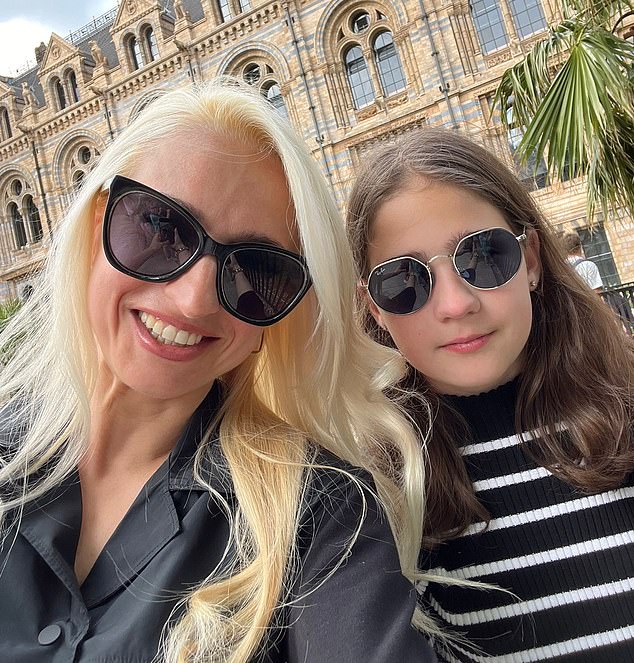
Ms Kolesnikovych and her daughter. After arriving in the UK, Polina started school in year four but struggled at first due to her lack of English
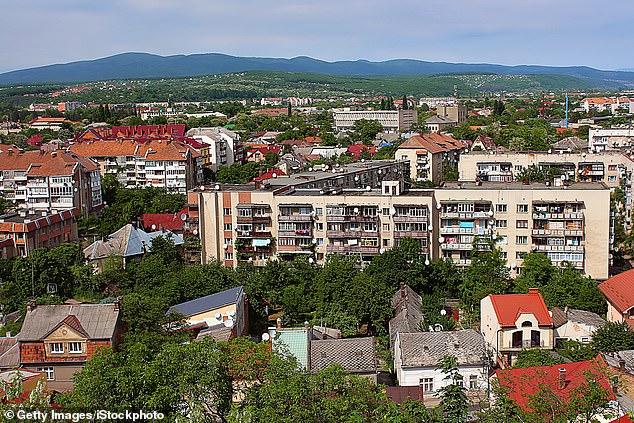
By April 2022, Ms Kolesnikovych made the difficult decision to flee the city. They travelled by train to the western city of Uzhorod (pictured) situated on the border with Slovakia
'When we were in Uzhgorod I texted John and asked if his kind offer may still be the case and his immediate answer on WhatsApp was a link so we could apply for the visa,' she said.
On May 20 2022, Ms Kolesnikovych and Polina boarded a plane in Slovakia for London with just one suitcase and one bag between them.
After arriving in the UK, Polina started school in year four but struggled at first due to her lack of English.
Ms Kolesnikovych said: 'The first year was extremely stressful for Polina because she had very limited English. She could manage basic phrases like 'I'm fine, thank you' but that wasn't enough to feel confident at school.
'She's also the kind of child who needs calm, meaningful conversation to make friends and in Ukraine she loved helping teachers and communicating with both adults and children, so the language barrier was especially hard at first.'
Now, Polina has settled into life in the UK and has just started year seven.
She continued: 'The school did an amazing job helping my daughter settle and build confidence.
'By the end of Year 6 she was completely different her English had improved greatly, and her teachers consistently praised her behaviour. For me as a mother, it was a difficult period, but it was also a story of real progress.'
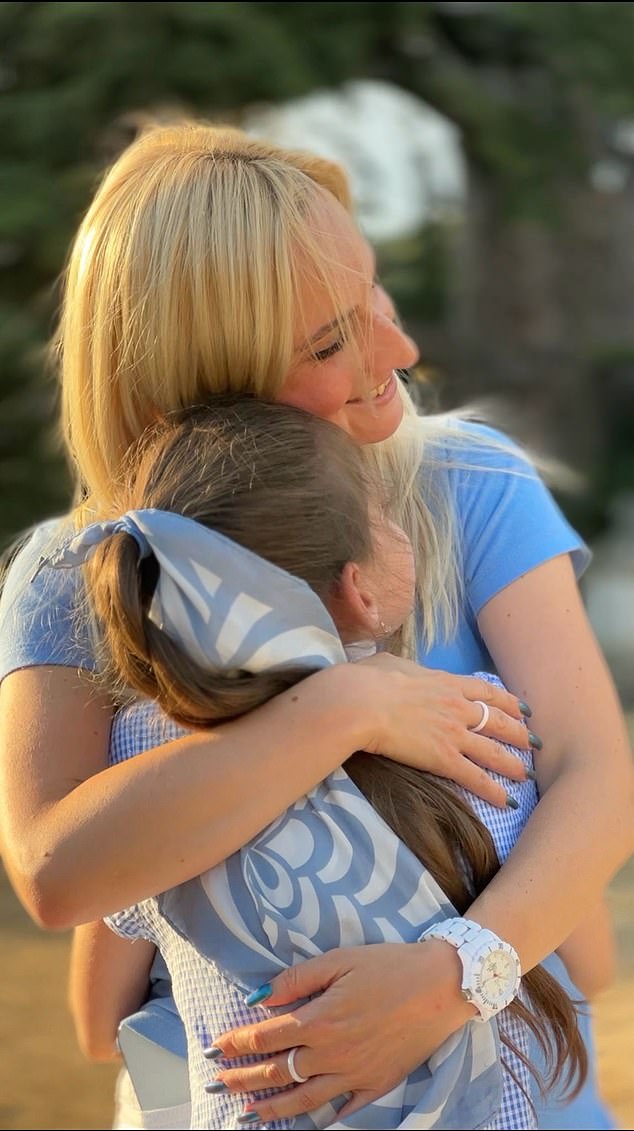
Ms Kolesnikovych embraces her daughter. While she admits initially the plan was to return to Ukraine after a year, for the sake of her daughter she would like to stay in the UK for now
Polina said: 'I do really love UK as a country, it's a very beautiful and comfortable place for living and getting education but when I first came here I felt a lot of anxiety and stress, because didn't know the language.'
However for Ms Kolesnikovych, the move to UK remained as difficult adjustment.
The 42-year-old said: 'For me life in Ukraine before the war was easier in many practical ways. I had my home, my car, and a strong support network and family around us.
'Professionally, I've always worked internationally and when we first arrived I had a strong hope that I could build projects linking the UK and Ukraine and, in the longer term, help bring international business and opportunities into Ukraine.
'But as the war continued, it became clear that many companies will understandably wait before making long-term investments there.'
According to her mother, Polina has vivid memories of her life before the war and remains in regular contact with her father and grandparents who remain in Ukraine.
Ms Kolesnikovych added: 'She remembers the good things about Ukraine her school, friends and family. She would love to visit again for a holiday when it's safe. We planned to go last summer, but because of heavy attacks we decided not to.
'I try to help her enjoy her life here in the UK while also staying connected to where she's from, and I encourage her to respect both cultures and see things from more than one perspective.'
While Ms Kolesnikovych admits initially the plan was to return to Ukraine after a year, for the sake of her daughter she would like to stay in the UK for now.
She said: 'We've been in the UK for about three and a half years, and for her life here has become a real success story she has settled, her confidence has grown, and she's thriving at school.
'Moving her back into the Ukrainian school system would mean another major transition and another big period of stress for her, so my priority is that she finishes school in the UK. When she's older, if she wants to study elsewhere, return to Ukraine, or live in another country, I will support her.'
Polina said she would like to split her time between the UK and Ukrainie -studying in Britain and holidaying and visiting family and friends in Ukraine.
The UK government's Home for Ukraine Scheme closed in February last year but those who have remained in Britain have been able to apply for the Ukrainian Permission Extension which will allow them to remain for up to another three and a half years.
The scheme is and always has been a temporary humanitarian programme that does not form a route to settlement, and time spent in the UK under the schemes does not count towards long residence settlement requirements.
Nevertheless, by the time the visas expire many of those families will have children with very little memory of their life in Ukraine.
And many of those will not only be in high school but also preparing for GCSEs or even A-Levels. Facing major disruption at a crucial time for them academically.
On top of this, if the war continues into 2028 and beyond, Ukraine could remain a challenging places to move back to if not impossible.
And so the conundrum of returning to Ukraine is not just difficult for parents but could soon become a dilemma for the government. But that, for now, seems a far away problem.
A Home Office spokesperson told the Daily Mail: 'Our Ukraine schemes remain open for those seeking sanctuary. More than 310,000 Ukrainians and their families have been offered or granted continued support.'
'In September 2025, we announced the Ukraine Permission Extension scheme would be extended for a further 24 months following the initial 18‑month period.'