
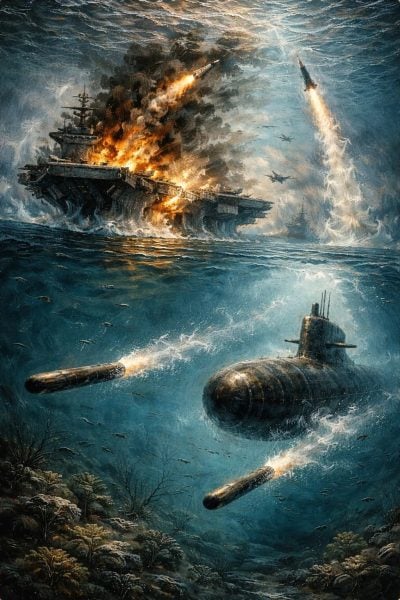
In the hypersonic era, the aircraft carrier is no longer the decisive force of naval warfare as it once was, but rather a platform with an increased level of risk.
To read this article in the following languages, click the Translate Website button below the author’s name.
Türkçe, Русский, Español, 中文, Portugues, Français, عربي, Hebrew, Deutsch, Farsi, Italiano, 日本語, 한국어, Српски. And 40 more languages.
At the end of the Second World War, which lasted six years, two major results emerged following the use of war platforms that controlled the surface, subsurface, and air domains of the sea. Between 1900 and 1945, battleships, which had been the greatest indicators of sea power, were replaced by aircraft carriers, while submarines—first prominently employed in the First World War—further consolidated their indispensable role.
The meeting of the airplane and the sea changed everything. Aircraft departing from a floating air base, sinking ships with airborne firepower (bombs, torpedoes), and destroying targets on land became the foremost indicators of naval warfare and national power. With the beginning of the nuclear age, when both aircraft carriers and submarines were equipped with nuclear propulsion, the balance of power was completely transformed. One of the most important indicators of possessing and sustaining global power—and therefore hegemony—became the ownership of aircraft carriers and nuclear submarines.
However, today, all balances at sea are changing—except beneath the surface. The aircraft carrier, the undisputed instrument of maritime domination in the twentieth century, has encountered a new wave of technology that questions its raison d’être as we move further into the twenty-first century. In particular, the proliferation of hypersonic weapons, precision-guided ballistic and cruise missiles, artificial intelligence-supported reconnaissance and surveillance networks, and unmanned systems has shaken the concept of the “Aircraft Carrier Strike Group” and carrier-centered naval doctrines to their foundations. Despite this, it is too early to declare that “the aircraft carrier is completely dead”; however, it is no longer realistic to argue that it continues to exist with the same role, importance, and risk-return ratio.
The U.S. Navy’s transition to the Distributed Maritime Operations (DMO) doctrine, Russia’s near-ideological rejection of the aircraft carrier and its pivot toward a submarine-missile axis, and China’s establishment of the world’s most advanced A2/AD (Anti-Access/Area Denial) systems—while building its own aircraft carrier fleet to operate within that A2/AD umbrella—all confirm the same phenomenon in different ways. In short, in the hypersonic era, the aircraft carrier is no longer the decisive force of naval warfare as it once was, but rather a platform with an increased level of risk, a narrowed role, and growing dependence on the networks surrounding it.
Aircraft Carrier’s Strengths and Weaknesses
The power provided by the aircraft carrier in the twentieth century can be grouped under two main headings: flexibility and deterrence. Flexible use refers to the ability to project firepower from sea to land, from sea to air, from sea to the subsurface domain, and across the sea surface through the manned and unmanned aircraft it carries in wartime. With the fighter jets, early warning and electronic warfare aircraft, and support elements it carries, the aircraft carrier functions as a mobile air base capable of projecting air power thousands of kilometers away without reliance on foreign land bases.
With the fixed- and rotary-wing aircraft and unmanned aerial vehicles it carries, it can protect the carrier strike group through combat air patrol (CAP); it can deliver firepower to land targets by conducting more than 300 sorties per day; it can launch aerial attacks against surface targets at sea; it can deploy aircraft equipped with torpedoes to attack submarines; and, most importantly, it can operate support elements that affect the fate of the war, such as reconnaissance, surveillance, and electronic warfare systems. It is also a platform with extensive utility in secondary naval missions during peacetime and crisis periods, including disaster response, evacuation, crisis management, peace support operations, embargo enforcement, and sanction implementation.
The second power element lies in its symbolic and practical representation of presence at sea. Thanks to its ability to produce fresh water continuously and its nuclear propulsion capability, the aircraft carrier can operate along virtually unlimited sea lines of communication, constrained only by food logistics. This situation enables a hegemonic power to demonstrate its hard power in the most visible manner, both militarily and diplomatically. In this respect, the political message it conveys is a clear sign of the great powers’ intent and determination and is often regarded as deterrence in itself.
However, alongside its strengths, the aircraft carrier has inherent weaknesses. Due to its enormous size, large radar cross-section, and strong electromagnetic and acoustic signatures, it is relatively easy to detect via satellite, submarine, and long-range reconnaissance aircraft. Although the Carrier Strike Group (CSG) is protected by escort ships—destroyers, frigates, submarines—and layered air defense systems, it was theoretically demonstrated throughout the Cold War, and occasionally in exercises, that it could be struck as a result of the saturation of this defense line in the face of a high-intensity guided missile attack. Even in the pre-hypersonic era, submarine torpedo attacks and massive salvos of cruise missiles launched from air and sea platforms against aircraft carriers were considered serious threats.
The Hypersonic Era: The Game-Changing Threat
The introduction of hypersonic weapons has dramatically magnified what was previously a partial and limited vulnerability. Hypersonic missiles and glide vehicles traveling at speeds above Mach 5 reduce the defensive reaction time of an aircraft carrier—including its airborne interceptors and escorting air defense ships—below the critical threshold. First and foremost, the speed factor compresses the time between target acquisition and impact into mere minutes. This represents an extremely limited time frame for both command-and-control systems and layered defense mechanisms.
Another critical factor is maneuverability. Unlike conventional ballistic missiles, which follow largely predictable trajectories, hypersonic glide vehicles can alter their course throughout flight. This makes both trajectory prediction and interception exceedingly difficult. The flight profile is another distinguishing feature. The fact that some hypersonic weapons can approach at relatively low altitudes, below the radar horizon, further reduces detection time.
China’s so-called “carrier killer” systems, such as the DF-21D and DF-26B, hypersonic platforms such as the DF-17—capable of speeds up to Mach 10 and a range of approximately 1,400–1,500 miles—and Russia’s Zircon and Kinzhal missiles are concrete examples of this new threat environment. Zircon’s range of approximately 600 miles and speed of up to Mach 9, and the Kinzhal’s range of nearly 1,000 miles and speed of up to Mach 10, render interception extraordinarily difficult.
Within this framework, the fact that a $40 million hypersonic missile can damage or sink a $13 billion aircraft carrier radically alters the cost-effect balance against the carrier. Therefore, today the aircraft carrier faces a “test of survival” the moment it enters the range of an adversary’s hypersonic and long-range missile systems. This threat is not merely physical; it is also psychological. A form of risk-based deterrence has emerged, forcing aircraft carriers to operate hundreds—or even thousands—of kilometers away from hostile coastlines.
A typical example of this asymmetry occurred in the Red Sea. On April 28, 2025, the aircraft carrier USS Truman lost an F/A-18 Hornet fighter jet (valued at approximately $70 million) and its towing vehicle overboard during evasive maneuvers intended to avoid Houthi missile threats. Shortly after this incident, President Trump withdrew the aircraft carrier from the operational area.
In short, the character of naval warfare has changed. As missile ranges have increased, missiles have become more decisive than ships. Today, actors such as Ukraine and the Houthis—who do not possess traditional navies—are capable of sinking ships. This development fundamentally alters the nature of deterrence.
In this context, not only missiles but also swarm-based suicide UAVs pose a serious threat to aircraft carriers. For example, if 1,000 swarm UAVs were to approach an aircraft carrier strike group consisting of four escort air-defense destroyers, the stockpiles of air defense missiles and artillery ammunition could be rapidly depleted, leaving a $14 billion aircraft carrier vulnerable during subsequent waves. It should be recalled that on October 17, 2025, during national celebrations, China simultaneously conducted a UAV demonstration in Liuyang involving 16,000 drones.
Transformation of the Role of the Aircraft Carrier
The Ukraine-Russia war, as well as the impact of Houthi operations in the Red Sea, has accelerated doctrinal reassessments regarding future great-power confrontations. The asymmetric effects generated by artificial intelligence–enabled armed unmanned aerial and naval vehicles, combined with hypersonic missile systems, have placed tanks, helicopters, and large warships operating near shorelines under significant risk, triggering doctrinal shifts.
In such an environment, major naval powers have faced a strategic crossroads regarding the aircraft carrier: abandon it entirely or transform its operational role by adapting it to new doctrines. The prevailing trend, particularly in the United States, has favored transformation.
The Distributed Maritime Operations (DMO) doctrine adopted by the U.S. Navy in 2018 was developed in this direction. Under this concept, the aircraft carrier is no longer assigned the leading role in a concentrated force structure. Instead, the objective is to preserve the U.S. Navy’s survivability against China’s A2/AD (Anti-Access/Area Denial) capabilities while maintaining lethal power in a dispersed, network-centric configuration.
Within this framework, the aircraft carrier is no longer positioned as a “super-platform” independently projecting massive firepower. Rather, it functions as a command, control, and sensor node within a distributed fleet network. Equipped with advanced communications, data-processing capabilities, and sensor systems, the carrier manages a dispersed force composed of frigates, destroyers, submarines, and unmanned systems. It serves as a hub for coordinating target acquisition, force deployment, situational awareness, and long-range strike operations.
F-35C aircraft and E-2D early warning platforms launched from the aircraft carrier are not necessarily intended to penetrate the most lethal layers of an adversary’s A2/AD umbrella directly. Instead, they may operate at the periphery of contested zones, conducting target detection and transmitting data to other platforms within the strike group network. In this way, the aircraft carrier contributes to the effective employment of long-range cruise missiles and other strike systems while attempting to remain outside the most dangerous threat envelopes.
At the same time, within the concepts of preemptive strike and integrated warfare, it is accepted that the best defense for an aircraft carrier lies in neutralizing the systems that threaten it before launch. Cyber and electronic warfare operations aim to disrupt the adversary’s missile launch command-and-control chain. Submarines and aircraft operating in conjunction with the strike group are tasked with targeting coastal missile batteries, radar systems, and critical A2/AD elements.
Despite these adaptations, it remains a fact that the hypersonic threat cannot be completely eliminated. Defense planners must therefore accept operating under a residual level of risk. Directed-energy weapons, particularly high-powered laser systems, are frequently cited as the most promising defensive solution against hypersonic missiles. However, although the U.S. Navy has tested 33-kilowatt and 150-kilowatt-class laser systems, Pentagon assessments indicate that approximately one megawatt of sustained laser power would be required to reliably neutralize a hypersonic missile—capabilities that remain technologically distant.
The Case of the USS Gerald R. Ford: The Contradiction of Range and Risk in Three Critical Seas
The next-generation and most modern U.S. aircraft carrier, the USS Gerald R. Ford, although equipped with the most advanced launch, recovery, and radar technologies, cannot sustain its traditional carrier superiority in the geopolitical crisis zones it may face. Analyses in the context of the Mediterranean, the Persian Gulf, and the Western Pacific reveal an unresolved dilemma between range and survivability.
.
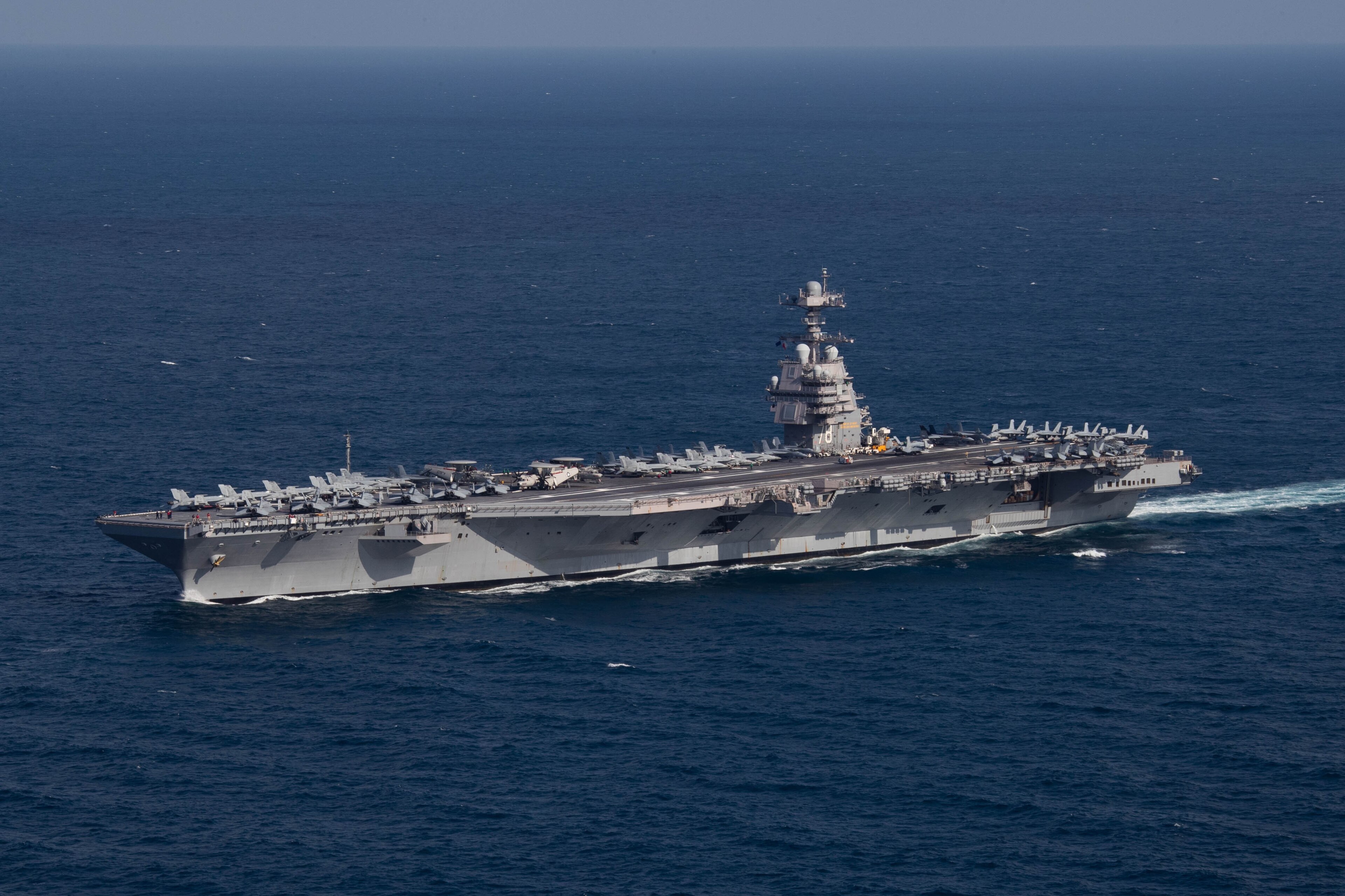
The U.S. Navy aircraft carrier USS Gerald R. Ford (CVN-78) (U.S. Navy photo by Mass Communication Specialist 2nd Class Jackson Adkins / Public Domain)
.
In the Mediterranean, Russian surface and submarine platforms equipped with weapon systems such as Zircon, Kinzhal, and Onyx create a significant threat environment. Should Russia, in the future, re-establish a military presence in Syria following regime changes and redeploy S-300 and S-400 air defense systems, the level of risk would increase substantially.
In the Persian Gulf, geography itself functions as a constraint. The narrowness of the Gulf and Iran’s layered missile architecture—with ranges extending from 300 to 1,000 kilometers—demonstrate that an aircraft carrier has extremely limited options for maintaining a safe operational distance. Entering the Gulf entails considerable risk while remaining entirely outside it significantly limits the effectiveness of air operations against targets deep within Iran.
If the aircraft carrier operates from the Arabian Sea, the combat radius of F/A-18 Super Hornets renders deep strike missions into Iranian territory operationally marginal without extensive aerial refueling. Under such circumstances, the carrier risks becoming more of a symbolic presence attempting to avoid becoming a target rather than an effective power-projection platform.
In the Western Pacific, the multilayered A2/AD architecture constructed by China—featuring DF-21D, DF-26, and DF-17 missile systems—represents perhaps the densest carrier-denial environment in the world. With the DF-21D exceeding a range of 1,000 miles and the DF-26 extending up to approximately 2,500 miles, combined with hypersonic DF-17 systems, China has created a formidable A2/AD umbrella in the South China Sea and the East China Sea.
China’s ISTAR (Intelligence, Surveillance, Target Acquisition, and Reconnaissance) network—comprising satellites, over-the-horizon (OTH) radar systems, and UAV platforms—facilitates the rapid completion of the kill chain. This architecture may force the USS Gerald R. Ford to remain in relatively less risky positions approximately 1,000–1,200 miles from the Taiwan Strait.
However, at such distances, even the F-35C’s combat radius of roughly 600 miles is insufficient for sustained and effective sortie generation against targets in and around Taiwan without reliance on multiple aerial refueling operations. This results in an extremely complex and fragile operational chain.
The core problem across these three theaters is identical: the modern aircraft carrier must balance between operating close enough to effectively employ its air wing and remaining far enough away to survive outside the adversary’s missile envelope. If it approaches, risk increases dramatically; if it remains distant, its striking power loses relevance. This paradox constitutes the fundamental contradiction imposed on the aircraft carrier by the hypersonic era.
Russian and Chinese Approaches
Most Russian strategists argue that the aircraft carrier’s role in the contemporary warfare environment has been significantly reduced. According to Russian military assessments, A2/AD capabilities, hypersonic missile systems, unmanned underwater vehicles, UAV swarms, and submarines collectively pose severe threats to aircraft carriers.
It is not coincidental that, following the loss of the Slava-class cruiser Moskva in the Black Sea in 2022—after operating in proximity to the Ukrainian coastline—the Russian Navy intensified its emphasis on hypersonic weapons and distributed missile capabilities. By equipping frigates and smaller corvettes with Kalibr, Onyx, and Zircon missile systems, Russia has generated striking power disproportionate to the tonnage of these platforms.
Russia’s strategic priorities—defense of the Arctic, security of the Northern Sea Route, and regional A2/AD missions—have oriented its naval doctrine toward shore-based missile systems, submarines, and land-based airpower rather than aircraft carriers.
China, by contrast, presents a more complex case. On one hand, it has constructed the world’s most comprehensive A2/AD architecture designed specifically to counter U.S. carrier operations. On the other hand, it is engaged in one of the most ambitious aircraft carrier construction programs in modern naval history, including the commissioning of Fujian and planned follow-on units.
The key distinction lies in doctrine. China does not design its aircraft carriers as globally roaming power-projection instruments akin to those of the United States. Instead, Chinese carriers are conceived as supporting platforms operating within the protective envelope of China’s own A2/AD architecture, primarily inside the First Island Chain. Their role is to reinforce regional maritime control and restrict the maneuvering freedom of the U.S. Navy.
Chinese strategists frequently describe the First Island Chain as a “metal chain” constraining China’s maritime destiny. Aircraft carriers are not viewed as the tools that will break this chain; rather, they are instruments that enhance operational flexibility within it.
At the same time, China’s expanding global trade interests necessitate sustained naval presence beyond regional waters. As China increasingly positions itself as a global economic actor, aircraft carriers may play a role in protecting sea lines of communication and commercial interests in distant maritime regions.
Despite these differing doctrinal orientations, both Russia and China have implicitly accepted that the aircraft carrier has lost its uncontested central role in the hypersonic and A2/AD era. Russia has pivoted decisively toward a submarine-missile axis, while China has integrated its carrier fleet into a layered defensive umbrella with limited and regionally defined roles.
The Relationship Between Aircraft Carrier Ownership and Economic Power
Today, the G20 countries—representing the world’s largest economies—together with the European Union, reveal a noticeable relationship between aircraft carrier ownership and economic scale. In general, large economies tend to acquire aircraft carriers. However, not every large economy possesses such platforms, and certain exceptions exist among smaller economies.
Despite these variations, a positive and statistically significant correlation can be observed between the year in which a country commissioned its first aircraft carrier and its national income at that time. Countries such as the United States, the United Kingdom, and France were already at the top tier of the global economy when they entered the aircraft carrier era in the first half of the twentieth century.
China commissioned its first aircraft carrier, Liaoning, only after its national income had exceeded 8 trillion dollars, by which time it had become the world’s second-largest economy after the United States.
.
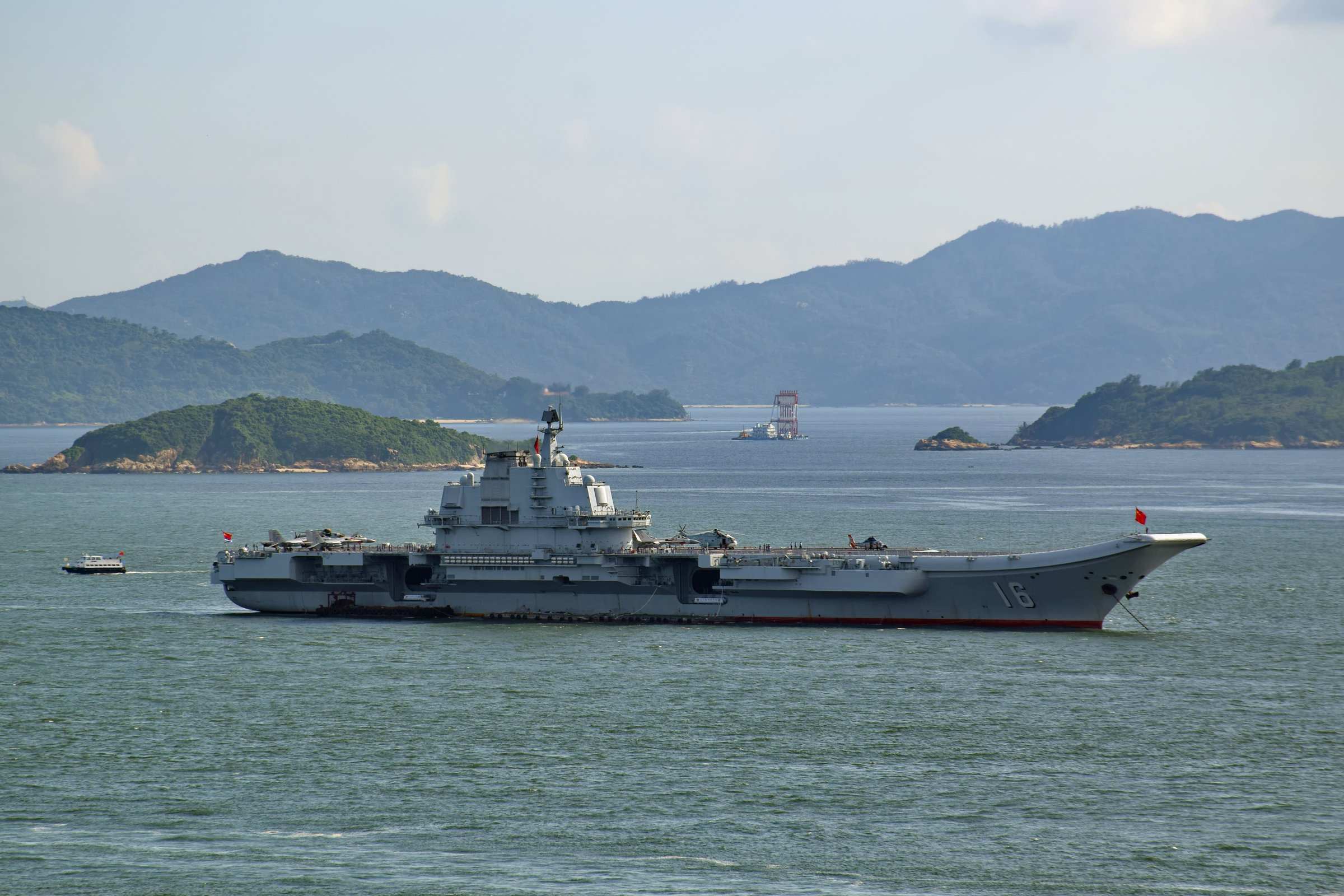
Aircraft Carrier Liaoning (16) at Hong Kong Waters (CC BY-SA 2.5)
.
Although countries such as India, Brazil, and Argentina acquired light aircraft carriers at comparatively lower income levels—often second-hand platforms—many of these vessels were either operated for relatively short periods or later removed from service. Today, India continues to operate two aircraft carriers, one of which is domestically built. Brazil has operated aircraft carriers in the past, both acquired second-hand, although operational continuity has varied over time.
Germany, despite being one of the world’s largest economies, has never pursued aircraft carrier acquisition due to its geographic position, alliance structures, and defense doctrine, which prioritizes land and air capabilities over maritime power projection.
In 2023, Turkey entered a new phase with the commissioning of TCG Anadolu, an amphibious assault ship-class platform. Although this vessel was initially presented to the public as an aircraft carrier—partly due to domestic political narratives—it was subsequently reclassified as a UAV carrier. At the time construction of this ship began, Turkey’s national income stood at approximately 0.8–0.9 trillion dollars. Today, it has reached approximately 1.5 trillion dollars.
This economic level may represent the lower threshold for sustaining limited aircraft carrier-type platforms. While the approximate 1.3 billion dollar cost of TCG Anadolu appears manageable at this scale, it is estimated that constructing a larger conventional aircraft carrier in the 45,000–65,000-ton range, equipped with EMALS or comparable advanced launch systems and operating an air wing of 30–50 aircraft, would require shipbuilding costs in the range of 4–6.5 billion dollars. When integration costs—including aircraft procurement, logistics, maintenance infrastructure, and operational integration—are considered, the total package cost could rise to 8–10 billion dollars.
Such a financial burden would be difficult to sustain, particularly given Turkey’s ongoing naval programs, air defense modernization requirements, land force upgrades, and macroeconomic vulnerabilities. However, the principal issue is not merely financial—it is operational
Submarine or Aircraft Carrier for Turkey Today?
Turkey is neither an island-continent power dominating two oceans like the United States, nor a semi-continental power such as China, which seeks to establish regional maritime dominance within a protective A2/AD envelope.
Turkey’s primary maritime maneuvering space is defined by the Eastern Mediterranean and the Aegean Sea—narrow, congested maritime theaters characterized by dense radar coverage due to islands, islets, rocky outcrops, and heavy commercial traffic.
In these regions, Israel, Greece, the Greek Cypriot Administration, and their principal allies—the United States, the United Kingdom, and France—constitute significant potential risks in both the maritime and air domains. Furthermore, the presence of British, French, and American military facilities in Cyprus, as well as air and naval assets operating from American and Greek bases on the island of Crete, would severely constrain the safe maneuverability of a large-tonnage aircraft carrier in wartime conditions.
In such an environment, the Eastern Mediterranean and the Aegean would be dominated by multilayered missile and air defense threats. These seas do not offer vast, open-ocean maneuvering space; rather, they present overlapping missile envelopes, island chains, straits, narrow waters, and dense surveillance networks.
Unless Turkey was to achieve absolute air superiority and maritime control in these theaters—a highly challenging objective in the initial phase of a major conflict—the deployment of a large aircraft carrier would entail substantial risk.
Therefore, the primary objective should be to restrict the adversary’s freedom of maneuver in the Aegean and the Eastern Mediterranean. Turkey’s strategic focus should prioritize the establishment of robust A2/AD (Anti-Access/Area Denial) capabilities while maintaining the survivability of its power-projection elements under strategic protection.
In this framework, preventing adversary surface and submarine forces from departing their bases and securing logistical lines becomes critical. Equally important is denying operational access to naval forces originating from the Western Mediterranean and supporting allied formations. (Libya, in this context, holds strategic significance.)
If hostile forces enter Turkey’s defined maritime area of strategic interest and attempt to constrain its operational freedom, the objective must be to deny their freedom of action within that same area.
The essence of the Blue Homeland doctrine is not merely permanent sovereignty over maritime zones; it also involves the establishment of an A2/AD shield around Turkey—an environment in which adversaries cannot maneuver freely, cannot approach at will, and cannot withdraw without consequence.
Such an architecture is more effectively achieved through submarines, shore-based long-range missile systems, intelligent naval mines, unmanned swarm systems, and strong naval aviation rather than through aircraft carriers.
In this geography, the aircraft carrier becomes a fragile instrument of limited and carefully managed demonstration of force unsuitable as the primary instrument in every crisis. By contrast, the submarine constitutes a strategic asset capable of operating undetected in all surrounding seas, delivering decisive first strikes when necessary, and generating profound psychological deterrenc
Cost-Impact Balance
The 8–10 billion dollars required for the construction of a large aircraft carrier would generate significantly greater deterrent and combat power if allocated more strategically within Turkey’s naval modernization framework.
With the same budget, the fleet of Reis-class or future MİLDEN-class submarines equipped with air-independent propulsion systems could be expanded. In the longer term, foundational investments in nuclear propulsion infrastructure could even be initiated. Advanced munitions stockpiles—such as AKYA heavyweight torpedoes and cruise missile systems like Gezgin and Atmaca—could be increased. Future submarine-launched cruise missile and potential hypersonic weapons programs could be strengthened.
Autonomous and semi-autonomous unmanned underwater vehicles could be developed for mine warfare, intelligence gathering, and anti-submarine operations.
In terms of deterrence relative to unit cost, submarines provide significantly higher strategic value than aircraft carriers. The aircraft carrier is visible; its position can be tracked; its electromagnetic and acoustic signatures are detectable. It generates a powerful psychological and political signal—but if struck, it produces an equally powerful political and military shock.
The submarine, by contrast, creates uncertainty. A submarine whose location is unknown generates a persistent psychological burden on an adversary—an unease that a visible aircraft carrier cannot replicate. For a country such as Turkey, surrounded by overlapping missile ranges, uncertainty constitutes the core of deterrence.
The Necessity of a Sister Ship to TCG Anadolu
TCG Anadolu represents a cost-effective and multi-role platform suited to Turkey’s economic scale and geographic realities. It provides operational flexibility for amphibious assault operations, humanitarian assistance, evacuation missions, crisis response, UAV-based air operations, and limited “light carrier” functionality.
Constructing a sister ship of the same class would be strategically meaningful in terms of ensuring operational continuity, balancing maintenance and refit cycles, and maintaining sustained availability. Moreover, it would be economically rational, as it would leverage existing design experience, industrial capacity, and logistical infrastructure.
However, pursuing a 60,000-ton, EMALS-equipped supercarrier designed to operate dozens of jet aircraft would not be economically, doctrinally, or geographically rational for Turkey.
Conclusion
The fundamental question facing Turkey is the following: In the new strategic environment shaped by hypersonic and A2/AD realities, would constructing a significantly larger and more expensive aircraft carrier—beyond TCG Anadolu—truly serve Turkey’s geographic position, economic capacity, and naval doctrine? Or would a more rational path involve concentrating resources on submarine expansion and the strengthening of A2/AD capabilities?
The position of the aircraft carrier in the hypersonic era is now inherently contested. Aircraft carriers can contribute to deterrence, but they do not independently win wars.
For example, even the USS Abraham Lincoln carrier strike group operating in January 2026 would not be capable of establishing permanent air superiority over Iran’s vast geography, deeply buried infrastructure, and dispersed military architecture. Moreover, during periods of heightened tension in the Arabian Sea, the USS Lincoln was compelled to operate cautiously under the shadow of regional terrain and missile threat envelopes, limiting its operational freedom due to the persistent risk posed by hypersonic and anti-ship missile systems.
Against this backdrop, the hypersonic era has not rendered the aircraft carrier obsolete overnight. However, it has definitively ended its era of uncontested superiority. No serious naval strategist today would argue that an aircraft carrier can operate close to hostile shores without substantial risk.
The aircraft carrier remains a relevant instrument in low-intensity conflicts, humanitarian missions, diplomatic signaling, and alliance assurance operations. Yet in saturated A2/AD environments—where great-power competition is most intense—it has lost its former centrality.
When Turkey’s economic scale, geopolitical environment, and naval doctrine are evaluated together, the construction of a second large aircraft carrier does not represent a sustainable, rational, or strategically coherent choice.
Turkey should strengthen its submarine fleet, long-range missile capabilities, TF-2000-class air defense destroyers, shore-based A2/AD architecture, and unmanned naval systems. The defense of the Blue Homeland should rest not on a highly visible aircraft carrier, but on layered deterrence built upon depth, concealment, and operational uncertainty.
At the same time, for peacetime presence missions and crisis-response activities, a large-tonnage aviation-capable platform remains useful. Therefore, at most, the construction of a sister ship to TCG Anadolu would be justified.
Beyond that threshold, pursuing a full-scale supercarrier program would introduce strategic and financial risks inconsistent with the realities of the hypersonic age and Turkey’s geostrategic environment.
Turkey’s true naval power must reside in its submarines—assets that remain unseen, yet whose presence must always be calculated by every potential adversary.
*
Click the share button below to email/forward this article. Follow us on Instagram and X and subscribe to our Telegram Channel. Feel free to repost Global Research articles with proper attribution.
This article was originally published on Mavi Vatan.
Ret Admiral Cem Gürdeniz, Writer, Geopolitical Expert, Theorist and creator of the Turkish Bluehomeland (Mavi Vatan) doctrine. He served as the Chief of Strategy Department and then the head of Plans and Policy Division in Turkish Naval Forces Headquarters. As his combat duties, he has served as the commander of Amphibious Ships Group and Mine Fleet between 2007 and 2009. He retired in 2012. He established Hamit Naci Blue Homeland Foundation in 2021. He has published numerous books on geopolitics, maritime strategy, maritime history and maritime culture. He is also a honorary member of ATASAM.
He is a Research Associate of the Centre for Research on Globalization (CRG).
Featured image is from the author
Global Research is a reader-funded media. We do not accept any funding from corporations or governments. Help us stay afloat. Click the image below to make a one-time or recurring donation.