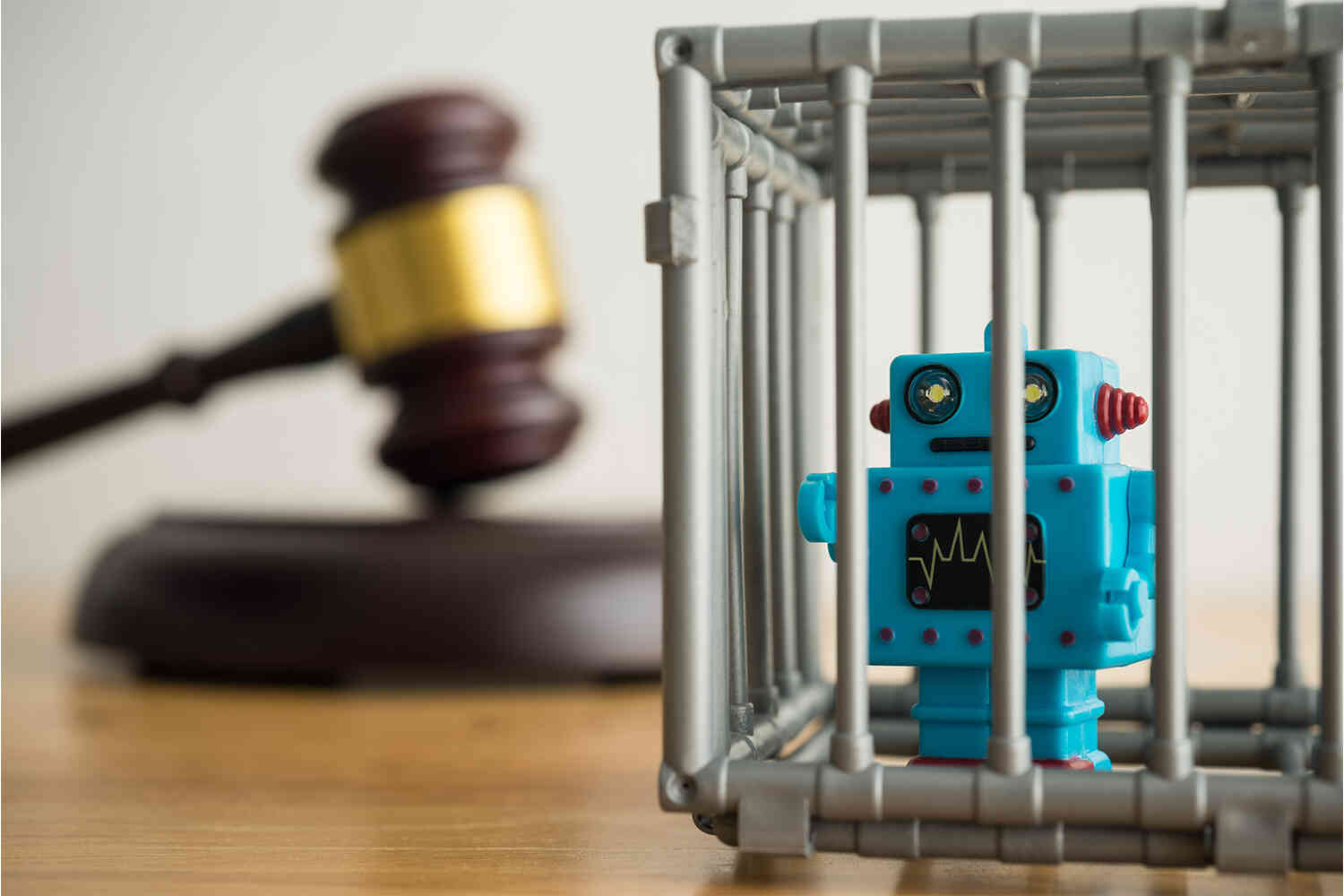
In a warning to all lawyers, a New York judge just threw the book at a client because their lawyer used A.I. to write his briefs, and of course, A.I. made up a huge chunk of them.
The story starts all the way back in October of 2024, some Fast and the Furious wannabes highjacked one of Flycatcher Toys' trucks on its way to Walmart for delivery.

The crooks swiped an estimated $1 million of Flycatcher's merchandise.
Then according to court records, those toys appeared on Amazon being sold at ridiculously low prices via a multitude of companies, so Flycatcher sued them all.
Flycatcher performed test buys from Defendants, and confirmed, using the aforementioned codes, as to each Defendant that the product being sold derived from the stolen shipments.
While there are multiple lawyers for the various companies, one company already lost their case: Affable Avenue LLC.
And they lost that lawsuit, not because they saw their day in court and were proved guilty of the accusations against them — they lost because their lawyer used A.I. to write his legal briefs for the court.
In an interview with the judge, Steven Andrew Feldman admitted that 14 out of his 60 citations were completely hallucinated cases.

So, the judge threw the book at him and Affable Avenue LLC too.
(At the very least, the duties imposed by Rule 11 require that attorneys read, and thereby confirm the existence and validity of, the legal authorities on which they rely."). Mr. Feldman claimed to have been pressed for time (Tr. 36, 42), but that does not excuse an attorney from his obligations — nor a client from its attorney's misdeeds, see Link v. Wabash R.R. Co., 370 U.S. 626, 634 (1962) ("[E]ach party is deemed bound by the acts of his lawyer-agent" and cannot "avoid the consequences of [its lawyer's] acts or omissions.") …
The Court SANCTIONS Mr. Feldman by entering default judgment as to his client, Defendant Affable Avenue LLC. The Clerk of Court is directed to strike docket entries 153 through 156 and to enter judgment in favor of Plaintiffs and against Affable Avenue LLC.
Plus, the judge ruled that Feldman will have to personally pay all of Flycatcher's attorneys' fees.
Dang!
And then the judge goes on to stick the attorney's head on a proverbial pike as a warning to others attempting to take similar shortcuts with A.I..
Accordingly, pursuant to Rule 11 and its inherent powers, the Court enters default judgment against Mr. Feldman's client, Affable, and finds this sanction is "limited to what suffices to deter repetition of the conduct or comparable conduct by others similarly situated." Fed. R. Civ. P. 11(c)(4).
Clearly, it does not pay to use A.I..