CNN host and “60 Minutes” correspondent Anderson Cooper visited South Africa to investigate President Donald Trump’s claim of genocide and ultimately reported that the killings of white residents were symptoms of rampant crim.
Cooper’s investigation, aired as a 15-minute segment on “60 Minutes” on Feb. 22, prioritized diminishing Trump’s hyperbolic claims while missing multiple human rights allegations. Cooper said he visited South Africa’s farms “because of what President Trump said last May about the murders of South African farmers” and ultimately reported that the country faces rampant crime with farmers becoming targets of opportunity. However, multiple South Africans told the Daily Caller that targeted attacks against white residents have been a serious issue. (RELATED: Investigating Farm Killings In South Africa — What We Saw)
In a meeting with South African President Cyril Ramaphosa, Trump accused him of being complicit in the “genocide” of white farmers, an allegation the president denied. Trump showed the president a video of Julius Malema, the leader of a communist, black nationalist political party, chanting, “Kill the Boer, kill the farmer,” at a March 2025 rally attended by thousands.
Hey, @ABC, here’s a video of SA National Assembly member Julius Malema chanting “Kill the Boer, the Farmer!” to a stadium full of people.
— Adam Johnston (@adamkjohnston) May 21, 2025
What’s happening to white South African farmers is not “unfounded.” https://t.co/VGO86ZGjDm pic.twitter.com/oVNIiUSuRf
Boers, or Afrikaners, are descendants of Dutch settlers who arrived in modern South Africa before the U.S. was founded. They make up a majority of South Africa’s white population, which has shrunk from 11% in 1996 to 7.3% in 2022, according to the country’s census. They were the focus of Cooper’s segment.
Trump also showed the president images of white crosses lining a long stretch of country road, referring to them as the “burial sites” of “over a thousand” white farmers.
Cooper visited the road and showed that the crosses were no longer there. He interviewed seventh-generation rancher and farmer Daryl Brown, who told Cooper that he had temporarily set up the crosses after the murder of his friends “in honor of commercial farmers in South Africa that had lost their lives” and added that it wasn’t a burial site.
Although Cooper emphasized Trump’s inaccurate claim that a victim was buried at each cross, each cross still represents a murdered farmer.
Cooper also asked those he interviewed whether Trump’s phrasing of the Afrikaners’ plight as a “genocide” was correct. Those interviewed largely agreed with the wife of one murdered farmer, who said, “I just thought he was using the wrong word.”
She continued, saying the attacks appear to be “opportunistic.”
Cooper noted that police estimated that more than 25,000 South Africans were murdered in 2024, with only 37 killed on farms. He also said the nation’s police only began publishing records on the race of farm attack victims last year, citing the first quarter of 2025, in which five of the six victims of farm homicides were black.
Victims and Afrikaner leaders told the Daily Caller during an on-the-ground investigation in June that many of the attacks do not actually take place on farms, but on smallholdings — small houses with property outside the cities — where attackers can torture victims in a house with little fear of interruption.
One survivor shared how she was tied up, beaten, called racial slurs, and watched her husband beaten to death. The number and racial makeup of such smallholding attacks are seemingly not represented in Cooper’s segment.
Johan Kotza, head of South Africa’s largest agricultural organization, told Cooper, “It’s actually not about white genocide. It’s about criminality in South Africa.”
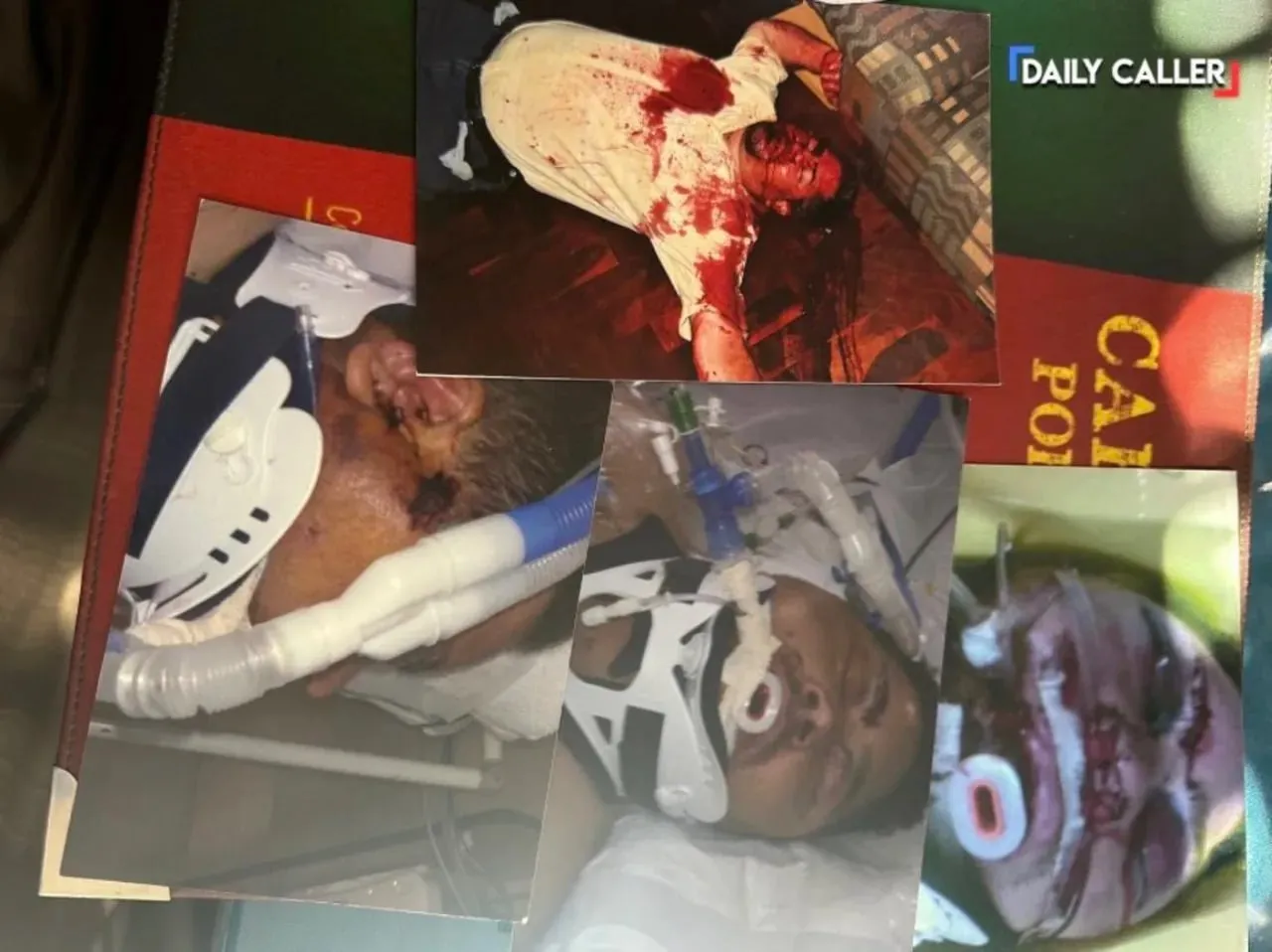
Photos taken by Elmarie Eastes-Schutte show her husband’s injuries immediately after the attack and later in the hospital. (Photo by Derek VanBuskirk)
Jacques Broodryk, chief spokesperson for AfriForum Community Safety, took a different view. He told the Caller in June that the brutality and racially charged motivation play a large part in the attacks.
“Crime is a major problem in South Africa. Everybody suffers from crime, but farm attacks and farm murders are the only crimes that are incited by politicians. It’s the only crime that’s romanticized,” Broodryk said, pointing to radicals calling to “kill the Boer” as well as the brutality of such attacks.
Broodryk said attackers often torture their victims, sometimes using tools like boiling water, broken bottles, barbed wire and drills. He argued dismissing the murders as mere crimes of greed diminishes the tragedy. Victims of attacks have told the Caller that attackers left with nothing, even after shooting one victim in the face.
A former South African schoolteacher, Anet Coetzee, woke up to a double-barrel shotgun shoved through her window. She only had time to cry out to God before the blast tore through her face and arm, knocking her to the floor.
— Derek VanBuskirk (@DerekVBK) June 5, 2025
She lost her right eye and most of her teeth that… pic.twitter.com/3RC3AHMRgN
When asked whether there was a genocide in South Africa, Broodryk told the Caller in June that although he thanked Trump for shining a spotlight on the plight of the Afrikaners, fixating on phrases like genocide is just “semantics.”
“[R]eal people are getting brutally murdered here: fathers, mothers, children. It’s a semantics game,” Broodryk said, again pointing to party leaders calling to “kill the Boer,” but also to the brutality of such attacks.
Cooper also refuted Trump’s claims that farmland was being stolen from Afrikaner owners through the Expropriation Act of 2024. The act grants the state power in some cases to seize land, or any form of private property, for no compensation, which in theory could allow the government to redistribute white-owned farmland to black farmers as part of a push for egalitarian land reform.
Area around an upmarket Apartment Complex.
— Jozi vs Jozi (@jozivsjozi) February 14, 2026
Bryanston, Johannesburg, South Africa.
2022 to 2025. pic.twitter.com/pRu86HGfOS
Cooper was correct that the act had not yet been used. However Broodryk and other leaders alleged to the Caller that other laws are currently discriminating against Afrikaner farmers, forcing them to lose their land to the majority-black population.
“On my farm, if I’m not 51% black, I can’t get a loan, can’t sell to the government, can’t even contract with a chain store,” Theo De Jager, executive director of the Southern African Agri Initiative, told the Caller, referring to one of South Africa’s many Black Economic Empowerment (BEE) laws. “How do you BEE a family farm?” (RELATED: Inside Orania — South Africa’s Whites-Only Town)
Squatting regulations are also lax in South Africa. Leaders told the Caller that the laws make it nearly impossible for landowners to clear out large groups who build communities from metal sheets on private property nearly overnight.
The Daily Caller reached out to Anderson Cooper’s 60 Minutes representative for comment.