After the Supreme Court’s ruling Friday that the International Emergency Economic Powers Act does not authorize the president to impose tariffs, one lesson should be obvious: If President Donald Trump is going to keep reshaping the global trade order, he needs tools that rest on firm statutory footing and a record that can survive courtroom scrutiny.
That is why a quietly consequential step President Trump took in January matters far more than most commentators noticed.
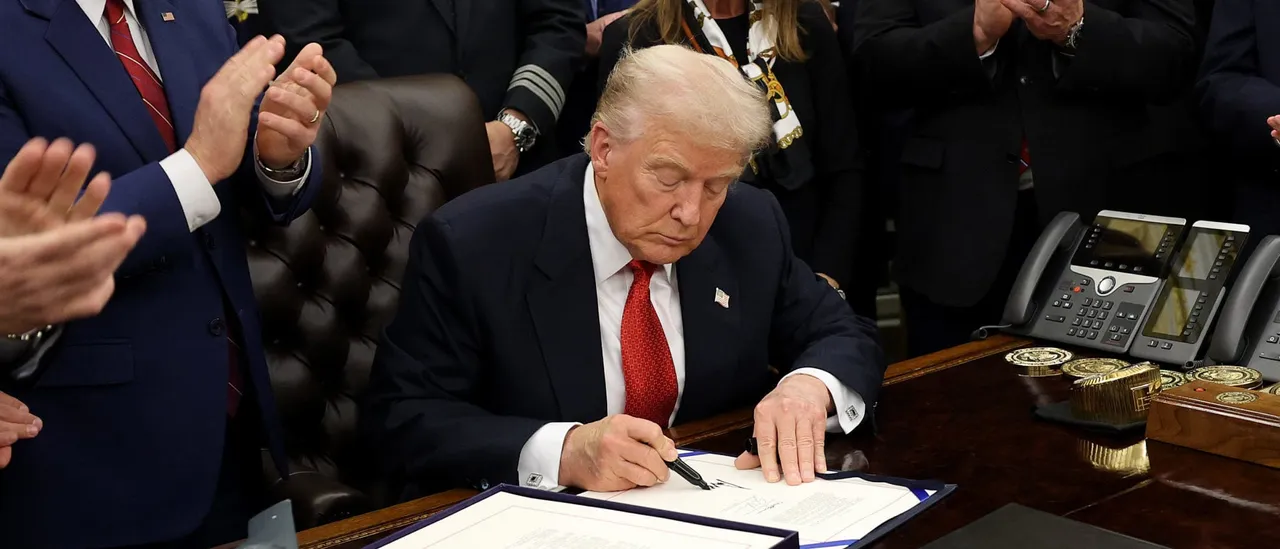
On Jan. 15, the Senate passed three appropriations bills, and President Trump signed them into law. Buried inside was language reflecting North Dakota Senator Kevin Cramer’s bipartisan PROVE IT Act framework. It directs the Department of Energy, in consultation with the National Energy Technology Laboratory, to conduct a comprehensive study comparing the emissions intensity of goods produced in the United States to those same goods produced abroad.
In plain English, Trump now has the federal machinery to hit back when foreign governments weaponize climate policy to punish U.S. industry.
And after the Supreme Court drew a bright line around tariff authority, this kind of data-driven predicate becomes even more valuable. The next phase of America First trade policy will reward the administration that can marry political will to lawful authority and defensible findings.
Sen. Cramer deserves real credit for pushing this framework and forcing it into the appropriations process. As he put it,”We’ve known for a long time that manufacturers here in the United States make some of the cleanest products in the world. We can actually prove it, and we should.”
“We should use that excellence as an advantage to ensure that our producers aren’t discriminated against by our trade partners or worse, undercut by polluting countries like China,” he continued. “It’s really an America First approach, and I look forward to working with Secretary Wright and the administration to get this report done, to make it a tradition, and make it a part of our trade policy going forward.”
The PROVE IT Act model is designed to produce high-quality, verifiable data demonstrating that U.S. manufacturing operates under some of the world’s cleanest standards. Public and private studies already suggest the United States has a major emissions advantage in products such as steel, aluminum, critical minerals, natural gas, and crude oil.
But in modern trade fights, unofficial evidence might as well be invisible. Without an authoritative federal dataset, American exporters can be judged by misleading calculations from foreign governments that tilt the playing field against American businesses.
The European Union’s Carbon Border Adjustment Mechanism (CBAM), which took effect on Jan. 1, reinforced the urgent need for this approach. The CBAM places tariffs on goods imported to the European Union, including steel, cement, aluminum, iron, fertilizers, and electricity, if they are deemed dirtier than European standards.
Cramer has warned that without independent U.S. data, American businesses could be forced onto Europe’s methodology, which is how a climate label becomes a punitive, anti-competitive tax. The PROVE IT framework establishes the analytical foundation needed to rebut discriminatory tariffs and strengthens the case for reciprocal action when our producers are targeted.
This is the point Trump’s libertarian critics refuse to admit. Trump did not sign on to Europe’s climate bureaucracy. He signed a way to beat it. Federal benchmarking is not a concession to Brussels. It is a weapon to defend American producers, expose foreign hypocrisy, and justify retaliation when American goods are penalized for outperforming foreign competitors.
Beyond trade defense, the PROVE IT approach strengthens America’s ability to counter misleading narratives from hostile nations.
Congressional findings around this effort emphasize what Americans already see. Hostile economies such as China have leveraged lax environmental enforcement to game the market system in their favor, undermining U.S. industrial competitiveness. Publishing transparent comparisons of emissions intensity exposes which countries truly lead in responsible production and which rely on dirtier practices.
It provides an irrefutable green basis for reshoring U.S. manufacturing and for reorienting supply chains toward cleaner, safer, pro-worker production at home.
Unsurprisingly, the most vocal opposition to the PROVE IT Act has come from the insular libertarian think tank network operating in the ivory towers of the Washington, D.C. swamp.
After embracing “free” trade policies that devastated American dominance, they now oppose a practical measure that helps undo the damage. The Competitive Enterprise Institute led a coalition of like-minded free market organizations that could not criticize the effort on the merits, so they opted to fearmonger that the data could later be used to support carbon taxes or domestic regulation. That objection is a tell. They fear a future where America stops taking foreign rules as inevitable and starts using hard data to defend its producers.
The CEI’s arguments miss the point entirely, perhaps deliberately so. This initiative equips the administration with facts that can be used to oppose unfair energy taxes and discriminatory foreign barriers. It also blocks a familiar rhetorical trick: falsely framing the effort as a carbon tariff to cast doubt on tariffs in general.
These same organizations have long opposed President Trump’s trade agenda. Now that the Supreme Court has narrowed one emergency pathway for tariffs, they want to exploit the moment to sow discord against all efforts to break the status quo that has devastated American workers.
Groups like CEI and their partners in organizations like Americans for Prosperity, Americans for Limited Government, the American Enterprise Institute, and FreedomWorks oppose PROVE IT provisions and the Trump trade agenda because the corporate interests who bankroll them profit from a world where manufacturing stays offshore. Billionaires like Charles Koch stand to lose if their international supply chain schemes are thwarted. That is why they have cultivated a network of elitist think tanks that exist to manufacture a faux-intellectual basis for ruthless profit seeking.
These networks do a great disservice to capitalism, and they unwittingly empower socialists. They prevent Republicans from adequately leveraging lawful government power to improve conditions for workers. Their continuous efforts to poison the well keep the Republican Party stagnant. That feeds the narrative that the GOP exists only to serve corporations and invites anti-market demagogues to fill the void. President Trump’s rise neutered these organizations to an extent, but vigilance remains necessary to ward off their influence.
Cramer’s success in getting PROVE IT language signed into law represents another step toward remaking the Republican Party into a solidly America First entity that can remain intact after Trump departs office.
Some industry organizations, such as the American Petroleum Institute and the U.S. Chamber of Commerce, even signed on. That matters. It shows the business community can adapt to a Republican Party oriented toward the righteous cause of defending workers’ rights and rebuilding production capacity at home.
Those unwilling to put America First are invited to order one-way tickets to Beijing.
Gavin M. Wax is a Fellow of the Claremont Institute and a Ben Franklin Fellowship Fellow.
The views and opinions expressed in this commentary are those of the author and do not reflect the official position of the Daily Caller.