'[Y]ou can have a vegetarian school, but you can't have a Catholic school; you can't have a Jewish school. … How do you respond to those concerns?' asked Justice Kavanaugh.
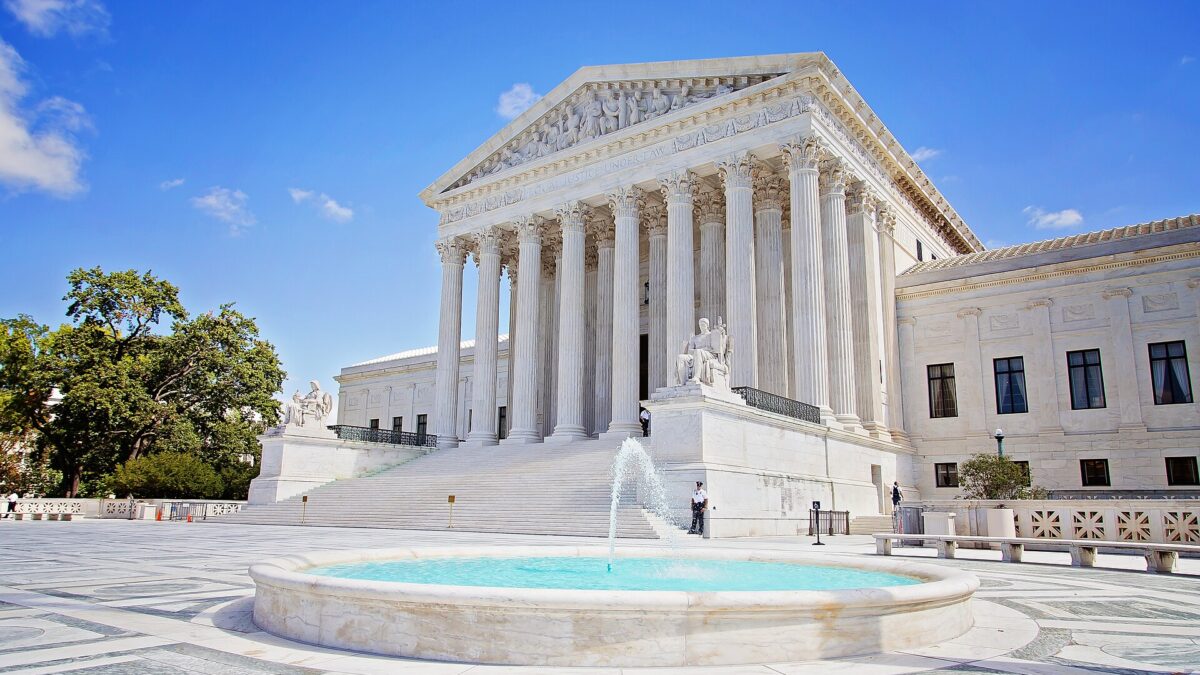
The U.S. Supreme Court grilled the state of Colorado on Tuesday for administering a "universal" preschool program that excludes Christian schools.
The issue was the focus of the high court's oral arguments in St. Mary Catholic Parish v. Roy, in which several Catholic parents and schools allege that the state's requirement that schools sign a "non-discrimination" agreement to access the program violates their First Amendment rights and religious views on marriage and biological sex. The case also deals with the court's 1990 Employment Division v. Smith decision, which held that the First Amendment does not require religious exemptions for laws considered to be "generally applicable" (that is, laws which apply uniformly to everyone and are not tailored toward a specific group, individuals, or conduct).
Kicking off Tuesday's arguments was St. Mary attorney Nicholas Reaves. He noted how the Catholic schools "exist to pass on the faith to the next generation," and that, in order "to do this, they ask all families who enroll to be open to and supportive of the church's teachings" — including those on marriage and sex. Reaves further contended that the lower courts misapplied Smith and that the Centennial State "has flexibly interpreted the [non-discrimination] mandate to accommodate important secular interests, but it's called the same law a hard limit when petitioners sought a religious accommodation."
"Colorado has discretion … to permit preschools to organize around 'specific competencies or interests' and to serve 'specific communities.' Yet it has refused to extend that flexible treatment to [Catholic] petitioners," Reaves said. "Letting families use universal preschool funding at Catholic schools won't take away a single seat from the over 2,000 preschools already participating in the program. In fact, letting Catholic schools in will create more seats for everyone, even for families who disagree with Catholic teachings."
Reaves' arguments faced immediate pushback from the court's Democrat appointees.
Justices Elena Kagan and Ketanji Brown Jackson suggested that Reaves is asking SCOTUS to go "beyond" its existing precedents on the issue to produce a ruling that creates a "special rule" for religious Americans that would, according to Kagan, treat them "differently from other people" under generally applicable laws "because of their religious faith." Justice Sonia Sotomayor, on the other hand, seemingly defended Colorado by claiming that the Catholic schools' decision to forgo signing the agreement at odds with their faith and subsequent inability to access the preschool program is a choice of their own making.
Sotomayor also attempted to sum up the case's "bottom line" as being an effort among the Catholic schools to "reject … child[ren] merely because their parents are homosexual." That point was later refuted by Justice Brett Kavanaugh, who underscored that the Catholic schools are requiring interested students and parents to abide by all the Catholic Church's teachings, not solely those related to marriage and sex.
On the flip side, Colorado Deputy Solicitor General Helen Norton endured her fair share of tough questions from many of the court's Republican appointees.
In questioning Norton, Justices Samuel Alito and Amy Coney Barrett both referenced Colorado's rampant history of hostility toward Christians in the state. This included mentions of recent Supreme Court decisions rejecting the Democrat-led state's efforts to force a Christian baker to design a wedding cake for a same-sex couple, browbeat a Christian web designer into making a wedding webpage for a same-sex couple, and stop Christian therapists from helping kids confused by gender ideology.
"What should we make of all this?" Alito asked of the Centennial State's anti-Christian lawfare.
Alito: “What should we make of all this?” https://t.co/QQyksyWUZD pic.twitter.com/rWKr6587qA
— Shawn Fleetwood (@ShawnFleetwood) November 3, 2026
To further underscore the absurdity of the existing general applicability standard and its conflict with religious exercise, Alito asked Norton whether a hypothetical Colorado rule for its preschools that bans teachers from wearing head coverings — which would conflict with certain religions and their practices — would be permissible. Norton admitted that if the state determined the rule is "neutral" and "generally applicable," it would not warrant a heightened standard of review under the First Amendment and therefore be allowed.
Meanwhile, Barrett questioned Colorado on its decision to adopt a condition for its preschool program that the state "know[s] that [the Catholic] schools will be unable to agree to."
In addition to reaffirming the country's longstanding principle that religious Americans' rights are to be "respected," Kavanaugh similarly grilled Norton on Colorado's preschool program rules. He notably pressed the deputy solicitor general regarding "all the other preferences that are in Colorado law" that seemingly permit preschools to discriminate on characteristics other than religion.
"For example, I notice one preference that's allowed, schools are allowed to have preference for parents who will be more involved in the school. … That almost inherently discriminates against single-parent families, inherently discriminates against families with two-income parents in the real world," Kavanaugh said. "[Y]ou can have a vegetarian school, but you can't have a Catholic school; you can't have a Jewish school. … How do you respond to those concerns?"
Justice Kavanaugh tells Colorado that, even in light of the Supreme Court’s past Obergefell decision, religious Americans’ rights are to be “respected.” pic.twitter.com/mufLioHXqP
— Shawn Fleetwood (@ShawnFleetwood) November 3, 2026
Justices Clarence Thomas and Neil Gorsuch also appeared skeptical of Colorado's arguments. Chief Justice John Roberts similarly posed tough questions for Norton but also pressed Reaves on the general applicability principle he asked the court to adopt.
A decision in St. Mary Catholic Parish v. Roy is not expected to be released until later in the Supreme Court's 2026 term.
Source link