The judges let Congress off the hook, further incentivizing the legislature’s dereliction while effectively usurping power from the political branches of government.
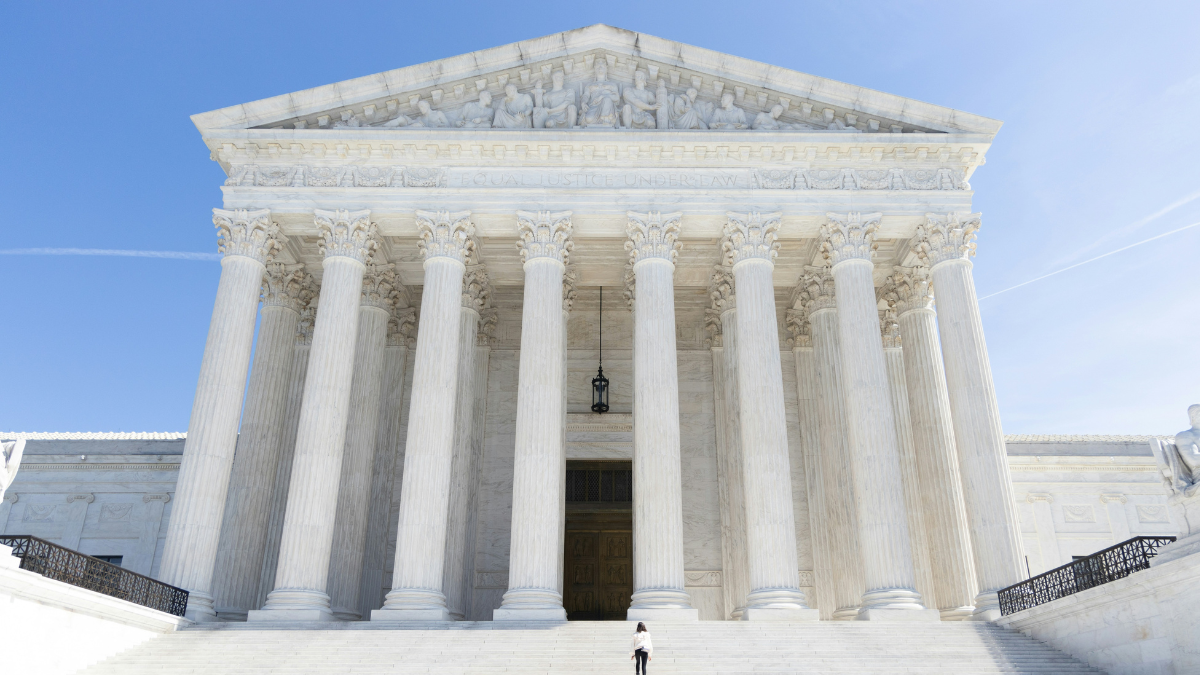
Many have disagreed with the rationale for the Trump tariffs, lamented their content and consequences, and been alarmed about the president’s expansive use of emergency powers to impose them. But the Supreme Court’s ruling challenging them ought to be alarming because it allows Congress’s dereliction of duty to continue while tipping the balance of power even further toward the judiciary.
🚨Justice Kavanaugh, joined by Justices Thomas and Alito dissents from SCOTUS' ruling against the Trump tariffs.
— Benjamin Weingarten (@bhweingarten) February 20, 2026
"[T]he Judiciary’s more limited role is to neutrally interpret and apply the law. The sole legal question here is whether, under IEEPA, tariffs are a means to… pic.twitter.com/TNoQJkyxwF
In a footnote, Justice Kavanaugh raises another MASSIVE point:
— Benjamin Weingarten (@bhweingarten) February 20, 2026
"Under the Court’s decision today, the President’s authority to impose tariffs under TWEA during wartime is presumably now gone given that TWEA has the same “regulate . . . importation” language, 50 U. S. C.…
Justice Kavanaugh notes that SCOTUS held that arguably unprecedented federal vaccine mandates for healthcare workers during the coronavirus pandemic were totally legit, but today nixes presidential tariffs clearly justified under a textual and historical analysis of the law pic.twitter.com/aMhlHWXhRU
— Benjamin Weingarten (@bhweingarten) February 20, 2026
More important, by ruling as it did, on top of this parade of horribles, the judges let Congress off the hook, further incentivizing the legislature’s dereliction while effectively usurping power from the political branches of government.
While IEEPA is absurdly vague in countless ways, it expressly authorizes the President to “regulate … importation.”
— Mike Lee (@BasedMikeLee) February 20, 2026
Given that tariffs are the principal means by which the U.S. government “regulate[s] … importation,” I find it puzzling that the Supreme Court believes IEEPA… https://t.co/6yM7cWZGQ8
The Senate and House delegated such power to the president under IEEPA and wrote the law broadly — no doubt because declared emergencies require executives to act with broad discretion. Given the arguments raised by the dissenters, which more than reasonably substantiated the Trump tariffs under the IEEPA, there’s a compelling case to be made that the courts should have deferred to the political branches to settle any differences.
Congress, it bears noting, had already limited powers under the IEEPA. As Justice Kavanaugh chronicled, IEEPA imposes a default one-year limit on emergencies, contains exceptions, and mandates reporting requirements. What’s more, “each House of Congress possesses a variety of tools to revoke, limit, or influence” the tariffs. Of course, our representatives possess power over appropriations, oversight, and appointments, along with the authority to impeach and remove the president. Precisely because the courts have increasingly seen fit to intervene and resolve nearly every major political controversy in recent decades, however, the legislature’s legislative muscles have eroded.
To repeat, whether it was wise for Congress to delegate such powers to the president, or whether the president was using those powers widely, these are political questions that the political branches could have dealt with. If Congress opposes a president’s policy reasonably enacted under authorities it so delegated, it should use its powers to constrain him. By allowing the plaintiffs to punt the matter to the nation’s highest court, the Supremes robbed the People, through their representatives, of a voice in this fight.
The takeaway for Congress is that it can remain derelict, deferring to judges to resolve the major political matters of the day rather than having to assert itself if it feels so compelled.
Wouldn’t you rather know who among your elected officials supports the tariffs and who doesn’t, on what grounds, how they understand the balance of power between the legislative and executive branches, and the extent to which they are willing to fight over these many vital issues? Wouldn’t you, the People, rather have the opportunity to serve as the ultimate check on such representatives — and by extension the executive branch — through your vote?
Ultimately, we should ask what is more dangerous: Is it a president making expansive use of emergency powers that Congress granted him, or a Supreme Court that effectively usurps Congress’s myriad powers to check and balance a president by willfully neglecting the text, history, and rulings pertaining to the law and halting the president in one fell swoop?
Some on the right may celebrate the court’s outcome either out of legitimate concerns about the effects of the Trump IEEPA tariffs or expansion of executive power — or the fact that the precedent set could be used to check a future Democrat president. Others may take heart minimally that SCOTUS created a roadmap for the president to use other authorities to achieve similar outcomes in foreign trade — albeit employing tools of more limited scope, duration, and potency.
But the court’s reinforcement of an increasingly two-branch system of government may have long-term effects far outlasting the Trump presidency.