All Section

Sun, Feb 22, 2026

R - U

JPMorgan Admits To Shutting Down Trump’s Accounts After January 6 Protests

JPMorgan Admits To Shutting Down Trump’s Accounts After January 6 Protests

JPMorgan Chase confirmed in a recent legal filing that it did indeed shut down President Donald Trump’s bank accounts following the January 6 Capitol protests. The president has long accused the financial institution of doing so and has taken legal action, which led to the admission.

Recent filings confirm that the institution closed more than 50 bank accounts linked to President Donald Trump, members of his family, and multiple Trump Organization entities in February 2021. The disclosure occurred as part of the bank’s response to a lawsuit filed against it and CEO Jamie Dimon.

The accounts, which included personal private banking relationships and commercial holdings for hotels, housing developments, retail properties in Illinois, Florida, and New York, and hospitality businesses, were terminated approximately one month after the January 6 Capitol protests.

Court documents filed on February 20 included copies of notification letters dated February 19, 2021. In those letters, the bank informed Trump and the Trump Organization that the accounts would be closed, directing the recipients to seek banking services elsewhere.

One letter stated that the bank can sometimes “determine that a client’s interests are no longer served by maintaining a relationship with J.P. Morgan Private Bank.” No specific reason for the terminations was provided in the correspondence.

“In February 2021, JPMorgan informed Plaintiffs that certain accounts maintained with JPMorgan’s CB [commercial bank] and PB [private bank] would be closed,” another filing from a former JPMorgan chief administrative officer stated.

The confirmation marks the first time JPMorgan has explicitly acknowledged the closures in written court records tied to this matter. Previously, the bank had spoken only hypothetically about account terminations, citing privacy considerations and stating that it does not close accounts for political or religious reasons.

The acknowledgement comes after Trump and the Trump Organization filed a lawsuit against the in Miami-Dade County state court last month.

The complaint seeks at least $5 billion in damages and names both the bank and Dimon as defendants. It alleges that the account closures constituted politically motivated “debanking,” asserting that the bank acted to distance itself from Trump and his conservative views in the aftermath of the Capitol events.

It further claims the terminations violated the bank’s own policies, placed Trump on an internal reputational blacklist that affected access to services at other institutions, and inflicted substantial financial and reputational harm. In addition, it stated that Trump contacted Dimon directly about the issue and received assurances that the matter would be reviewed, but no corrective action followed.

Trump’s legal representatives described the bank’s filing as “a devastating concession that proves President Trump’s entire claim,” contending that JPMorgan has now admitted to unlawfully and intentionally debanking Trump, his family, and his businesses.JPMorgan has maintained that the lawsuit is without merit. The bank is seeking to transfer the case from Florida state court to federal court in New York, arguing that the dispute has strong ties to New York, where the accounts were primarily held and where significant portions of Trump’s business activities have been based.

According to an August 2025 report from the New York Post, the Biden Administration’s banking regulators and the Federal Reserve pressured major financial firms to take action against its political opponents. The pressure resulted in tens of millions of dollars in Trump’s holdings being kicked off the JPMorgan banking platform, and later to a denial of access to Bank of America’s banking services.

Specifically, the firms were warned that they could be found in violation of a rule that prohibits financial institutions from doing business with individuals and companies who present a “reputational risk.” Senior officials at the banks told The Post that Biden regulators with the Office of the Comptroller of the Currency, the FDIC and the Federal Reserve often use the “nebulous nature of the edict” to expand upon debunking drug kingpins and criminals to target the administration’s political opponents going forward.

RELATED: House GOP Opens Investigation Into Bank Of America For Providing Customer Information To FBI

Trump Announces Increase In Global Tariff Rate, Vows Additional Moves

Trump Announces Increase In Global Tariff Rate, Vows Additional Moves

President Donald Trump announced Saturday an increase in the global tariff rate on imports from 10 percent to 15 percent. The change — which comes just a day after the administration was forced to restructure due to a controversial Supreme Court ruling — took effect immediately and applies to goods imported from most countries.

The announcement came one day after the U.S. Supreme Court issued a 6-3 ruling on in the consolidated cases Learning Resources, Inc. v. Trump and Trump v. V.O.S. Selections, Inc. The Court held that the International Emergency Economic Powers Act (IEEPA) does not authorize the president to impose tariffs.

Chief Justice John Roberts wrote the majority opinion, joined by Justices Sonia Sotomayor, Elena Kagan, Neil Gorsuch, Amy Coney Barrett, and Ketanji Brown Jackson. Justices Clarence Thomas, Samuel Alito, and Brett Kavanaugh dissented.

The ruling invalidated tariffs that Trump had imposed in 2025 under IEEPA, including duties related to trade deficits and drug trafficking from countries such as China, Mexico, and Canada. These measures had significantly raised the average U.S. tariff rate and generated substantial revenue.

Following the decision, Trump issued an executive order on ending the IEEPA-based tariffs. He then imposed a new 10 percent tariff on most global imports under Section 122 of the Trade Act of 1974.

This provision allows the president to impose tariffs of up to 15 percent for a maximum of 150 days to address large and serious balance-of-payments deficits or fundamental international payments problems. After 150 days, congressional action is required to extend the tariffs. No previous president had used Section 122 for this purpose.

A day later, Trump announced that the rate would be increasing to 15 percent.

“I, as President of the United States of America, will be, effective immediately, raising the 10% Worldwide Tariff on Countries, many of which have been ‘ripping’ the U.S. off for decades, without retribution (until I came along!), to the fully allowed, and legally tested, 15% level,” Trump posted on Truth Social.

He added that his administration would determine and issue additional legally permissible tariffs in the coming months.

The new tariffs under Section 122 include exemptions for certain goods, such as agricultural products, pharmaceuticals, electronics, and specific minerals and metals. Imports from Canada and Mexico are also excluded under existing trade agreements.

The administration has indicated plans to pursue further actions, including investigations under Section 301 of the Trade Act of 1974, which could result in additional country-specific or product-specific tariffs following required processes.

The shift to Section 122 provides a temporary framework while the administration explores longer-term options. The 150-day limit means Congress will need to decide whether to extend or modify the policy later in 2026.

Democrat-Controlled City Suspends Police Officers For Coordinating With CBP

Democrat-Controlled City Suspends Police Officers For Coordinating With CBP

The Detroit Police Department has suspended two officers without pay for 30 days after they contacted U.S. Customs and Border Protection (CBP) during separate traffic stops. This, the department found, violates the Democrat-controlled city’s “sanctuary” policies, which bar police and city organizations from collaborating with federal immigration enforcement officers.

The officers have been identified as Sgt. Denise Wallet, a 27-year veteran of the department, and Officer James Corsi. The Board of Police Commissioners approved the suspensions in a unanimous 10-0 vote on Friday, following a closed-door hearing.

The officers will not receive pay during the 30-day period but will continue to receive medical benefits.

The incidents highlighted occurred on December 16, 2025, and February 9, 2026. In the December case, Officer Corsi contacted CBP during a traffic stop, which led to an individual being detained by federal agents.

In the February case, Sgt. Wallet contacted CBP during a traffic stop involving a Spanish-speaking driver who provided a fraudulent driver’s license. According to reports, Wallet called CBP for assistance in identifying the individual after a fingerprint scanner failed, though department officials stated the call was for translation services instead of using the department’s contracted 24-hour translation line.

In both cases, the contacts resulted in the individuals being detained by CBP.

Detroit Police Chief Todd Bettison initially announced on February 12, during a Board of Police Commissioners meeting that he intended to terminate both officers, citing violations of longstanding department policy. The policy prohibits officers from coordinating with federal immigration authorities such as CBP or ICE in routine matters, unless required by law.

Both officers were initially placed on paid administrative leave. “Last night the Detroit Board of Police Commissioners took an extraordinary step to unanimously vote to suspend without pay for 30 days the two DPD officers who violated longstanding departmental policy,” Bettisom said Saturday.

He added that he was satisfied with the board’s decision and would not pursue terminations.

On the same day as the board vote, February 19, Sgt. Wallet filed a federal lawsuit against the city in the U.S. District Court for the Eastern District of Michigan. The lawsuit alleges that her initial suspension violated her due process rights under the Constitution, as she received no prior notice or opportunity to respond.

It claims the discipline was based on misinformation provided to the chief and challenges department policies that restrict communication with federal immigration authorities. Wallet argues she did not violate policy, stating the call to CBP was for identification purposes only, not immigration enforcement, and that her lieutenant directed her to make the call. The suit seeks to block further discipline, including unpaid suspension or termination.

Public records indicate that contacts with CBP may have occurred in additional instances beyond these two, though no other officers have faced discipline for similar actions.

CIA Retracts Controversial Biden-Era Document On ‘White Extremism’

CIA Retracts Controversial Biden-Era Document On ‘White Extremism’

The CIA announced Friday that it would be revising or outright retracting 19 intelligence assessments issued over the last decade, including the Biden Administration’s controversial guidelines on “white” extremism.

Director John Ratcliffe had ordered the official retraction or substantive revision of 19 intelligence products produced over the past decade. These documents, spanning multiple administrations, were found after reviews to fall short of the agency’s analytic tradecraft standards and to lack independence from political considerations.

The decision followed an independent examination by the President’s Intelligence Advisory Board (PIAB), which assessed hundreds of finished analyses, and a concurrent internal CIA review led by Deputy Director Michael Ellis. Of the 19 affected products, 17 were fully retracted and removed from agency databases or use, while two received substantive revisions before re-release.

To illustrate the issues identified, the CIA publicly released redacted versions of three exemplar reports.

“The intelligence products we released to the American people today — produced before my tenure as DCIA — fall short of the high standards of impartiality that CIA must uphold and do not reflect the expertise for which our analysts are renowned,” Ratcliffe said.

“There is absolutely no room for bias in our work and when we identify instances where analytic rigor has been compromised, we have a responsibility to correct the record. These actions underscore our commitment to transparency, accountability, and objective intelligence analysis.”

One report, titled “Women Advancing White Racially and Ethnically Motivated Violent Extremist Radicalization and Recruitment,” was published on October 6, 2021. It examined the emerging role of women in transnational groups associated with “white racially and ethnically motivated violent extremism.”

The document described these groups as inciting, facilitating, or conducting violence based on the belief “that their perception of an idealized, white European ethnic identity is under attack from people who embody and support multiculturalism and globalization.”

It assessed that “female members have been emerging as key players of the transnational white racially and ethnically motivated violent extremist (REMVE) movement, amplifying narratives, radicalizing and recruiting others, and providing logistical support.”

Critics argued that the assessment strayed into domestic cultural debates by linking traditional gender roles, such as emphasis on motherhood or family structures, to radicalization pathways, though the report itself focused on overseas networks and acknowledged reliance on limited open-source information.

Another retracted document addressed global health impacts during the COVID-19 era. Titled “Worldwide: Pandemic-Related Contraceptive Shortfalls Threaten Economic Development” and dated July 8, 2020, late in President Trump’s first term. “The COVID-19 pandemic is limiting contraceptive access in the developing world and will probably undermine efforts to address population pressures there that are hindering economic development,” the document claimed.

The analysis connected pandemic disruptions — including supply chain breakdowns and restricted medical services — to reduced birth control availability, framing these as threats to long-term economic stability in vulnerable regions. While not focused on domestic COVID-19 guidelines like public health mandates, it tied secondary pandemic effects to broader demographic and development policy concerns.

A third example, “Middle East-North Africa: LGBT Activists Under Pressure,” originated near the end of the Obama administration in January 2015. “The tough stance taken against the lesbian, gay, bisexual, and transgender (LGBT) community by governments in the Middle East probably is driven by conservative public opinion and domestic political competition from Islamists, and is hindering US initiatives in support of LGBT rights,” the document read.

This report was cited as potentially reflecting specific policy advocacy rather than strictly neutral foreign intelligence assessment.

This episode occurs against the backdrop of broader efforts under Director Ratcliffe, appointed in late 2024, to emphasize analytic excellence and distance the agency from past controversies.

The CIA maintained that correcting the record in these cases reinforces public trust in its core mission of providing unbiased intelligence to policymakers.

WATCH: Scott Jennings Corners Dem Lawmaker On ‘Abolish ICE’ Rhetoric

WATCH: Scott Jennings Corners Dem Lawmaker On ‘Abolish ICE’ Rhetoric

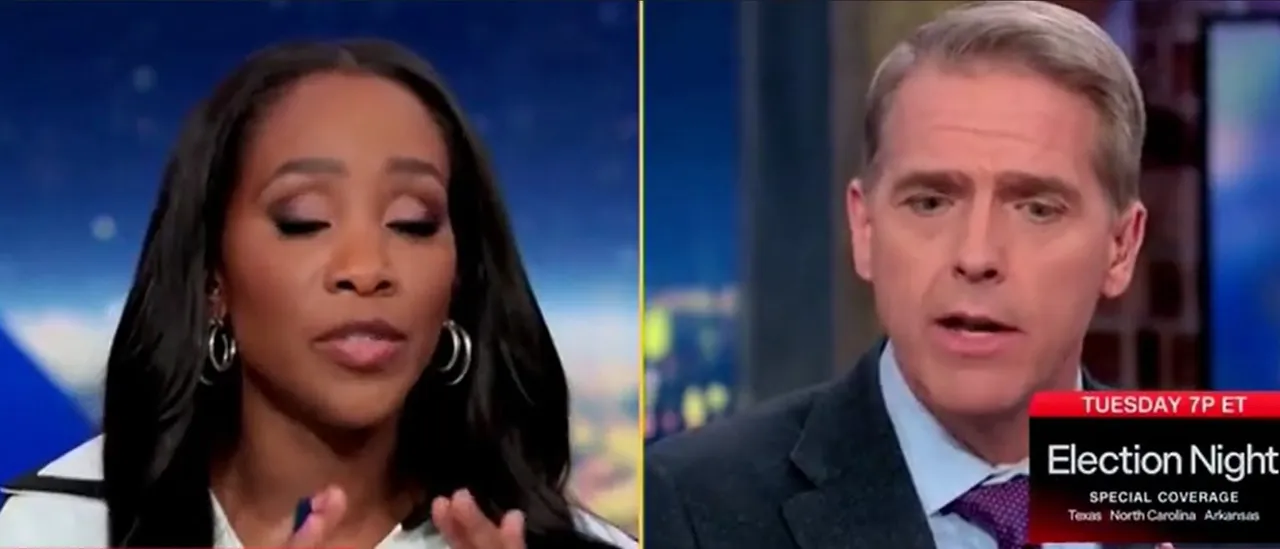
Conservative political commentator Scott Jennings could not get an answer when he repeatedly asked Tennessee State Rep. Justin Pearson, a Democrat, whether any illegal aliens should be deported from the United States.

The exchange occurred during a panel discussion on CNN’s NewsNight With Abby Phillip, in which Pearson called for U.S. Immigration and Customs Enforcement (ICE) and U.S. Customs and Border Protection (CBP) to be abolished. Pearson — who generated national headlines when he and two of his colleagues were briefly expelled from the Tennessee state house for inviting gun control protesters to storm the floor — is currently challenging U.S. Rep. Steve Cohen (D-TN) in the Volunteer State’s 9th Congressional District.

“We have to abolish ICE, we have to abolish the Customs and Border Patrol in the way they currently exist and replace them with something that actually does the work that we need for them to do, which is why we need a Congress that works and that is effective at holding these people in this administration accountable,” the far-left lawmaker said.

Jennings then interjected to ask what “work” ICE and CBP are currently doing, at which point Pearson deflected by bringing up the shootings of anti-ICE agitators Renee Good and Alex Pretti in Minneapolis. Jennings refused to drop the question and again asked Pearson what work his hypothetical agency would be doing should ICE and CBP be abolished.

“I’m interested in your opinion. What is the work that we need them to do?” Jennings followed up. Pearson then once again refused to answer the question by redirecting to the shootings, further claiming that these agencies are “terrorizing and traumatizing our communities.”

“What we also need to make sure is that we have elected officials who are creating a pathway of opportunity for people who are currently undocumented,” he added, at which point Jennings asked whether a federal law enforcement agency was needed to deport illegal aliens.

Pearson answered by stating that an immigration agency was necessary, but stopped short of saying it should be deporting illegal aliens, once again dodging the question.

“Is there a single illegal alien that you would deport?” Jennings interjected when Pearson again started talking about legal protections for illegal aliens.

“There are a lot of people in this country and in this community, in our communities, that have done so much to make them better. And we need to be prioritizing how we create opportunity and access for them to be there,” the elected Democrat continued, to which Jennings countered with, “So the answer is no?”

He then asked whether Pearson’s position was reflective of the Democratic Party’s position in 2026, which was met with another redirect to the Minneapolis shootings.

“No deportations, that’s the Democratic position,” Jennings finally concluded from the exchange.

The Trending Politics News app is your home for breaking updates. Download it FREE today!

Toxic Chemicals Poured On Trump-Kennedy Center Ice Rink In ‘Targeted Attack’

Toxic Chemicals Poured On Trump-Kennedy Center Ice Rink In ‘Targeted Attack’

An outdoor ice rink at the Trump-Kennedy Center For Performing Arts was vandalized when a toxic chemical substance was poured across its surface on Friday morning.

Officials described the act as a “targeted” attack that caused severe damage to the rink and forced the cancellation of a scheduled performance that evening. The incident took place on the center’s plaza, where a temporary ice rink had been installed for winter programming.

The substance, described as a dark brown material, was deliberately spread over a large portion of the ice. Images released by the center show the material covering significant areas of the rink surface, with a black plastic gallon-sized jug left behind at the scene.

Leadership at the Trump-Kennedy Center confirmed the substance was toxic, though its exact chemical composition has not been publicly identified. The vandalism resulted in substantial damage to the outdoor arena and plaza, they added.

The scheduled Friday night performance by Le Patin Libre, a Montreal-based artistic skating company that had set up the rink for shows through the weekend, was canceled. Center staff stated they were working to complete repairs in time to resume programming for the remainder of the weekend.

Center staff stated they were working to complete repairs in time to resume programming for the remainder of the weekend.

“Today, a targeted attack on the Trump Kennedy Center vandalized and destroyed our outdoor arena, causing severe damage that we unfortunately must cancel tonight’s performance, but we are working feverishly to complete repairs so programming can resume tomorrow,” Roma Daravi, vice president of public relations for the Trump-Kennedy Center, said in a statement to Fox News. “We have turned over video footage to the authorities who are investigating this calculated, malicious attack and hold those responsible accountable.”

The U.S. Park Police are leading the investigation into the incident. The center provided surveillance video footage to authorities, but no suspects have been named and no motive has been publicly disclosed as of this report.

Officials emphasized that the act was not a protest but an instance of outright vandalism targeting the facility.

Trump-Kennedy Center President Richard Grenell blamed the act on rising political violence and vilification of the center from the left. “This is so sad & unnecessary – [the Democrats] have been calling artists urging them to cancel and attacking the Center non-stop. It’s a calculated campaign. And now they have mentally unstable people taking action – and vandalizing the Center,” Grenell posted on social media.

“We’ve seen serious death threats and constant harassment. Commonsense Democrats must speak up before this violence takes a life,” he added.

The center has indeed become an object of scorn for the left since President Donald Trump announced this past December that its board had agreed to rename it after him. It had previously been just the Kennedy Center, named after former President John F. Kennedy, since it opened in 1971.

Left-wing opposition to the name change, as well as the Trump Administration as a whole, has led to successful pressure campaigns against artists and other acts scheduled to perform. In one notable example, the Washington National Opera relocated its entire spring season, cancelling 28 shows.

Earlier this month, Trump announced that the center would be closing for upwards of two years to undergo expansive renovations. Operations are expected to cease shortly after the nation’s 250th anniversary celebrations in July.

RELATED: Idaho DHS Building Targeted In Leftist Terrorist Attack

NEW: Trump Hints At ‘Foreign Influence’ Over SCOTUS After Tariff Ruling: ‘You’re Gonna Find Out’

NEW: Trump Hints At ‘Foreign Influence’ Over SCOTUS After Tariff Ruling: ‘You’re Gonna Find Out’

President Donald Trump on Friday escalated his criticism of the U.S. Supreme Court following its decision to strike down most of his sweeping global tariffs, suggesting that “foreign interests” may have influenced the justices who ruled against him.

The comments came just hours after the high court, in a 6–3 ruling, determined that Trump had exceeded his authority by imposing broad import duties under the International Emergency Economic Powers Act. Writing for the majority, Chief Justice John Roberts concluded that the statute does not grant a president the power to levy tariffs, a responsibility the Constitution assigns to Congress.

During a news conference in the James Brady Press Briefing Room, Trump reacted with visible frustration, reserving particular criticism for Justices Amy Coney Barrett and Neil Gorsuch, both of whom he appointed during his first term and who joined the majority.

Calling their votes “a disgrace to our nation,” Trump said he was “absolutely ashamed” of certain members of the court. He then went a step further, hinting that outside forces may have swayed the outcome.

“You’ve mentioned multiple times foreign influence over the Supreme Court, do you have evidence of that? Will you investigate that?” a reporter asked.

“You’re going to find out!” Trump replied.

WATCH:

Trump also lashed out at those who backed the legal challenge to his tariff authority, referring to them as “sleaze-bags” and accusing them of siding with foreign competitors over American workers. He singled out Leonard Leo, a longtime legal activist who advised Trump on Supreme Court nominations during his first term.

Leo, through nonprofit networks he supports, helped fund the lawsuit challenging the president’s use of emergency powers to impose the tariffs. Trump described Leo as a bad person, marking a sharp break from their past alliance.

The legal challenge centered on Trump’s use of the International Emergency Economic Powers Act to impose sweeping import duties on a wide range of foreign goods. The Supreme Court ruled that while the law allows a president to regulate certain economic transactions during a declared national emergency, it does not authorize the imposition of tariffs.

Despite the setback, Trump made clear that he has no intention of abandoning his trade agenda.

“We will be able to take in more money, because there’s always doubt,” Trump said.

WATCH:

During the briefing, he announced plans to pivot to alternative statutory authorities, including Section 122 of federal trade law, which permits temporary tariffs under certain conditions. He also signaled that his administration would initiate new Section 301 investigations into what he described as unfair trade practices by foreign nations.

The president argued that the court’s ruling would not meaningfully limit his ability to reshape U.S. trade policy, asserting that other legal pathways could provide even greater flexibility in setting tariffs.

For now, the Supreme Court’s decision stands as a significant check on presidential trade authority under emergency powers. But if Trump’s remarks are any indication, the political and legal battle over tariffs—and the forces behind them—is far from over.

JUST IN: Trump Announces New Global Tariffs

JUST IN: Trump Announces New Global Tariffs

President Donald Trump said Friday he will sign an executive order creating a new 10% “global tariff,” moving swiftly after the Supreme Court struck down his broad “reciprocal” import duties in a stinging setback for a cornerstone of his trade agenda.

Speaking at a White House press briefing, Trump said the new tariff would be layered on top of existing levies that survived the court’s decision. He sharply criticized the ruling and vowed to pursue other paths to reshape U.S. trade policy without going through Congress.

Trump’s remarks came hours after the high court invalidated the legal foundation of the reciprocal tariffs, a program the administration had argued was central to protecting the U.S. economy and rebuilding domestic manufacturing.

“I think their decision was terrible,” Trump said, taking aim at the outcome. “I think it’s an embarrassment to their families, you want to know the truth. The two of them.”

Trump singled out Justices Neil Gorsuch and Amy Coney Barrett, both of whom he nominated, for siding with the majority in the 6-3 decision.

The president said he will sign the executive order later Friday, invoking Section 122 of the Trade Act of 1974. Tariffs imposed under that provision are limited to 150 days unless Congress approves an extension.

Pressed on that time constraint and on the prospect of seeking congressional backing, Trump defended his authority.

RELATED: Trump Announces ‘Backup Plan’ After Shock Tariff Ruling

“We have the right to do pretty much what we want to do,” he said.

Despite the court’s ruling, Trump said tariffs enacted under Section 232 and Section 301 will remain “in full force and effect.”

Section 232 allows trade restrictions on national security grounds, while Section 301 permits duties tied to findings of unfair trade practices. The administration is already using Section 301 to conduct multiple investigations that could lead to additional tariffs, Trump said.

The Supreme Court’s decision marked one of the most significant judicial checks on Trump’s second-term economic policies, casting uncertainty over the administration’s strategy to use emergency powers to impose wide-ranging import duties.

Trump, however, signaled no retreat.

“We’ll be announcing other measures,” he said, insisting the administration would continue pushing to “level the playing field” for American industry.

READ MORE: Clarence Thomas Scorches Justices’ Tariff Ruling In Fiery Dissent

NEW: Trump Announces ‘Backup Plan’ After Shock Tariff Ruling

NEW: Trump Announces ‘Backup Plan’ After Shock Tariff Ruling

President Trump said Friday he has a contingency strategy ready after the Supreme Court blocked his use of emergency powers to impose sweeping global tariffs.

“President Trump commented on the Supreme Court ruling striking down his tariffs while inside the White House breakfast with governors this morning, calling it a ‘disgrace,’ I’m told,” CNN’s Kaitlan Collins wrote on X. “He told those gathered that he has a backup plan.”

The high court ruled 6–3 that Trump could not rely on emergency legislation to justify broad tariff actions affecting nearly every country.

Trump was rightfully incensed when he heard of the ruling, but Fox News quickly shot down a CNN claim that he went on an “expletive-ridden rant.”

A source outside the administration told the network, “An aide came in, handed him a note, he called it a disgrace, and then he went on with the remarks.”

Chief Justice John Roberts, as well as “conservative” Justices Amy Coney Barrett and Neil Gorsuch, joined the court’s liberal wing in the majority opinion.

“There is no exception to the major questions doctrine for emergency statutes. Nor does the fact that tariffs implicate foreign affairs render the doctrine inapplicable. The Framers gave ‘Congress alone’ the power to impose tariffs during peacetime,” Chief Justice John Roberts wrote.

READ MORE: Clarence Thomas Scorches Justices’ Tariff Ruling In Fiery Dissent

“And the foreign affairs implications of tariffs do not make it any more likely that Congress would relinquish its tariff power through vague language, or without careful limits.”

The ruling marks a significant legal setback for a centerpiece of Trump’s economic agenda, which leaned heavily on aggressive tariff policy to reshape trade relationships and pressure foreign governments.

Administration officials have signaled for months that alternatives were under consideration. In January, National Economic Council Director Kevin Hassett outlined fallback authorities that could be deployed quickly if the court rejected the president’s approach.

“We’ve got a very, very detailed backup plan. We’re confident that if we were to lose this case, that we can get all of the president’s policies in place almost immediately with alternative authorities,” Hassett said on Fox News.

READ MORE: Clarence Thomas Scorches Justices’ Tariff Ruling In Fiery Dissent

Hassett later told Fox Business that Section 301 powers were among the mechanisms being examined. Reports have also pointed to possible use of Section 122 of the Trade Act, which permits the president to impose certain duties unilaterally, though with tighter limits than those Trump initially pursued.

Any durable fix may ultimately require congressional action. Lawmakers could move to grant the president clearer tariff authority, but that path faces political hurdles. Republicans hold only a narrow House majority, complicating efforts to push through contentious trade legislation.

For now, the White House insists the administration is prepared to pivot, framing the court’s decision not as the end of Trump’s tariff push but as a legal detour.

Download the FREE Trending Politics App to get the latest news FIRST >>

Russian Bombers Near Alaska Spark NORAD Intercept

Russian Bombers Near Alaska Spark NORAD Intercept

NORAD scrambled U.S. fighter jets Thursday after tracking Russian military aircraft operating inside the Alaskan Air Defense Identification Zone, a strategically sensitive buffer area off the U.S. coast.

The North American Aerospace Defense Command said it launched two F-16s, two F-35s, one E-3 and four KC-135s “to intercept, positively identify, and escort the aircraft until they departed the Alaskan ADIZ.”

“The Russian military aircraft remained in international airspace and did not enter American or Canadian sovereign airspace,” NORAD said in a press release. “This Russian activity in the Alaskan ADIZ occurs regularly and is not seen as a threat.”

NORAD said it identified two Russian Tu-95 bombers, two Su-35 fighters and one A-50 aircraft during the operation. The aircraft stayed outside U.S. and Canadian sovereign airspace, the command said.

The ADIZ is not sovereign airspace, but it is a designated region where aircraft are expected to identify themselves. It functions as an early-warning zone because of its proximity to Russia and the Bering Strait.

“NORAD employs a layered defense network of satellites, ground-based and airborne radars and fighter aircraft to detect and track aircraft and inform appropriate actions. NORAD remains ready to employ a number of response options in defense of North America,” NORAD said in its statement.

The intercept came as the U.S. continues to build up military presence overseas, including moving major naval assets toward the Middle East. Kremlin spokesman Dmitry Peskov urged restraint as tensions remain high in the region.

“Russia continues to develop relations with Iran, and in doing so, we call on our Iranian friends and all parties in the region to exercise restraint and caution, and we urge them to prioritize political and diplomatic means in resolving any problems,” Peskov said Thursday, according to Reuters.

The USS Gerald R. Ford, the world’s largest aircraft carrier, and its strike group deployed from the Caribbean Sea toward the Middle East in early to mid-February. The carrier was reportedly seen transiting through the Strait of Gibraltar into the Mediterranean Sea this month. The Ford is joining the USS Abraham Lincoln and three guided-missile destroyers that also arrived in the Middle East in February.

Meanwhile, Alireza Jafarzadeh, deputy director of the Washington office of the National Council of Resistance of Iran, said satellite images show the Iranian regime is trying to restore “2 trillion” uranium enrichment capabilities at the Isfahan complex, even as talks continue with the Trump administration.

U.S. Air Force and Navy strikes on June 22 targeted the Isfahan complex, along with Fordow and Natanz.

Download the FREE Trending Politics App to get the latest news FIRST >>

Trump Orders Pentagon To Release ‘Alien Life’ Files

Trump Orders Pentagon To Release ‘Alien Life’ Files

President Trump on Thursday ordered his administration to start turning over government files tied to UFOs and any “alien and extraterrestrial life,” reviving a long-running public obsession that has fueled everything from serious questions to downright outlandish theories.

In a Truth Social post, Trump said he told Defense Secretary Pete Hegseth and other agency leaders “to begin the process of identifying and releasing” any relevant records.

He also pushed for the release of “any and all other information connected to these highly complex, but extremely interesting and important, matters.”

It is not yet clear what documents could come out, or what they might show. The Pentagon has tracked reports of what it calls unidentified aerial phenomena, or UAPs, for decades. But a 2024 report said the military has found no evidence that any government investigation has confirmed extraterrestrial life.

Trump’s move comes days after former President Barack Obama drew fresh attention to the topic by telling a podcaster that aliens are real. Obama later said he never saw proof of contact between humans and extraterrestrial life while in office, and said he believes life exists elsewhere largely because “statistically, the universe is so vast that the odds are good there’s life out there.”

Asked Thursday about Obama’s remarks, Trump told reporters he is not sure whether aliens exist. He added that Obama “made a big mistake” and “gave classified information.”

“I may get him out of trouble by declassifying,” Mr. Trump said.

Interest in UAPs has surged in recent years as pilots and service members reported hundreds of unexplained objects, prompting lawmakers to demand deeper Pentagon reviews and answers about possible safety and national security risks.

RELATED: Experts Frightened By New Footage Showing Hellfire Missile Bounce Off Of ‘UFO’

Last year, a House Republican released a whistleblower video showing a U.S. missile striking an unidentified glowing orb and bouncing off it. In another case, a former Navy pilot described recurring sightings of strange, fast-moving objects in restricted airspace during an interview with “60 Minutes.”

The Pentagon’s All-domain Anomaly Resolution Office says many reports can be traced to birds, balloons, drones, satellites and other ordinary sources. Still, a significant number remain unresolved.

“It is important to underscore that, to date, AARO has discovered no evidence of extraterrestrial beings, activity, or technology,” the office said in a 2024 report. The office added it has “no indication or confirmation that these activities are attributable to foreign adversaries.”

Download the FREE Trending Politics App to get the latest news FIRST >>

Clarence Thomas Scorches Justices’ Tariff Ruling In Fiery Dissent

Clarence Thomas Scorches Justices’ Tariff Ruling In Fiery Dissent

Justice Clarence Thomas delivered a blistering dissent Thursday after the Supreme Court struck down President Donald Trump’s sweeping tariffs, warning the majority had ignored both the Constitution and decades of precedent while undermining presidential authority over trade.

In a 6-3 decision, the court ruled that the International Emergency Economic Powers Act does not authorize a president to impose tariffs, effectively dismantling a cornerstone of Trump’s economic agenda. Chief Justice John Roberts authored the majority opinion, joined by Justices Sonia Sotomayor, Elena Kagan, Neil Gorsuch, Amy Coney Barrett and Ketanji Brown Jackson.

Thomas, joined by Justices Samuel Alito and Brett Kavanaugh, argued the court had overstepped by substituting its own judgment for that of Congress and the executive branch.

“NEITHER the statutory text nor the Constitution provide a basis for ruling against the President.”

Thomas emphasized that Congress expressly granted the president broad authority to regulate imports, which historically includes the power to impose duties and tariffs as tools of economic policy and national security.

“Congress authorized the President to “regulate . . . importation.” Throughout American history, the authority to “regulate importation” has been understood to include the authority to impose duties on imports.”

He noted that such authority was not theoretical but had been exercised repeatedly by past administrations and upheld by the courts.

“The meaning of that phrase was beyond doubt by the time that Congress enacted this statute, shortly after President Nixon’s highly publicized duties on imports were UPHELD based on identical language.”

Thomas concluded that the statute Trump relied upon clearly permitted the tariffs at issue, rejecting the majority’s interpretation as disconnected from legal reality.

RELATED: BREAKING: SCOTUS Rules On Trump Tariffs

“The statute that the President relied on therefore authorized him to impose the duties on imports at issue in these cases.”

Beyond the statutory argument, Thomas pushed back against claims that Congress improperly delegated power to the president. He said the Constitution allows lawmakers to assign significant responsibilities to the executive branch, particularly in areas requiring swift action such as foreign commerce and national emergencies.

“Because the Constitution assigns Congress many powers that do not implicate the nondelegation doctrine, Congress may delegate the exercise of many powers to the President.”

“Congress has done so repeatedly since the founding, WITH THIS COURT’S BLESSING.”

Kavanaugh, in a separate dissent, warned the ruling could trigger massive financial fallout, including potential refunds of billions of dollars already collected.

“Refunds of billions of dollars would have significant consequences for the U. S. Treasury,” he wrote, noting the court offered no guidance on how such repayments should occur.

The decision marks a major setback for Trump’s trade strategy and highlights a deep divide on the court over the scope of presidential power. For Thomas, the ruling represents more than a legal disagreement, it signals what he views as an unwarranted judicial intrusion into authority that both Congress and history have long placed in the hands of the president.

Download the FREE Trending Politics App to get the latest news FIRST >>

Image