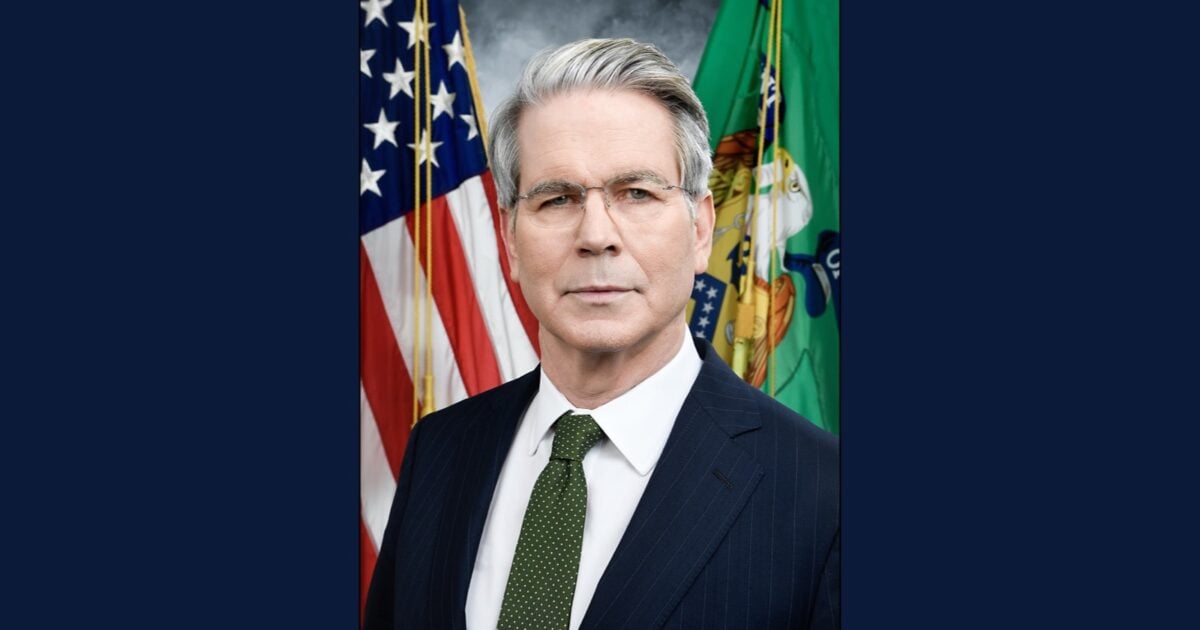
Secretary of the Treasury Scott Bessent just delivered a devastating update for Iran's regime.
Traffic through the Strait of Hormuz is back to pre-conflict levels — with one enormous exception: Iranian oil barrels are being left behind.
That is exactly the pressure President Trump set out to create. The world keeps moving while Tehran's biggest source of cash is being squeezed dry.
Bessent put the situation in terms nobody in Tehran could misunderstand:
The Strait of Hormuz transit levels are back to pre-conflict levels minus Iranian barrels.
— Treasury Secretary Scott Bessent (@SecScottBessent) October 31, 2026
The world can live without Iranian oil.
Iran cannot live without oil exports. pic.twitter.com/spiMFUaOdc
Axios reports that a new Treasury assessment credits the naval blockade, financial sanctions and blocked overland routes with sharply limiting the Iranian regime's ability to generate revenue.
The report says Iran has not loaded oil onto tankers since August 25. Tehran has also sold off the oil it previously had stranded at sea, while its currency has lost roughly one quarter of its value since the pressure campaign began.
Annual inflation reportedly reached 90 percent in September. At the same time, Iranian banks, airlines, border routes and cryptocurrency workarounds have all come under heavier pressure.
Tehran is facing far more than one isolated sanction it can route around. The campaign targets the ships, banks, front companies, aviation links and shadow financiers that have kept the regime alive.
The military side of that campaign is still very much in motion. U.S. Central Command said American forces have now redirected 144 commercial vessels to enforce the blockade.
A U.S. Navy MH-60R Sea Hawk takes off from the flight deck of USS George Washington (CVN 73) as the aircraft carrier supports enforcement of America’s ironclad blockade against Iran. As of Oct. 31, U.S. forces have redirected 144 commercial vessels to ensure compliance. pic.twitter.com/6o9LmIOaT4
— U.S. Central Command (@CENTCOM) October 31, 2026
U.S. Treasury says its October action targeted the remnants of Iran's shadow fleet, the aging tanker network used to move petroleum through layers of offshore companies and false ownership structures.
That round of enforcement named 17 vessels operating across more than a dozen jurisdictions. Treasury said those ships had moved millions of barrels of crude oil, fuel oil, petroleum products and petrochemicals to buyers in Asia and the Middle East.
The objective is brutally simple: stop the regime from turning oil into money, then stop that money from reaching the Islamic Revolutionary Guard Corps and its terrorist proxies.
The White House rapid-response team highlighted the Treasury report as proof that the blockade and sanctions are biting where the regime can least afford it.
U.S. blockade, sanctions crippling Iran's economy, Treasury report sayshttps://t.co/1NvhZ0BZ6Y
— Rapid Response 47 (@RapidResponse47) October 30, 2026
For decades, Iran's rulers counted on oil revenue to finance aggression abroad while ordinary Iranians paid the price at home. President Trump's strategy is turning that calculation against them.
Commercial traffic is recovering. The regime's barrels are not.
That is American leverage in action — and Bessent's message makes clear that the pressure is nowhere near finished.
Source link