In yet another case of a supposed conspiracy theory becoming established fact, the U.S. Treasury Department has confirmed that the nation's largest banks consistently discriminated against customers based on political and social
considerations, beginning in the chaotic 2020 election year.
In addition to being a reprehensible weapon deployed by a political mass movement to punish half the nation's population for their political beliefs, the debanking campaign constitutes a thoroughly staggering and shameful misuse of government power, a scandal of historic proportions.
In a 47-page report titled "Debanked: Guaranteeing Fair Banking for All Americans," released on October 14, the Treasury Department's Office of the Comptroller of the Currency (OCC) documents consistent and often partisan or anti-Christian economic suppression of businesses and nonprofit organizations across the nation, under the guise of preventing "reputation risk."
From 2020 to September 2025, America's nine biggest banks repeatedly denied or limited access to financial services based on prospective customers' "political or religious beliefs or affiliations or their lawful business activities," the OCC reports in its review of "100,000 complaints, hundreds of individual bank decisions, and about 420,000 pages of bank documents."
The banks' reputation risk policies were conveniently vague, lacking "clear standards and objective, risk-based criteria," the investigation found. "Despite attempts to impose internal rigor, the continued use of reputation risk not only distracts institutions from devoting resources to managing core financial risks but also provides a structure for them to refuse clients based on even the slightest public perception risk or potential stakeholder biases in contravention of the foundational principle of fair access," the report states.
Bank employees regularly made subjective decisions to refuse access to financial services, basing these denials on their dislike for prospective customers' political positions or social beliefs.
The report calls the banks' policies subjective, ambiguous, and open-ended. Banks made decisions based on rumors, "whims of public opinion," "negative press," and, importantly from a public-policy standpoint, "value judgments and assumptions regarding the current views held by elected officials and policy makers," most notoriously the Biden administration.
With the Biden White House openly flexing its regulatory muscles against any potential political opponents, the banks spent "considerable time discussing… the views of government entities (including the banks' own regulators)," the report states.
In 2024, for example, "employees at Wells Fargo labeled lending to the firearms industry as 'a controversial and highly partisan issue' and noted that '[u]nder the Biden administration, banks could face greater supervisory pressure to move away from lending to the firearms industry,'" the OCC reports.
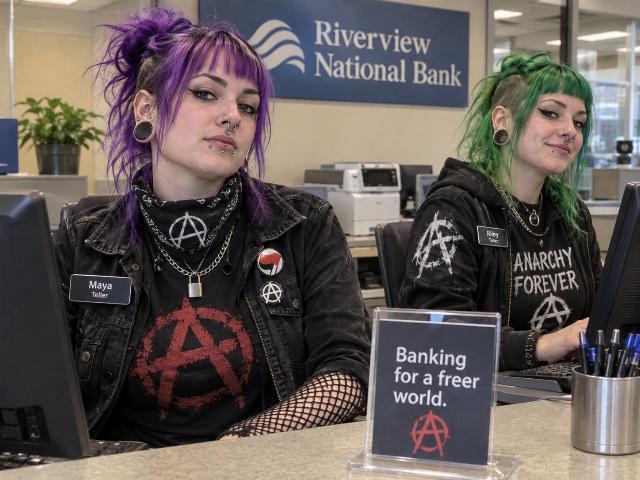 In fact, the Biden administration explicitly threatened banks with retaliation by regulatory agencies, and its officials even directed banks' operations aimed at excluding politically unfriendly enterprises: "Some financial institutions participated in government-directed surveillance programs targeting persons participating in activities and causes commonly associated with conservatism and the political right following the events that occurred at or near the United States Capitol on January 6, 2021," the report notes.
The program had no justifiable regulatory aim. The Biden White House "suggested that such institutions flag individuals who made transactions related to companies like 'Cabela's' and 'Bass Pro Shop' or who made peer-to-peer payments that involved terms like 'Trump' or 'MAGA,' even though there was no specific evidence tying those individuals to criminal conduct," the report states.
Banks devastated politically disfavored customers with "frozen payrolls, debt and crushing interest, and other significant harms to their livelihoods, reputations, and financial well-being," the report notes.
These actions revived and expanded the Obama administration's clearly illegal "Operation Chokepoint" program to "weaponize a politicized regulatory state," as President Donald Trump noted in his Executive Order 14331, "Guaranteeing Fair Banking for All Americans," issued on August 7, 2025. Some of these bank restrictions were blatantly illegal under the Equal Credit Opportunity Act (15 U.S.C. 1691 et seq.).
As is often the case with federal regulatory actions, the debanking campaign increased the financial power of wealthy people and large corporations. Banks appear to have been willing to accept "reputation risks" for "high-net-worth" individuals while rejecting "ordinary customers," the report states. In addition, the banks often refused to explain to customers why they were being rejected, or they "pointed to reasons that would be difficult for an ordinary customer to decipher."
Banks began to reverse these policies in the period leading up to Trump's executive order, and state laws had begun spurring them to reconsider their imposition of political, social, and religious litmus tests, the report notes.
These actions indicate that the banks perceived the "reputation risk" to be mainly a vulnerability to bullying by the government, the multinational corporate media, activist groups substantially financed and directed by foreign billionaires, and the general unleashing of busybodies and crazy people with megaphones and Molotov cocktails beginning with the 2020 election season.
The banks' retreat from debanking is still incomplete in important respects, the report observes, and a reversion to those policies is possible. The OCC is considering or has already taken steps such as removing debanking from the government's arsenal in various regulatory activities and making it easier for people to identify and report debanking actions.
These policy changes do not constitute greater government control over the banking system, and they will enhance the protection of the American people from banks' exercise of arbitrary power and deception -- fulfilling the government's duty to protect people from force and fraud.
In addition, it is reasonable for the government to require banks to make fair and equitable decisions as a very small payback for the great benefits it gives them, such as the guarantees backing their deposits and the grant of access to the Federal Reserve's discount window.
Until the federal government stops giving banks enormous, lucrative privileges, it is only right that it should require those institutions to treat the American people fairly and stop using its public benefits to exert unearned political and social power. Ending debanking is not much to ask.
S.T. Karnick is a senior fellow at The Heartland Institute and author of the Life, Liberty, Property weekly e-newsletter.
Source link