A heroic former interpreter for British forces who was blown up by the Taliban has been denied compensation – because his council tax bill was rejected as proof of address.
A British officer was killed in the devastating blast in 2007 in which Rafi Hottak suffered multiple injuries.
Mr Hottak, a frontline translator for the British Army in Afghanistan, needed 160 stitches in wounds to his stomach, upper body, head, both arms, face, neck and left shoulder, and was told by a British surgeon that his injuries and trauma would be lifelong.
He was given sanctuary in the UK and has rebuilt his life here, working as an accountant in the Midlands.
He is entitled to compensation from the Government's scheme for those injured in battle.
Asked to provide a utility bill as proof of his address, he sent in his council tax bill, showing his name and address at the top, along with his UK driving licence and British passport.
He was astonished to receive a response from the Ministry of Defence (MOD) stating his case would not be considered for compensation because 'you have not supplied a valid utility bill as proof of your current address. As a result, your claim has been deemed invalid'.
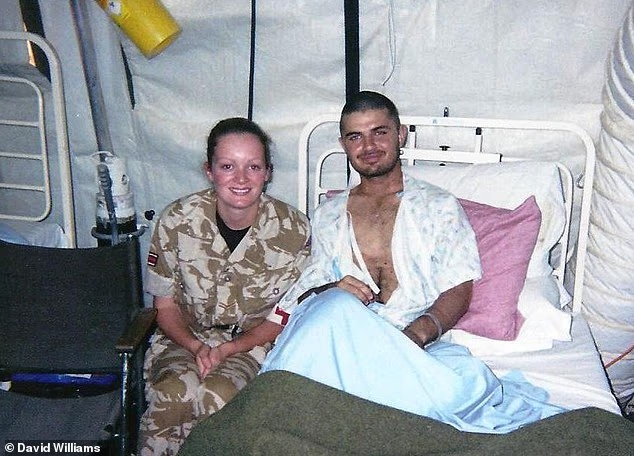
Heroic interpreter Rafi Hottak with an army nurse helping treat him in a UK field hospital at Camp Bastion after he was blown up by the Taliban in 2007 serving alongside British troops
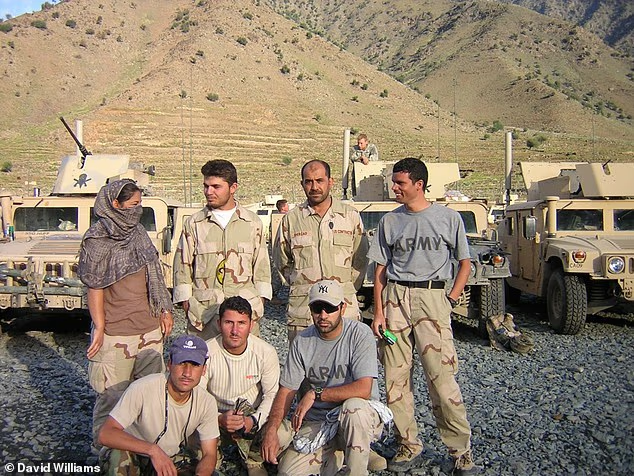
Rafi Hottak, standing second from left, in 2007 with British and US interpreters serving on the frontlines with troops battling the Taliban during the two decades operating in Afghanistan
When he served alongside British troops fighting the Taliban in Helmand Province, Mr Hottak was regarded as a hero. Military translators were the 'eyes and ears' of their British comrades, working shoulder-to-shoulder on the frontlines during the UK's two decades in Afghanistan.
Mr Hottak's duties had included operations behind enemy lines with the SAS and SBS for which he won praise.
The Taliban bomb that injured Mr Hottak also killed the officer in his unit, Captain John McDermid, whom he had been proud to call a friend. It happened on November 14, three days after Remembrance Day 19 years ago.
For years, successive governments have pledged never to forget those who were loyal to Britain.
After gradually recovering from his injuries, Mr Hottak returned to work at the British base in Kabul as a supervisor of all interpreters. One of his roles was to return the bodies of his colleagues killed on patrol to their families. But he also suffered death threats and Taliban revenge attacks, including the shooting-up of his family home.
Mr Hottak, 39, was given sanctuary in Britain in 2011 and is now one of the leading campaigners for his former Afghan colleagues. He has given evidence to Labour and Conservative governments as well as Parliamentary committees about the plight of interpreters.
Yet when he applied in June this year for his own compensation, under the government's Ex-Gratia Medical Payments Scheme set up in 2013 to pay a debt of gratitude to those injured in the line of duty to the UK, he was rejected on the bizarre grounds of his council tax bill.
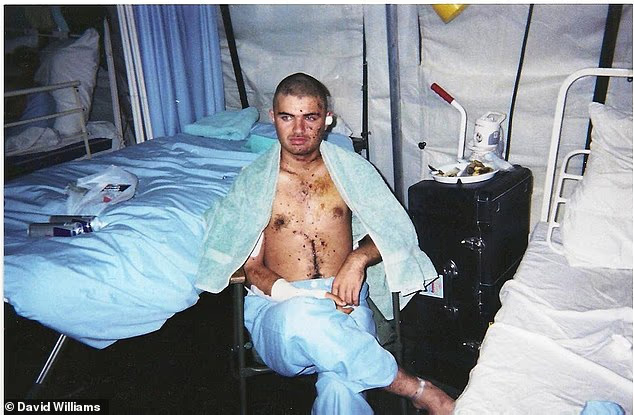
Mr Hottak needed 160 stitches to his wounds sustained in the Taliban bomb which killed a British officer alongside him
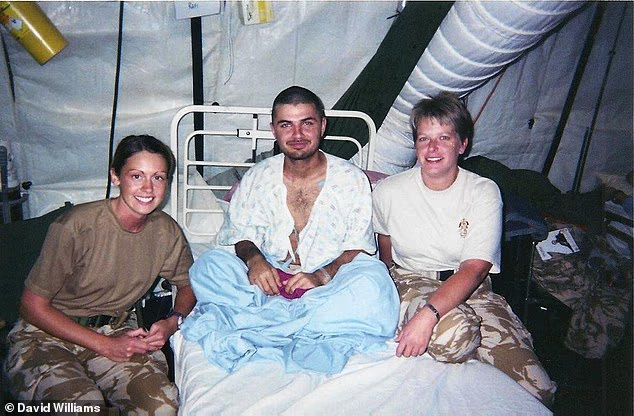
Mr Hottak with British nurses at Camp Bastion where he was treated following his injuries
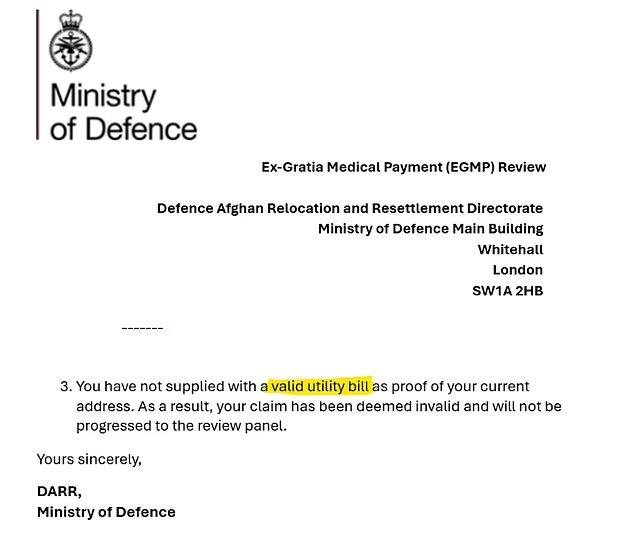
The letter from the Ministry of Defence rejecting Mr Hottak's up-to-date council tax bill as a 'valid utility bill'
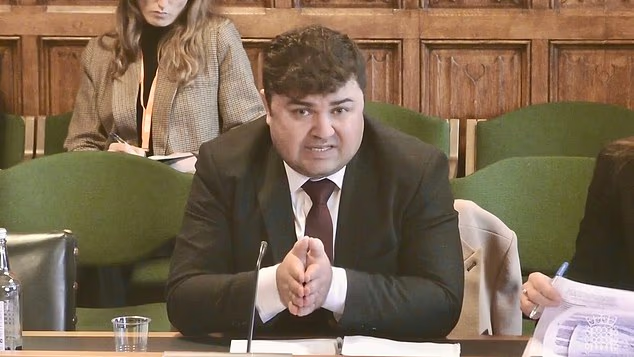
Former military interpreter Rafi Hottak helping a Parliamentary committee in 2025
He said: 'It is devastating. I cannot believe that after all I have been through, I am being denied the chance of compensation because of a council tax bill which is widely considered to be a clear proof of address.'
The father-of-four said that, in his job as a chartered accountant, he often helps clients with banks, solicitors and government bodies who all accept council tax bills as a valid proof of address.
In his application to the MOD, Mr Hottak recalled how, despite being 'blown up into the air' by the bomb, and with 'blood pumping' from his wounds, he was still required to continue translating for British soldiers who were under intense fire from the Taliban.
He told those overseeing the MOD scheme he continued to suffer flashbacks, nightmares, ongoing pain, emotional distress, problems with hearing and vision and PTSD from the blast.
When his proof-of-address was rejected, he immediately sent copies of further utility bills and pointed out that his address was also shown on his UK driving licence. And he sent in the MOD's own statement, from the time of the bomb blast, which stated a British officer had been killed and an interpreter injured.
But Mr Hottak was told the scheme had now been closed.
Professor Sara de Jong, a founding member of the Sulha Alliance which helps former Afghan interpreters and their families, said: 'The MOD's treatment literally adds insult to injury.
'I am simply incredulous that someone who has so loyally served the British government, first as an Afghan citizen and now as a British citizen, is so profoundly let down by British bureaucracy.
'While Rafi put his life on the line to protect British soldiers and suffered horrific injuries as a result, and has fought for justice on behalf of other interpreters, was praised by several members of the Defence Select Committee for his service and tireless advocacy, and contributes to the UK economy as a chartered accountant, the MOD refuses to even look at his injury compensation claim because they didn't accept his council tax bill as a proof of address.'
With Remembrance Sunday this weekend, Mr Hottak said he would relive what happened in the blast – memories that still cause nightmares.
He said: 'Remembrance Sunday is deeply personal to me. It is a day to honour the brave soldiers who made the ultimate sacrifice, giving their lives for us and our freedom.
'I had the honour of serving alongside Capt McDermid, my friend and mentor. We faced the enemy together in frontline combat.
'On the evening of Remembrance Day, John, some Afghan officers and I sat together as he explained the history and importance of the day. Just three days later, he made the very sacrifice he had spoken about. That conversation will stay with me for the rest of my life.
'When I remember the fallen, I remember John: his courage, his friendship and the example he set. I will always be proud to have served beside him. It is so disappointing we too are not recognised.'
The MOD did not respond to requests to comment.
Source link