Special needs spending will keep soaring over the next decade despite reforms to bring it under control, Bridget Phillipson has admitted.
The revelation came in the Education Secretary's long-awaited schools white paper, which also contained a number of 'class warfare' measures.
These included 'tightening the rules' for schools that use banding in admissions, to 'produce representative intakes' – following criticism that the system is elitist.
In addition, funding will be diverted away from private special needs schools, which the Government says often charge too much.
The wide-ranging proposals are aimed at making mainstream schools more 'inclusive' and curbing spending on special educational needs and disabilities (Send).
Speaking in Peterborough, Mrs Phillipson said the plans will take children with Send 'from sidelined and excluded to seen, heard and included'.
It comes after soaring cases of ADHD and autism almost bankrupted councils – with some experts saying these conditions have been 'over-diagnosed'.
Since 2014, the number of children receiving Education, Health and Care Plans (EHCPs), which give them a legal right to specialist care, has doubled.
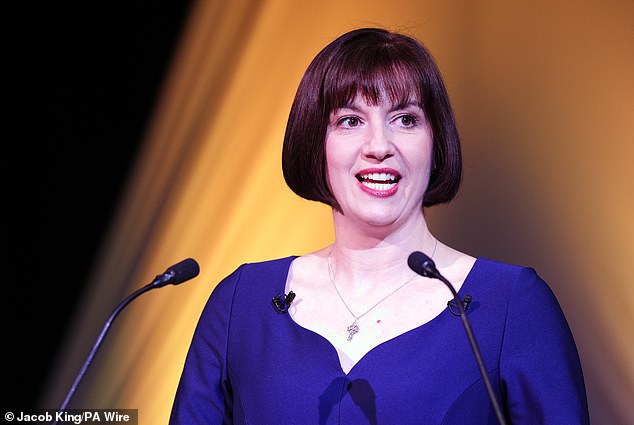
Special needs spending will keep soaring over the next decade despite reforms to bring it under control, Bridget Phillipson (pictured) has admitted
Under the new plans, only the most severely affected pupils – such as those with blindness – will be entitled to an EHCP – while everyone else will get support supplied at school level, backed by an extra £4 billion in funding.
However, now the Department for Education (DfE) has admitted costs will keep rising over the next four years and will only come back to today's levels in 2035, due to the reforms being delivered in phases.
Under the plans, schools will legally be obliged to provide an 'inclusion plan', which sets out what they are doing to help pupils with Send, with Ofsted policing this.
Schools will be told to produce a 'universal offer' which means classrooms and teaching must be designed with Send in mind, and every teacher will get Send training.
Anyone who needs more support will get an individual plan, and there will be a further tier of support for those who need specialists from outside the school – for example, for speech and language therapy.
It is expected Mrs Phillipson will face a backbench revolt over the plans, with some Labour MPs opposed to spending being reined in.
The plans also appeared to continue Labour's 'class warfare' agenda, as schools will in future face 'tightened rules' around admissions banding.
Schools are able to use banding to admit certain proportions of pupils from each ability group, but critics have said this can be manipulated to admit more privileged children.
Under the new rules, banding will be reformed to ensure it 'produces representative intakes', the paper said.
In addition, funding will be diverted away from private special schools, with a 'change in the law' to cap how much they can charge.
The government claims that independent special schools charge an average of £63,000 per child per year, compared to £26,000 for a state special school.
Around a third of independent special schools are backed by private equity firms, it says.
Mrs Phillipson said: 'We're going to act to reduce the big expansion that we've seen in independent specialist provision that is private equity backed, where we're seeing huge profits being made at the expense of vulnerable children, and we cannot continue to sustain that.'
It is understood she wants more children educated in specialist units in mainstream schools instead.
The move comes following Labour's VAT on fees for all private schools, which came into force last year.
The proposals received a mixed reaction.
Shadow Education Secretary Laura Trott said she welcomed 'stronger mainstream inclusion' but added: 'Parents and teachers will still have little clarity about what these reforms will mean for their children.'
She added: 'Ministers have repeatedly failed to guarantee that children holding EHCPs won't have them removed leaving parents anxious. Parents who have fought for years to secure support for their children deserve a cast-iron assurance that it will not be withdrawn.'
Zachary Marsh, research fellow at think tank Policy Exchange, said: 'These proposals are a welcome move away from the current cripplingly expensive, inflexible model of Send provision, which our research forecasts will cost over £18 billion a year by 2028 without reform.
'They rightly focus on ensuring support is available in an early and flexible manner to support children with SEND to thrive alongside their peers, an approach Policy Exchange has consistently advocated.'
Meanwhile, Julie Robinson, chief executive at the Independent Schools Council, said: 'Tens of thousands of young people with Send depend on independent special schools to meet their needs and provide the best possible education and care. From small charity-run schools at the heart of their communities, to large specialist providers working with young people with complex disabilities and medical conditions, the expertise required in so many cases of individualised care inevitably carries a cost.
'Despite strong rhetoric about independent special schools in the media, the Government's proposals lack essential detail. It is imperative that the Government provides clarity about these changes for families who rely on specialist care and support for their children.'