
Britain's elite universities now have more Chinese than British students enrolled on advanced engineering and technology courses, new data shows.
The UK's top five research centres also have almost as many Chinese students as British doing post-graduate science and maths.
Last night, campaigners and politicians said talented students must be encouraged to remain in Britain after their studies - to prevent their skills falling into the hands of the Chinese regime.
Sam Dunning, of the UK-China Transparency think-tank, said Britain's long-winded planning processes, expensive utilities and high taxes mean graduate researchers can set up labs or businesses in China quicker and at a fraction of the cost.
'The risks are high,' he said. 'Technology is the defining force of the modern era and we are training the next generation of high‑end engineers.
'Our universities and government are not doing nearly enough to prevent sensitive research and know‑how from being fed back to the Chinese military or spun out into companies in China rather than here.
'These are extremely talented people who could be founding Britain's next great AI or biotech firm, if only we offered a more competitive environment.
'It is not in the public interest for any of them to go and work for the Chinese military, potentially enabling Russian aggression or some other threat to us or our allies.'
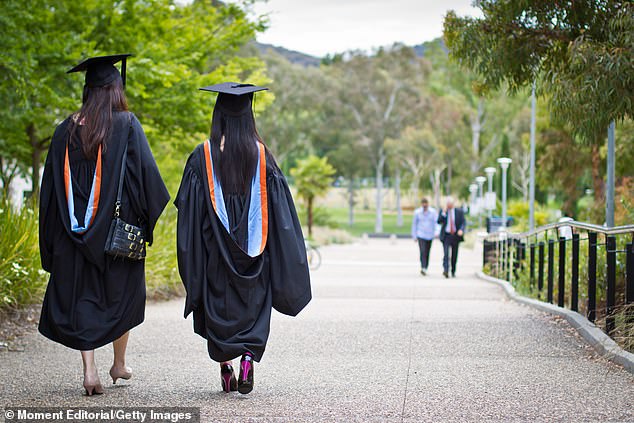
Chinese students now outnumber Britons on advanced technology courses at top UK universities, and almost as many are studying science and biotechnology
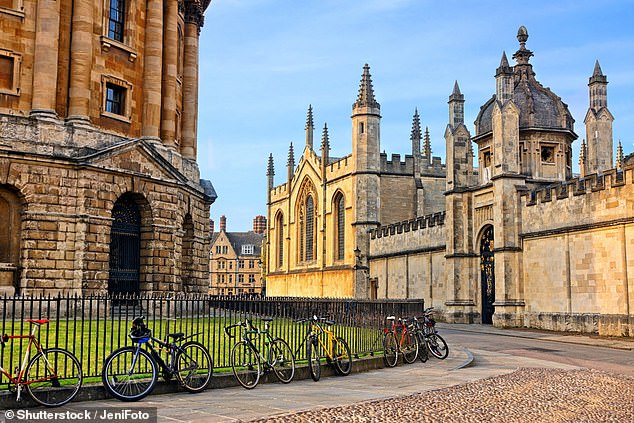
Oxford is one of the UK's top learning centres for science, technology, engineering and maths
The data, compiled by the Higher Education Statistics Agency, showed the breakdown of students studying post-graduate engineering and technology at Britain's top-five universities for those subjects - Oxford, Cambridge, Imperial, Manchester and University College London (UCL).
In total, 3,160 Chinese students were enrolled compared to just 2,260 Britons.
Meanwhile, 6,295 Chinese students, not far from the 8,155 British, were studying science, maths and biotechnology at the top-five centres for those subjects - Cambridge, Oxford, Imperial, UCL and Edinburgh.
Shadow national security and safeguarding minister Alicia Kearns said: 'British universities are addicted to Chinese finance and are blindly oblivious to the risks.
'That dependence has undermined academic freedom on campus and exposes cutting-edge research to state-directed technology and intellectual property theft.
'The fact there are now more Chinese students studying engineering in our great universities rather than British students should be a wake-up call.
'We need a renewed drive to get our own young people into STEM so Britain can develop the technological advantage needed to protect our national security.'
Luke de Pulford, executive director of the Inter-Parliamentary Alliance on China, said a science student at Edinburgh was recently lured to work at a state-run genomics programme in Bejing after being groomed by a Chinese United Front organisation masquerading as a 'talent programme'.
'The UK has been wilfully naive about the intention of some Chinese students and the talent acquisition centres which are United Front projects,' he said.
'They want to get students of Chinese descent who are doing sensitive research projects back into China to work for state owned enterprises.
'Not having China in the enhanced tier of the foreign influence registration scheme means that the police and the intelligence security services have no tools whatsoever to address it, so they're just free to roam and do whatever they want.'
Last year, Royal Society president Sir Paul Nurse warned that China was investing vast sums in science and technology, while Britain researchers face tight budgets.
'If you go now to try and visit the growing science cities [in China], they are incredibly impressive,' he said. 'When I go and visit our universities and look at the infrastructure that we've got, it is looking increasingly third-worldish to me in comparison.'