Alice Unchained
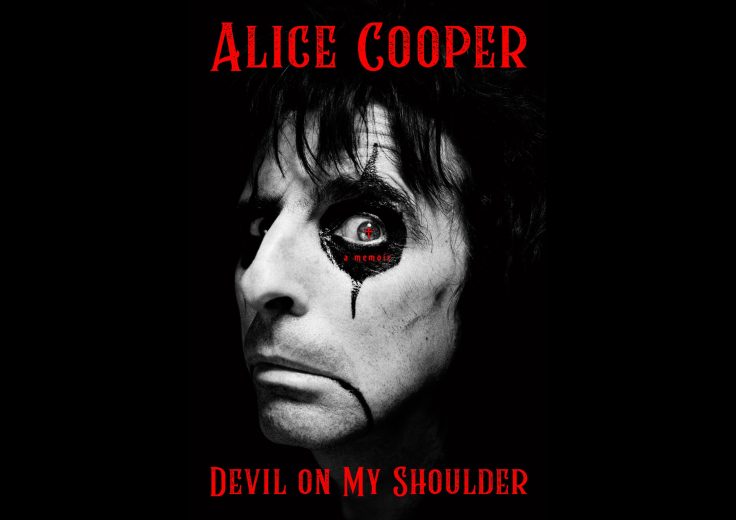
REVIEW: 'Devil on My Shoulder: A Memoir' by Alice Cooper
Eddie DeanIn the summer of '71, as rock royalty played for charity at the Concert for Bangladesh in New York, a band of cretinous dirtballs emerged from the Midwest's teenage wasteland with a breakout album that made mincemeat of the fashionable save-the-world vibe. It was titled Love It to Death, and the cover showed the group preening in the glare of a searchlight: menacing, androgynous-looking ghouls who'd apparently made Halloween a 24-7 proposition.
Their music featured buzz-saw guitars and a snarling lead singer named Alice Cooper, which was also the name of the band—which, rumor had it, was an homage to a 17th-century witch burnt at the stake. In the opening track, "Caught in a Dream," Alice detailed the band's aspirations after years of commercial rejection scraping by in the underbelly of the music biz:
I need a houseboat and I need a plane/I need a butler and a trip to Spain/ I need everything the world owes me/I tell that to myself and I agree.
Strange thing is, these swaggering delusions of grandeur came true. Not long after, the Alice Cooper group was one of the biggest rock acts on the planet. By '73 came Billion Dollar Babies, a concept album with a title song inspired by their wild ride from scuzzy garage band to shock-rock arena stardom. The record-breaking tour had a fleet of semitrailer trucks with 22,000 sparklers, 300 baby dolls, 58 mannequins, 14 bubble machines, a giant dentist's drill and surgical table, an Egyptian sarcophagus, and a guillotine, among an array of stage props.
The band's dream to make the big time at all costs stemmed from their hungry years broke and crammed together in a seedy L.A. group house, when they rejected with a proto-punk sneer the communal hippie utopia of the late '60s. "Our attitude was, 'Be as one and all smell of patchouli?' Nah, we want Ferraris and a house in the Hollywood Hills!" writes Alice Cooper in his new memoir. "That was always the goal. We liked consumer culture."
A love of the dazzling abundance of postwar American pop culture, along with a streak of defiant contrarianism, are the defining themes of Devil on My Shoulder, dedicated to "the outsiders." It chronicles the long and controversy-studded career of Cooper, still thriving today as rock's mascara-eyed madman 51 years after the original band imploded and Alice went solo. The memoir is also a reminder of the status-quo rattling impact when the Alice Cooper phenomenon first hit and Cooper became the scourge of society—the preachers and teachers and parents as well as rock critics who cried sell-out with the band's every new outrage.
Those expecting a dire mea culpa on the perils of modern celebrity will be disappointed. Cooper is one of rock's master raconteurs and most sociable creatures, from his droll cameos on '70s talk shows to hosting his current satellite-radio show. His memoir reflects an outlook both absurdist and upbeat (almost relentlessly so) and reads more like a Horatio Alger success story than any Hollywood Babylon-style gloom-and-doom exposé. It also celebrates his path to sobriety and salvation through his fanatical devotion to golf and his return to the Christian faith of his childhood—not the typical pastimes of geriatric alumni of the Rock & Roll Hall of Fame.
The book also gives Cooper an opportunity to set the record straight. As he explains, he renounced his first memoir, Me, Alice, published at the height of his fame in 1976, because it consisted of drunken tall tales concocted on the fly to sell books. Long out of print, it was dedicated to "the other superstar, Richard Nixon" and included a foreword by Cooper's minister father, Ether, a pastor and engineer, attending gigs and helping to design the stage set with a giant spider web.
To help correct the lies and debunk the many urban myths that he helped stoke, from the Ouija board origins of the band name to a notorious onstage chicken-killing incident, Cooper enlists the help of his alter-ego Alice, who plays devil's advocate in the narrative, his fact-checking interrogations rendered in Gothic font. "I'd like to describe to you my journey to Hell and back with Alice, because it's not only rockers who lose their way," writes Cooper. "Not to sound messianic, but in a perverse, crazy kind of way, I think I was assigned to do some good here. And if that's not proof that God has a sense of humor, nothing is."
At the heart of the story is an affectionate and granular portrait of growing up in early '60s suburbia and undergoing that era's teenage rite of passage—starting a rock band. Born Vince Furnier, he was weaned on horror movies and TV shows like The Twilight Zone and Alfred Hitchcock Presents, as well as comics and pulp fiction and Chuck Berry records. All fed his fertile imagination and obsession with the strange and uncanny.
At Cortez High School in Phoenix, Ariz., Vince wrote a column for the school newspaper and was a star of the track team. In art class, he bonded with classmate Dennis Dunaway over the mind-bending Surrealist paintings of Salvador Dali, the outrageous provocateur who they'd seen on The Tonight Show Starring Johnny Carson. After Dunaway saw a concert by Duane "King of the Twangy Guitar" Eddy, the two decided to start a group with other students. The Spiders became a popular local garage rock act, with Vince's dad, a minister and engineer, helping to design stage sets of webs and lights.
As the renamed Nazz, the band headed to L.A. in the late '60s with little success. Another name change, due to another Nazz led by a young Todd Rundgren with a hit record out, showed their against-the-grain attitude. "We wanted to go in the opposite direction of the folksy or psychedelic trend of the day," he notes in the memoir, "thinking we should give ourselves an old-fashioned, All-American grandma name like Betty Crocker, something deliberately uncool. And 'Alice Cooper' just popped into my head."
Their unhinged, chaotic stage show with West Side Story-style street-fight antics found a fan in Frank Zappa, who watched them clear out an audience in minutes and signed them to a deal on his Straight Records label, a home for eccentric acts. Two albums went nowhere. It took a move to the Detroit area where other high-energy bands like the Stooges and MC5 had found a rabid following.
Manager Shep Gordon encouraged the mayhem and myth-making, and producer Bob Ezrin boiled down their music to concise, hook-laden songs with Cooper honing lyrics with weird characters and surprise endings—the storytelling devices, he notes, that "I learned reading O. Henry, listening to Chuck Berry and watching Alfred Hitchcock when I was young: always a twist at the end of the story, at the end of the lyric, at the end of the episode."
The result was a string of early '70s monster hits: "I'm Eighteen," "School's Out," "Elected," among others, that bottled for all time the joys and confusion of youth rebellion. The fusion of ballistic rock and off-the-wall theatrics was the band's golden ticket, but it was the sound and fury of the Alice character that really set the band apart.
In 1975 Cooper had legally changed his name, and he created his onstage alter-ego as pop culture's most diabolical arch-villain. "At that time there were no villains in rock and roll," he writes. "There were all these Peter Pans but no Captain Hook. And I said to myself, 'Well, I'll gladly be Captain Hook!'"
The shows, which Cooper at the time described as "kinetic art," grew into increasingly wigged-out rituals, with Alice as sacrificial scapegoat paying for his evil deeds in mock beheadings and electric-chair executions as audiences went wild. Cooper likens the crime-and-punishment themes to medieval morality plays, but he now admits the violence became too extreme.
Cooper's alter-ego outgrew the band, and after he went solo, the Alice character nearly destroyed him as well. Even as he hobnobbed with celebs like his hero Dali, and Groucho Marx, who loved the vaudeville aspects of Alice's antics, Cooper's addictions to alcohol and cocaine deepened. It was 1983 before he got clean and able to finally separate himself from his toxic stage persona.
Diehard Alice Cooper aficionados will tell you his music peaked with the original band. Even so, one of the memoir's guilty pleasures is rediscovering gems from Cooper's up-and-down, six-decade solo career where he has gained legions of new fans that span generations, and which has influenced countless shock-rock acts—most of which have lacked the surreal and satirical art-school sense of humor that began with his garage band, The Spiders. Solo highlights include his 1977 ballad, "You and Me," a Top 10 hit he crooned on The Muppet Show; "Clones (We're All)," his 1980 nod to New Wave; his cameo as King Herod in Jesus Christ Superstar; and his 1978 detox album, From the Inside, detailing the horrors of his stint in rehab.
At 78, Cooper has found his own version of the American Dream: Avuncular radio personality, daily golfer, churchgoer, and proprietor, along with his wife Sheryl, of the Solid Rock Teen Center in Phoenix, a nonprofit facility for local youth to pursue the arts. And he still tours. "I've been singing 'I'm Eighteen' for forty-six years, and now the crutch that I've always used as a prop during that song as a nod to Salvador Dali has taken on a second, ironic meaning," he writes, adding: "I'm not hanging up my spurs at least until after Mick Jagger does."
Devil on My Shoulder: A Memoir
by Alice Cooper with Daniel Richler
Da Capo, 464 pp., $32.50
Eddie Dean is the coauthor of Dr. Ralph Stanley's Man of Constant Sorrow: My Life and Times.
Source link