
The newest form of subliminal messaging — and how we play into it every single day
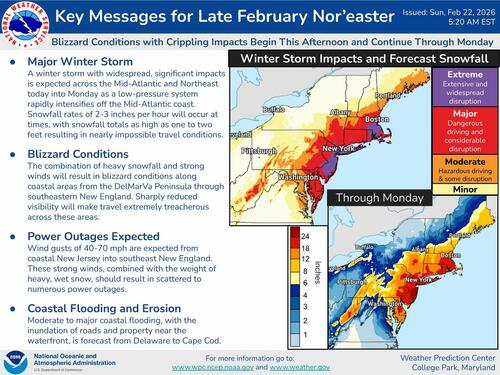
Turn on the news any morning — any morning — and within sixty seconds you will be told that somewhere, something is the most extreme version of itself that has ever existed. The drought is the driest on record. The rainfall is the wettest in a century. The storm is historic. The heat is unprecedented. The cold snap is generational. Tomorrow, a different city will be the hottest, the snowiest, the most flooded. The language never changes because the game never changes: make the ordinary feel extraordinary, make the expected feel shocking, and above all, make the audience feel that without this information they would have been dangerously unprepared.
Weather is just the warm-up act. Sports runs the same playbook every day. You open your phone, pull up the injury report, scan the line movement, and read the breakdown from three different analysts — and somehow each one tells a completely different story using the exact same set of facts. One paints a team as invincible. Another frames the same record as a house of cards. A third pulls a five-game sample that makes a .500 team look like a dynasty. The numbers didn’t change. The narrative did. And nine times out of ten, you don’t just consume it — you believe it.
By the time you scroll past weather and sports and land on money, the conditioning is complete. You are told, on the same front page, that markets are at record highs, that the economy is generating record jobs, and that “national wealth” has never been greater — while in the next tab, you quietly check your bank app and find record credit-card balances, record insurance renewals, and a savings buffer that rounds to zero. Record stock market valuations sit beside record credit card delinquency rates. Record low unemployment sits beside record time-to-hire and job-search fatigue. Record corporate profits stack on top of record household interest-to-income ratios. Record “national wealth” coexists with record subjective financial anxiety. The drought is the driest, the flood is the worst, the market is the richest — and somehow, your ATM is still flashing “insufficient funds.”
That is not a sports problem, and it is not a weather problem. It is the oldest trick in the modern information economy: data, packaged with precision, weaponized as belief. Financial markets in 2026 are running the longest, most sophisticated version of this game in recorded economic history, and most of the world is playing along — including the institutions paid to be skeptical.
This is the story of that mirage. It is the story of a financial system that has become extraordinarily skilled not at pricing risk, but at deferring it — and of the tools, the legislation, and the language engineered to make sure you never notice the difference. The record drought and the historic flood were just the rehearsal. The main event has been running on Wall Street all along.
The Scoreboard Has Been Severed from the Field
As of February 24, 2026, two numbers exist simultaneously in the same global economy, and they describe two entirely different worlds.
The first number is 0.02. That is the current reading of the Composite Indicator of Systemic Stress — the CISS — a real-time diagnostic developed by the European Central Bank to measure the health of the financial system’s plumbing. It aggregates fifteen individual stress indicators across five market segments: banks, money markets, equities, bonds, and foreign exchange. A reading of 0.02 is about as low as the instrument goes. It says, in effect, that the pipes are flowing with perfect, frictionless liquidity. Nothing in the financial system, according to this gauge, is under stress.
The second number is 106,862. That is the current reading of the World Uncertainty Index — the WUI — which scours Economist Intelligence Unit country reports from 143 nations, counts how often the word “uncertainty” appears, normalizes it, and rescales the result. A reading of 106,862 is not just high. It exceeds the peak readings of COVID-19, the 2008 Global Financial Crisis, and the September 11 attacks — combined. It says that the narrative fabric of the global economy is more frayed than at any point in sixty years of recorded data.

These two numbers describe two incompatible realities sitting on top of each other. And the reason most people have heard of one and not the other is itself the story.
Think of it this way: imagine a gambler in a 2026 sportsbook. The digital board shows the home team — Wall Street — winning by an insurmountable margin. The odds of a soft landing, of diplomatic success, of smooth sailing through the rest of the year are priced at near-certainty. But if the gambler looks out the window, they can see the stadium is on fire. The players are leaving the field. The referees are arguing. The fans are beginning to panic.
In a functional market, that gambler bets on the chaos. In the Mirage, the subliminal messaging of government policy tells the gambler that the scoreboard is the only reality that matters — and that regardless of what is happening on the field, as long as the scoreboard says the team is winning, the payout will come.
That messaging didn’t happen by accident. It was built.

The Architecture of the Mirage
There is a third signal that sophisticated market participants watch but rarely discuss publicly: the VVIX, the “Volatility of Volatility.” While the VIX — Wall Street’s headline fear gauge — sits suppressed at 12.5, a level associated with extreme complacency, the VVIX has begun a quiet, ominous upward drift.
That specific combination — low VIX, rising VVIX — is the mathematical signature of an eroding calm. It says current prices are stable, but the predictability of that stability is breaking down underneath. Sophisticated players are quietly buying insurance on the idea that when the VIX finally moves, it will not be a trend. It will be a vertical jump.
Three instruments. Three stories. One of them makes the headline. Welcome to the new subliminal messaging.

Treasury squeeze underway
The mathematics behind the CISS formula clarifies why this disconnect is possible. The index only spikes when multiple market segments are stressed simultaneously, expressed as:

Where is the vector of weights across five market segments and is their time-varying correlation matrix. When that correlation matrix is engineered to reflect an absence of co-dependence — when the market segments are operating as isolated silos rather than an interconnected system — the Dam appears impenetrable regardless of what is happening outside it. That engineering is precisely what the legislation of 2025 accomplished.
The Two Laws That Built the Rebar
The 2026 divergence is not a market accident. It is the product of two pieces of legislation, signed in the summer of 2025, that have effectively lobotomized the mechanisms that allow markets to price risk honestly.
The first is the One Big Beautiful Bill Act, signed into law on July 4, 2025 — a $6 trillion fiscal package functioning as a permanent liquidity floor under both corporate earnings and household risk appetite. Its most behaviorally sophisticated provision is the creation of the “Trump Account” (Internal Revenue Code Section 530A): a tax-advantaged savings vehicle seeded with a $1,000 federal contribution for every American child born between 2025 and 2028, immediately invested in S&P 500 index funds. Parents, employers, and relatives can contribute up to $5,000 annually. The Council of Economic Advisers projects that a $1,000 birth deposit could grow to $500,000 by retirement — or $1 million by age 28 with maximum contributions.
Read that again. The federal government has created a mechanism that locks millions of American families into the permanent maintenance of current index levels — not as investors making a judgment about value, but as structural, generational, policy-mandated buyers of the market. The bid for equities is now baked into the birth certificate.
The OBBBA also made the TCJA tax cuts permanent and reinstated 100% bonus depreciation for qualified production property — allowing corporations to manufacture “earnings beats” through accounting timing rather than genuine productivity growth. While “Liberation Day” tariffs initially averaging 16.9% (reduced to 9.1% after a February 2026 Supreme Court ruling) quietly decimated actual trade volumes with key partners, record corporate buybacks mechanically held earnings per share elevated. To a price-based stress index like the CISS, this looks like resilience. To an honest observer, it is rebar made of debt.

The second pillar is the GENIUS Act — the Guiding and Establishing National Innovation for U.S. Stablecoins Act, enacted July 18, 2025. If the OBBBA is the floor under equities, the GENIUS Act is the wall around the U.S. Treasury market. By requiring all dollar-backed stablecoins to be backed 1:1 with U.S. Treasuries, it converts an entire and growing slice of digital finance into a structural, captive buyer of short-term government paper.
By February 2026, stablecoin supply has stabilized near $300 billion, with Standard Chartered projecting it reaches $2 trillion by 2028 — generating $800 billion to $1 trillion in fresh T-bill demand as issuers accumulate reserve assets. That captive demand artificially suppresses interest rates at the front end of the curve, allowing the Treasury to potentially suspend 30-year bond auctions for up to three years. Simultaneously, the GENIUS Act greenlights a new payments rail dominated by U.S.-listed tech platforms — justifying NASDAQ valuations north of 24,000, even as 30–40% of the global semiconductor supply chain sits fragmented behind tariff walls and export controls.
Together, OBBBA and GENIUS are the Synthetic Rebar of 2026: fiscal policy and regulatory design transformed into volatility suppressants. The calm is not organic. It has been manufactured, at scale, by statute.
History Always Tells You the Ending
The pattern embedded in the 2026 Divergence Matrix is not new. History has run this exact script before — and it has always resolved the same way: not gradually, not gracefully, but through what physicists call a phase transition and what markets call a crash.
In 1929, new technologies — the automobile, the telephone — were proliferating with the same boundless optimism that now surrounds AI and stablecoins. Brokerage houses allowed ordinary people to buy stocks on 10% margin, creating a Liquidation Machine with a hair trigger. Financial stress, by every price-based measure, was negligible. The Fed had been publicly warning about speculative excess since 1928. Trade tensions simmered. The WUI equivalent of the day, had it existed, would have been screaming. When the first serious break hit on Black Tuesday, October 29, 1929, 16 million shares traded and $30 billion in market value evaporated in sessions the ticker machines couldn’t keep pace with. The scoreboard and the field re-coupled in days.
In 1973, markets rested on the belief that U.S. oil spare capacity — managed by the Texas Railroad Commission since the 1930s — would cap any global energy shock. Price-based stress was low. Equities were priced for perfection. In reality, the buffer had been exhausted in March 1971, when the Commission permitted 100% production capacity for the first time, with the chairman lamenting that the “old warrior” of Texas oil could no longer rise. When OAPEC imposed its embargo, the market realized the cushion was zero. Oil prices quadrupled. The S&P 500 entered a 45% collapse. The Mirage of energy independence shattered into stagflation.
In 2007, the VIX hovered in the low teens. The CISS sat near 0.05. Regulators used the word “contained” to describe subprime mortgage turmoil — the single most consequential wrong word in modern financial history. A retrospective text analysis of that era would have shown an explosive surge in mentions of “counterparty risk,” “insolvency,” and “bank runs” — the linguistic early-warning system that price-based models were structurally blind to. When the dam broke in 2008, stress did not trend higher. It jumped — interbank lending froze entirely, Libor-OIS spreads blew out, and institutions simply stopped trusting one another.
Each episode followed the same script: long divergence between low measured stress and high creeping uncertainty, resolved in a short, violent re-coupling. Nothing about 2026 suggests a different ending.
The Household Version of the Same Story
The CISS/WUI split does not live only on trading floors. It lives at the kitchen table.
The macro-level Mirage has a household-level echo: the affordability disconnect. The same machinery that manufactures a story of stability out of price-based indexes manufactures a story of “doing fine” out of aggregates like GDP and headline unemployment — even as the lived balance sheet says the opposite.
While official inflation gauges may show cooling price pressures, the entry ticket to stability — a starter home, a decent lease in a safe zip code — remains at record highs. A whole cohort has become trapped renters: they earn enough to qualify for a lease, but every rent check resets the clock on ever accumulating a down payment. Home and auto insurance premiums, medical coverage, co-pays, and deductibles function as stealth taxes — they rarely move in lockstep with headline CPI baskets, but they climb relentlessly in the background, consuming the line that used to be called “savings.” High-end electronics may deflate in price, lending cover to “inflation is under control” narratives, but groceries, utilities, and fuel remain structurally elevated — turning daily life into a slow bleed, a financial death by a thousand cuts.
Perhaps most telling is the emergence of what can only be called the “New Poor” with high incomes: households earning two or three times the median income who still feel precarious, because the cost of maintaining a basic middle-class baseline — housing, healthcare, childcare, any path toward education — has outpaced even high-tier wage growth. On paper, comfortable. One medical event from the edge.
This is the Statistical Gaslighting Effect in action. Curated aggregates — GDP, unemployment, top-line CPI — function as a macro-shroud. When the official data says “expansion” but the kitchen-table budget says “contraction,” it creates a Knightian Gap in trust: citizens no longer believe the map reflects the terrain. Uncertainty is no longer just about the future economy. It is about whether the scoreboard is honest.
The OBBBA and GENIUS Act, which have locked fiscal and monetary interventions into protecting asset prices, have also built an affordability wall. Those who already own assets are subsidized. Those on the outside face permanently raised entry prices. A household can be technically solvent — income exceeds expenses, bills paid on time — and still be psychologically insolvent, because the margin of safety has been consumed entirely by the rising cost of survival. It is the personal-finance version of a market with CISS at 0.02 and WUI at 106,862: a story of calm floating on top of a reality of constant, grinding stress.
When the Official Story and the Kitchen Table Story diverge far enough, the system begins to lose the consent of the governed around economic policy. People stop debating the model and start rejecting the legitimacy of the scoreboard. The household-level divergence becomes a precursor to political volatility — and political volatility, as history shows, has a way of finding the structural fault lines in the financial architecture above it.
The Knightian Gap, at that point, is no longer a number on a Bloomberg terminal. It is the distance between the Truth of the Spreadsheet and the Truth of the ATM.
The Geneva Trigger
The economist Frank Knight, writing in 1921, drew a distinction that has never mattered more than it does today. Risk, Knight argued, is a situation where the probability of future outcomes can be estimated from historical data. Uncertainty — what is now called Knightian Uncertainty — is categorically different: a state where there is no scientific basis whatsoever to form a calculable probability.
The 2026 Mirage is not a crisis of high risk. It is a crisis of model failure. Standard financial models — Value-at-Risk, the CISS itself — are built on the assumption that the future will resemble the past, or at minimum that the distribution of outcomes is knowable. The Synthetic Rebar of 2026 has introduced a set of Unknown Unknowns those models were never designed to process. How does one model the probability of a Strait of Hormuz closure against the backdrop of a $6 trillion liquidity floor? What happens when the mandated S&P 500 investments inside Trump Accounts collide with an 8% inflation spike? There is no formula for that interaction — because the interaction itself has no historical precedent.
This problem is compounded by the fact that AI-driven agents now account for more than 70% of global trading volume, turning the market into a Black Box that absorbs uncertainty while simultaneously multiplying it. The Mirage is no longer only a human psychological condition. It is a feature of the algorithms themselves.
As of today, February 24, 2026, the Mirage is focused on a single near-term pressure point: the U.S.-Iran nuclear talks in Geneva, scheduled for February 26. Markets are priced for a muddle-through — no war, no blockade of the Strait of Hormuz, no escalation that forces hard policy choices on OBBBA or GENIUS. Senior U.S. officials have warned this may be the final diplomatic window before potential military action against Iranian nuclear sites. The United States has assembled its greatest military firepower in decades across the Middle East.
The Knightian threat lives one layer below what the market is pricing:
A failed Geneva outcome pushes oil toward $150 to $200 per barrel — roughly 20% of the world’s oil supply flows through the Strait of Hormuz — driving U.S. headline inflation toward the high single digits. The OBBBA’s “Trump Accounts” and debt-fueled buybacks stop feeling like free money when real wages are being crushed by energy costs. The projected $303,800 balance for a child born in 2026 becomes a nominal mirage if the purchasing power of that dollar has been halved.
Simultaneously, if global markets begin to doubt the stability of the U.S. dollar — facing fiscal dominance and inflation together — the structural bid for Treasuries from stablecoin issuers could reverse. A run on a major stablecoin, echoing the 2022 TerraUSD collapse, could force the liquidation of hundreds of billions in T-bills at the exact moment the Treasury needs to issue more debt to fund OBBBA obligations.
At that point, the correlation matrix snaps to 1.0. The CISS does not creep from 0.02 to 0.10 to 0.30. It jumps — from 0.02 to 0.90 — as vol-sellers become forced buyers of protection and cross-market contagion, the very thing the OBBBA was designed to conceal, lights up every board simultaneously. The $12 trillion gap between where uncertainty-based indicators say we are and where asset prices trade is not amortized over a decade. It is closed in a single week of trading.

The $12 Trillion Knightian Gap: the unpriced vacuum of denial sitting between manufactured market calm and real-world uncertainty. When the Synthetic Rebar snaps, this gap doesn't close gradually — it closes in a single week of trading.
The Signal of the Century
The 106,862 WUI reading is the most important number in the world today.
It is, in context, the signal of the century — evidence that the narrative fabric binding 143 economies together is more frayed than at any point in sixty years of data collection. That this signal coexists with a near-zero CISS and a tranquil VIX tells us nothing about the genuine strength of the system, and everything about the success of our policy-driven delusions.
We have constructed a financial architecture of Synthetic Rebar — the OBBBA’s $6 trillion liquidity floor and the GENIUS Act’s weaponized stablecoin demand — that has stripped the market of its ability to price risk honestly. We have deployed the same editorial operating system that governs the weather desk and the sports breakdown: find the number that sounds most reassuring, lead with it, and let the audience fill in the rest. The CISS reading of 0.02 makes the front page. The WUI reading of 106,862 does not. The earnings beat is the headline. The hollowed-out trade volume is paragraph seven.
The system has not gotten better at understanding risk. It has gotten better at deferring it — via legislative engineering, regulatory design, and the relentless curation of which data point gets promoted to “the story.”
When the dam finally fails to hold back the ocean, history shows the resolution is not gradual. It is a phase transition — violent, rapid, and absolute. Whether the trigger is Geneva, a stablecoin run, a collapse in the semiconductor supply chain, or the structural failure of OBBBA and GENIUS themselves, the result will be the same: the Mirage shatters, the $12 trillion gap closes, and the Matrix is forced to see the world the way the uncertainty indices — and the household ATM — have been describing it all along.
We are standing in the gap.
The only real unknown is which specific failure will finally snap the rebar.