A former soldier who tried to set fire to his elderly neighbour's motorbike directly beneath his bedroom window following a bitter dispute has been jailed for four years.
Gary Bohanna, 55, poured petrol over the vehicle before attempting to ignite it with a cigarette lighter and a blowtorch while 70-year-old Gerard Bennett was inside his home.
The attack, which took place in Everton, Liverpool, on March 26, came after a series of incidents involving threats and aggression towards his neighbours, with disputes over a gazebo, loud music and motorbike parts left in the garden.
Bohanna's attempt to start the blaze was thwarted when Mr Bennett smelled petrol and went outside to investigate, discovering his neighbour leaning over the garden fence with the lighter and blowtorch in his hands.
Liverpool Crown Court heard that Bohanna, who previously served in the Army and suffers from post-traumatic stress disorder (PTSD), had a lengthy history of violence and alcohol abuse.
His previous convictions included assault, battery and numerous drunk and disorderly offences, as well as an incident in 2022 when he strangled a taxi driver with a belt while returning home from the pub.
Despite being arrested over the attempted arson, Bohanna subsequently threatened to burn down Mr Bennett's home if he was convicted of the offence.
A doctor who assessed the former soldier described him as a dangerous person, while a pre-sentence report concluded he posed a 'very high risk of causing serious harm' to both people he knew and members of the public.
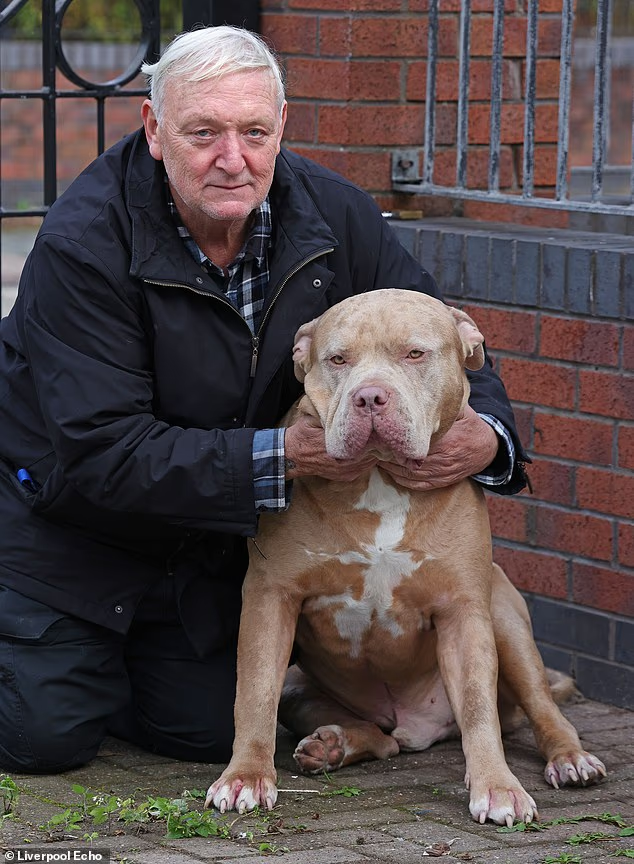
Gerard Bennett, 70 with his pet dog Lenny who had a nightmare neighbour who tried to burn his house down with his dog inside
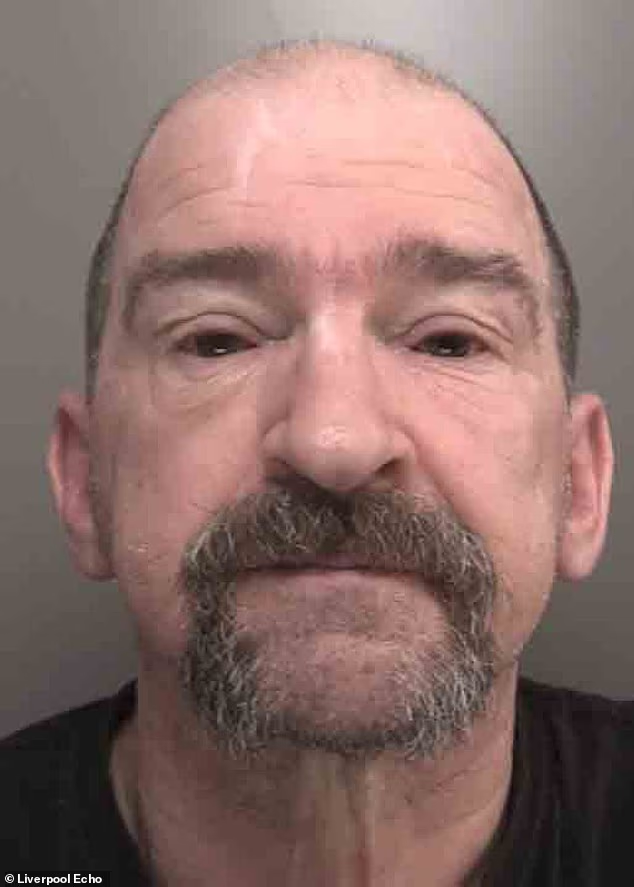
Gary Bohanna, 55, poured petrol over the vehicle before attempting to ignite it with a cigarette lighter and a blowtorch
Bohanna from Everton, pleaded guilty to attempted arson with recklessness as to whether life was endangered and appeared at Liverpool Crown Court on Monday, November 2, for sentencing.
Mr Bennett previously said how he had been working in his front garden on the day of the attack and had moved one of his motorbikes outside.
He said: 'I had been working all day in the front garden, getting it ready for when it was being paved. I moved one of my motorbikes into the front garden but it was just a shell of a bike. It didn't have a petrol tank on it.
'I came outside after making a drink and saw him there. He was stood outside my house, leaning over the fence with a cigarette lighter in one hand and a blowtorch in the other. It was right next to my bedroom window.'
The court heard that Bohanna had become increasingly disgruntled with his neighbour over a series of relatively minor disagreements, including the erection of a gazebo, music being played and engine parts being stored in the garden.
Sentencing him, Judge Robert Trevor-Jones said the attack could have had devastating consequences because of the motorbike's position immediately beneath Mr Bennett's bedroom window.
He said: 'This clearly happened not in a vacuum, but as hostility [due to] a dispute you have with him. Whether because of the erection of a gazebo or the playing of music, to which references have been made, or to engine parts being placed in the garden, it caused you to be disgruntled.
'Day in, day out, neighbours can be disgruntled, but they do not react like that. The motorcycle in particular as placed immediately under Gerard Bennett's bedroom window, and one doesn't need a very imaginative train of thought to think that, if you had proceeded, what might have happened. When somebody starts a fire, the fire can rapidly go out of control.'
The judge acknowledged that Bohanna had developed serious mental health difficulties following his military service, which had contributed to his offending.
He said: 'You have a number of previous convictions. They all seem to have arisen on your discharge from, the army. You were diagnosed as suffering from considerable PTSD from the experiences you had to undergo as part of your military service, and that is a mitigating factor on your behalf.'
However, the court heard that Bohanna had repeatedly failed to comply with previous court orders and had a tendency to respond to perceived grievances with aggression and violence, particularly when drinking.
Judge Trevor-Jones said: 'The pre-sentence report discloses a history of non-compliance with previous orders. The author found that you were minimising your culpability in the account you gave, an account which was described as somewhat muddled.
'When you perceive a grievance of some sort, it immediately turns towards hostility, aggression, and violence. That's made worse with the difficulty you have restraining your feelings, and further impacted by your alcohol abuse.
'This offence represents an escalation as far as your offending is concerned. There had been previous aggression towards your neighbours, and using threats, aggression and violence to solve conflicts.'
The judge also raised concerns about Bohanna's increasingly isolated life and the apparent breakdown of his relationship with his mother, who had previously been one of his few sources of support.
He said: 'There is further reference to your being socially isolated. You may have become alienated from your mother, who throughout seemed to have been perhaps the only support for you.
'The PSR concludes that you are a medium to high risk of re-offending and a very high risk of causing serious harm to known adults, and also to the public at large.'
The court was also told of a disturbing threat Bohanna had made during a medical assessment, when he warned that he would set fire to his neighbour's house if found guilty.
Referring to the doctor's report, the judge said Bohanna had threatened 'if (he) was to be convicted of the offence, [he] would set fire to Gerard Bennett's house'.
He added: 'This is a very entrenched degree of hostility and grievance.'
The doctor had also identified a 'marked history of violence towards others, the alcohol abuse being a highly relevant factor', and concluded that Bohanna was dangerous.
The judge agreed with that assessment, saying: 'It's quite abundantly clear that you do present as a dangerous offender. That's not such to justify a life sentence in prison, but in my judgement a determinate sentence cannot meet this degree of offending.'
Paul Woods, defending, told the court that Bohanna had struggled with his mental health and alcohol dependency but had made significant progress since being remanded in custody.
He said: 'I have drawn the alcohol issue to his attention.. In his pre-sentence report he said he would like to go and have a pint at watch the football in due course. He said it would have to be a pint of J2O.
'Since custody he has engaged with substance abuse services and he has gained employment, and he has made real progress. He's clearly in a far better position than he was when he went into custody and any risk he poses has been tangibly reduced.'
But despite those improvements, Judge Trevor-Jones concluded that Bohanna continued to pose a significant danger and required an extended sentence to protect the public.
He was jailed for four years, with an additional four-year licence period because of his dangerousness.
The judge also imposed a six-year restraining order prohibiting Bohanna from contacting or approaching Mr Bennett.
Source link