For generations, Australians have followed the conventional wisdom that buying property was the surest path to wealth.
But when a near-identical apartment in her Melbourne building recently went up for sale, 29-year-old tech worker Brielle Basmadjian did something many Australians would consider unthinkable: she walked away.
Despite being able to afford the Malvern apartment she rents, Ms Basmadjian decided she was better off continuing to invest in exchange-traded funds (ETFs) instead.
'I certainly looked at it because it's not beyond the realms of possibility for me to purchase the apartment that I'm in,' she told the Daily Mail.
'But running the numbers, it didn't make a lot of sense for me.'
Ms Basmadjian is part of a growing cohort of younger Australians directing their savings into ETFs rather than funnelling every spare dollar into a home deposit as high property prices, borrowing costs and ownership expenses reshape attitudes towards the Great Australian Dream.
Unlike many renters, she has already been on the property ladder.
Ms Basmadjian bought a home with a former partner during her twenties, but the relationship ended and the property was eventually sold.

Brielle Basmadjian (pictured) is part of a growing cohort of younger Australians directing their savings into ETFs rather than funnelling every spare dollar into a home deposit
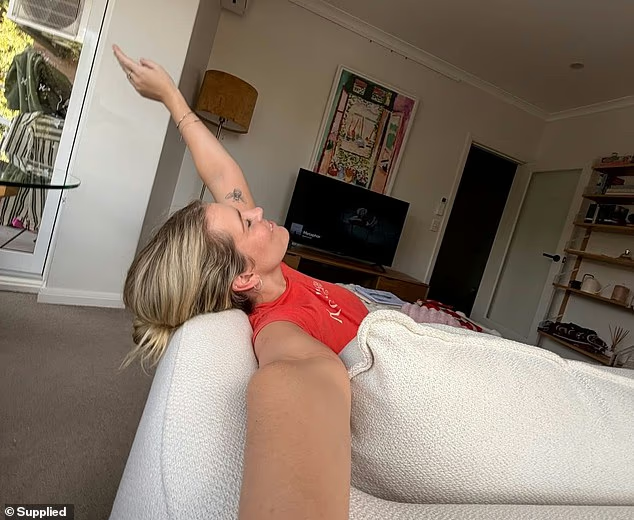
Despite being able to buy the Malvern apartment she rents, Ms Basmadjian (pictured) decided she was better off continuing to invest in ETFs instead

The latest ASX research shows nearly 3million Australians now own ETFs, more than double the number in 2020
'I actually did own property briefly with a partner during my 20s at one point, but we split ways and we ended up selling,' she said.
Rather than rushing back into the market, she has continued building an ETF portfolio, a habit she started when she began passively investing at the age of 20.
While Ms Basmadjian admits she sometimes wonders whether she has missed out on Australia's housing boom - with prices now on the slide in the wake of five interest rate rises this year and Federal government tax reforms - she believes renting and investing has given her greater flexibility.
'I did think for a while that, "Oh God, I missed the boat",' she said.
She said she still believes property has advantages, but many young Australians face a very different housing market from previous generations.
'I still have some of those old beliefs ingrained in me from my family about bricks and mortar. I think there's definitely something to be said for the growth property can deliver,' she said.
'But it's become extremely challenging for young people to get into the market. If you're saving money and it's just sitting in a bank account, not really working for you, that money may as well be invested and growing in some way.
'Even if I dumped $150,000 into a deposit, I don't think I would actually be able to maintain my current lifestyle, the apartment I'm in and the travel that I can afford.'
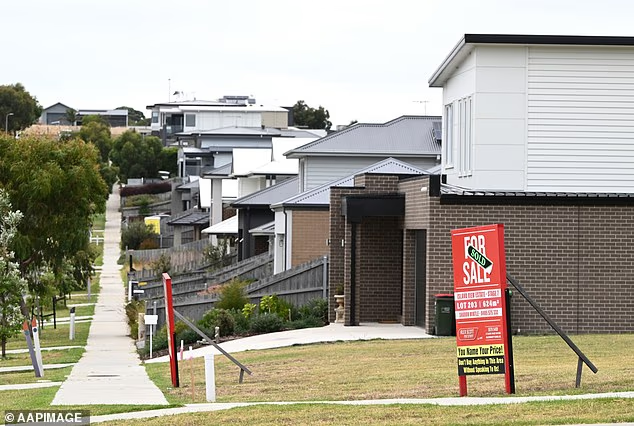
Interest in investment property has almost halved, falling from 36 per cent in 2023 to just 20 per cent in 2026
The shift is showing up in the numbers. The latest ASX research shows nearly three million Australians now own ETFs, more than double the number in 2020.
Meanwhile, interest in investment properties has almost halved, falling from 36 per cent in 2023 to just 20 per cent in 2026.
Among investors aged 18 to 29, ETFs are now just as popular as investment properties as a first investment.
Trading 212 Australia CEO Eric Peterson, who has traded since 2001, said investing in property comes with potential roadblocks that make it a less compelling option for younger investors.
'Having to come up with a sizable deposit, accessing credit from a bank, paying stamp duty and broker fees are all intimidating barriers to entry,' Mr Peterson said.
'In bear markets, losses can exceed the capital you invested in the asset. With investing in share markets, much of that simply doesn't exist.'
His platform, Trading 212, lets customers buy and sell 'fractional' shares - portions of a stock that customers may not otherwise be able to afford - with zero brokerage fees.

Trading 212 founder Eric Peterson has traded since 2001. He says property investing poses potential roadblocks to younger investors
Mr Peterson said all markets can and sometimes will be volatile in the short term, but long term before-inflation returns average at about 10 per cent.
'Even longer periods can somewhat deviate from this. For example, the S&P (Standard & Poors 500, an index which tracks the top 500 companies on the US stock exchanges) has returned over 15 per cent per year, on average, over the past decade.
'Returns on broad based market ETFs (SPYs, QQQ, for example) are around the same as the broader market and offer a cost effective way of investing across a great number of securities in a single trade.
'Other products, such as bonds, commodities, crypto, etc, all have their own risk profiles which have historically returned greater or lesser amounts that align with their underlying volatility.'
Perth renter Jasper Twigg still hopes to buy a home one day, but has chosen to invest in ETFs while building a larger deposit.
'If house prices hadn't surged by so much in the last few years, I probably would have bought a house already or at least looked at buying one more seriously,' he said.
'Given how much they've gone up, I'm probably not there yet in terms of a deposit.
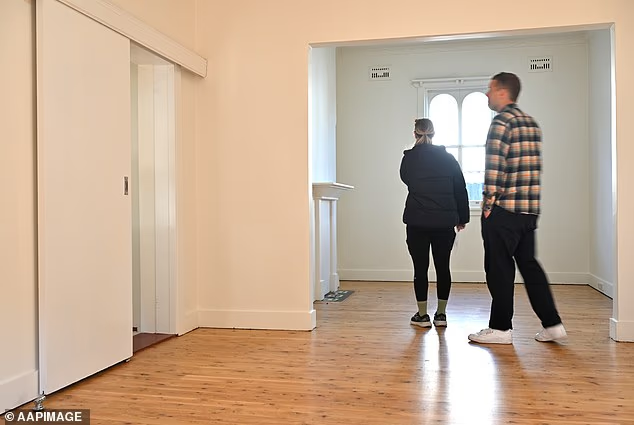
Jasper Twigg said he remained committed to buying a home eventually, but believed ETFs were currently the most effective way to grow his savings while keeping his options open
'The last two years have been the period where I've pushed that dream out a little bit, given how expensive it's become.'
The university research officer said renting allowed him to live in Perth's affluent western suburbs, an area he could not currently afford to buy into.
'I've got friends who wanted to buy in places like Wembley, but they've had to buy in Joondalup instead because they just had to keep expanding the circle out to afford something,' he said.
'I'm renting in Wembley at the moment and, if you're in a shared house like me, that cuts the cost down by three.
'Renting lets you live in a more expensive location.'
Mr Twigg said he remained committed to buying a home eventually, but believed ETFs were currently the most effective way to grow his savings while keeping his options open.
Source link