Aussie motorists have successfully challenged parking fines issued by the City of Adelaide, prompting questions about the human review of potential offences flagged by officers and its AI-assisted Park Safe system.
DataSA figures show about one in four City of Adelaide parking fines challenged since June 2024 were withdrawn following review.
The council requires two staff members to examine the evidence before an expiation notice is issued.
However, the data includes penalties issued by both parking inspectors on foot and the council's Park Safe vehicles, meaning the withdrawal rate cannot be attributed solely to AI-assisted enforcement.
A City of Adelaide spokesman told Daily Mail that some fines had been withdrawn due to mitigating circumstances rather than errors, including motorists stopping to read parking signs or responding to medical emergencies.
The spokesman also defended the Park Safe system as an 'effective tool' for spotting potential infringements.
'Effective parking management supports safer streets, improves access and parking spaces for visitors to the city, and helps maintain a safer environment for pedestrians, cyclists and other road users,' the council spokesman said.
'Council has a well-established review process that allows motorists to seek a reassessment of an expiation where they believe relevant circumstances should be considered.
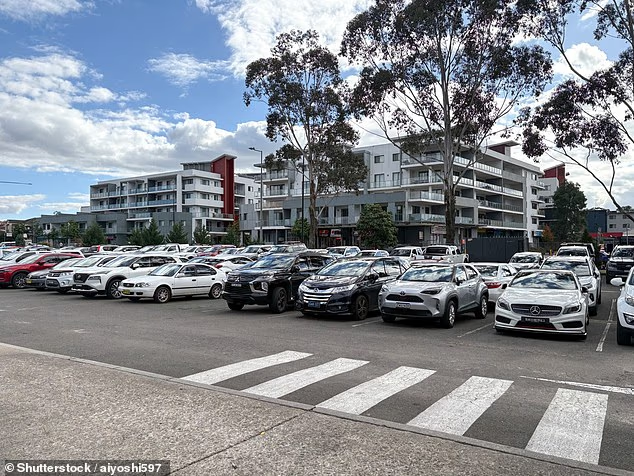
Hundreds of Aussie motorists have beaten parking fines issued by an Adelaide council
'Human oversight remains a fundamental component of the process and one staff member will review the expiation, followed by a second staff member to confirm and issue it.
'We are always looking to improve our team's accuracy both on-foot and via Park Safe.'
The council pointed to more recent Park Safe data showing that less than one per cent of notices issued during the first three months of the 2026-27 financial year were withdrawn following review.
'In the first three months of this financial year, 11,068 expiation notices were issued by officers following offences recorded by Park Safe,' he said.
'Less than one in a hundred of these expiation notices has been withdrawn, following [a] request to review.
'Reviews provide valuable insights that are considered in updates to our standard operating procedures.'
University of Sydney senior lecturer in business information systems Dr Raffaele Ciriello told Daily Mail that the withdrawal rate may reflect shortcomings in human oversight rather than the AI-assisted technology itself.
'This raises serious questions about whether so-called "human-in-the-loop" oversight actually works,' he said.
University of Sydney senior lecturer in business information systems, Dr Raffaele Ciriello, told Daily Mail the issue may stem from human oversight instead of AI
'When AI systems flag potential offences at scale, public servants can become overwhelmed with automated outputs, and human review risks becoming little more than a rubber stamp.
'The high withdrawal rate suggests that the current safeguards deserve much closer scrutiny.'
Dr Ciriello encouraged drivers to challenge fines they believed had been wrongly issued.
'Motorists should carefully check their fines and challenge them if they believe they've been wrongly issued,' he said.
'This also puts pressure on councils to improve oversight rather than leaving motorists to identify mistakes themselves.'
Parking penalties are not the only infringements detected through AI-assisted systems to face scrutiny, with seatbelt fines also being challenged elsewhere in Australia.
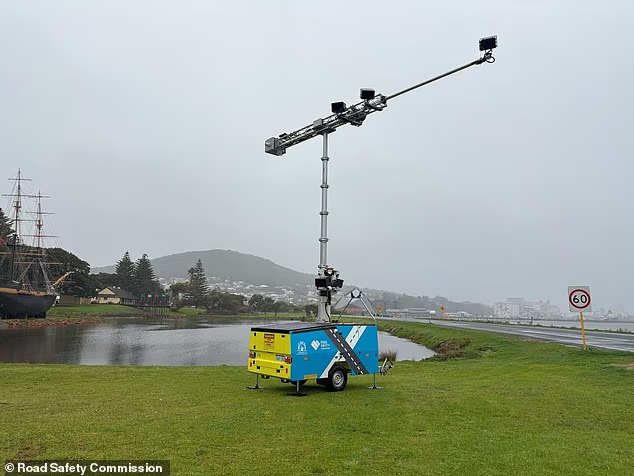
In Western Australia, about 5,700 seatbelt fines were withdrawn following requests for review by motorists. The infringements typically carried a $550 penalty and four demerit points.
Some 81,412 seatbelt-related infringements had been issued to motorists since the cameras were introduced in October 2025.
Dr Raffaele Ciriello, senior Lecturer in Business Information Systems at the University of Sydney, told Daily Mail the issue may stem from human oversight instead of the technology
Western Australian Police Commissioner Col Blanch said penalties were dropped in cases where prosecutors determined there was no reasonable prospect of a conviction.
'I think we only receive about 5 per cent of all of those matters and only about 0.1 or 0.2 per cent actually result in a trial,' Commissioner Blanch told 102.5 ABC Perth.
'We don't want to waste the courts' time on a matter we aren't going to win anyway.
'That doesn't mean everyone can make up a story and just tell us what they think.'
Commissioner Blanch said a review of penalties arising from AI-assisted cameras was underway.
'I think it's our job and the government's job to assess how this is going and whether this is a burden,' he said.
Source link