Downing Street today refused to rule out retaliation to Donald Trump's latest trade assault.
The US president has vowed to impose 15 per cent tariff on imports from around the world after the Supreme Court dramatically struck down his 'liberation day' levies on Friday.
Businesses have warned the UK will be among the worst hit, as previously it only faced 10 per cent.
No10 said it had received assurances that the move will not affect preferential arrangements Keir Starmer negotiated on steel, cars and pharmaceuticals.
But costs on UK goods exported to the US are still expected to increase by up to £3billion.
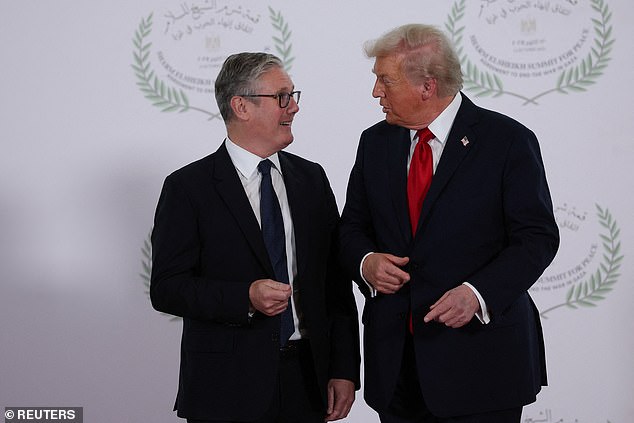
No10 said it had received assurances that the move by Donald Trump will not affect preferential arrangements Keir Starmer negotiated on steel, cars and pharmaceuticals (pictured together last year)
The PM's spokesman said Business Secretary Peter Kyle had spoken to his counterpart Jamieson Greer to 'underline his concerns'.
They said discussions were 'continuing at all levels' to understand how Trump's new tariffs will work but the UK did not 'expect this to affect the majority of trade'.
The spokesman added that 'no one wants to see a trade war', but stressed 'nothing is off the table at this stage'.
There are fears a furious Mr Trump will also step up pressure for the UK to make concessions on issues such as chlorinated chicken, pharmaceutical costs and tech firms.
Sir Keir has steered well clear of retaliation for US tariffs so far, to avoid sparking an even more damaging tit for tat. Instead he has argued that free trade benefits both sides.
Mr Greer, the US trade representative, told CBS the deal struck with Britain would remain in place.
'The deals were not premised on whether or not the emergency tariff litigation would rise or fall,' he said.
'These deals are going to be good deals. We expect to stand by them. We expect our partners to stand by them.'
Mr Trump used 'emergency powers' to introduce the reciprocal tariffs in April, but that was ruled illegal by the Supreme Court.
He has signed a presidential order to reinstate the global levies, but must get approval from Congress within 150 days.
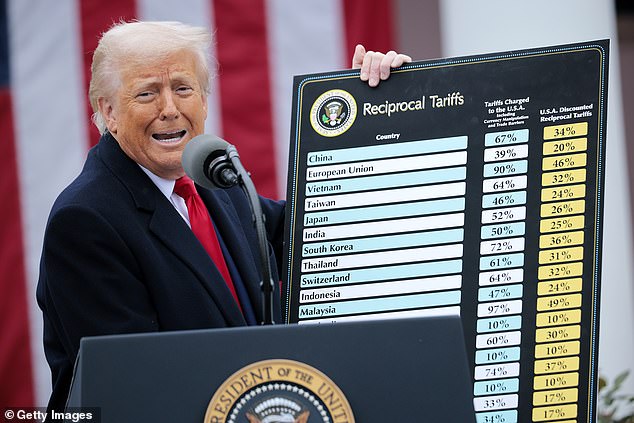
Mr Trump used 'emergency powers' to introduce the reciprocal tariffs in April, but that was ruled illegal by the Supreme Court