U.S. States use 2 nearly identical systems to check applicant identities. One is used to check Driver’s License applicants, the other is used to check Voter Registration applicants. One is flawed, the other flawless. Guess which is used for our elections.
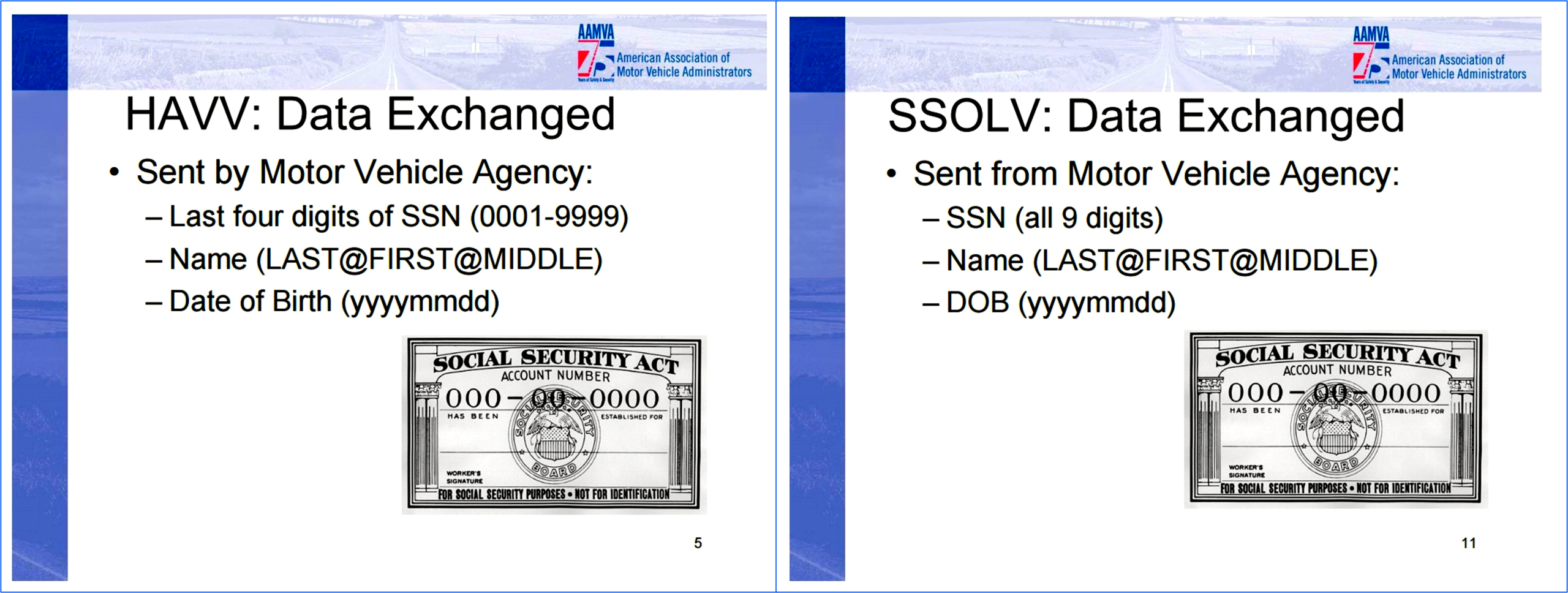
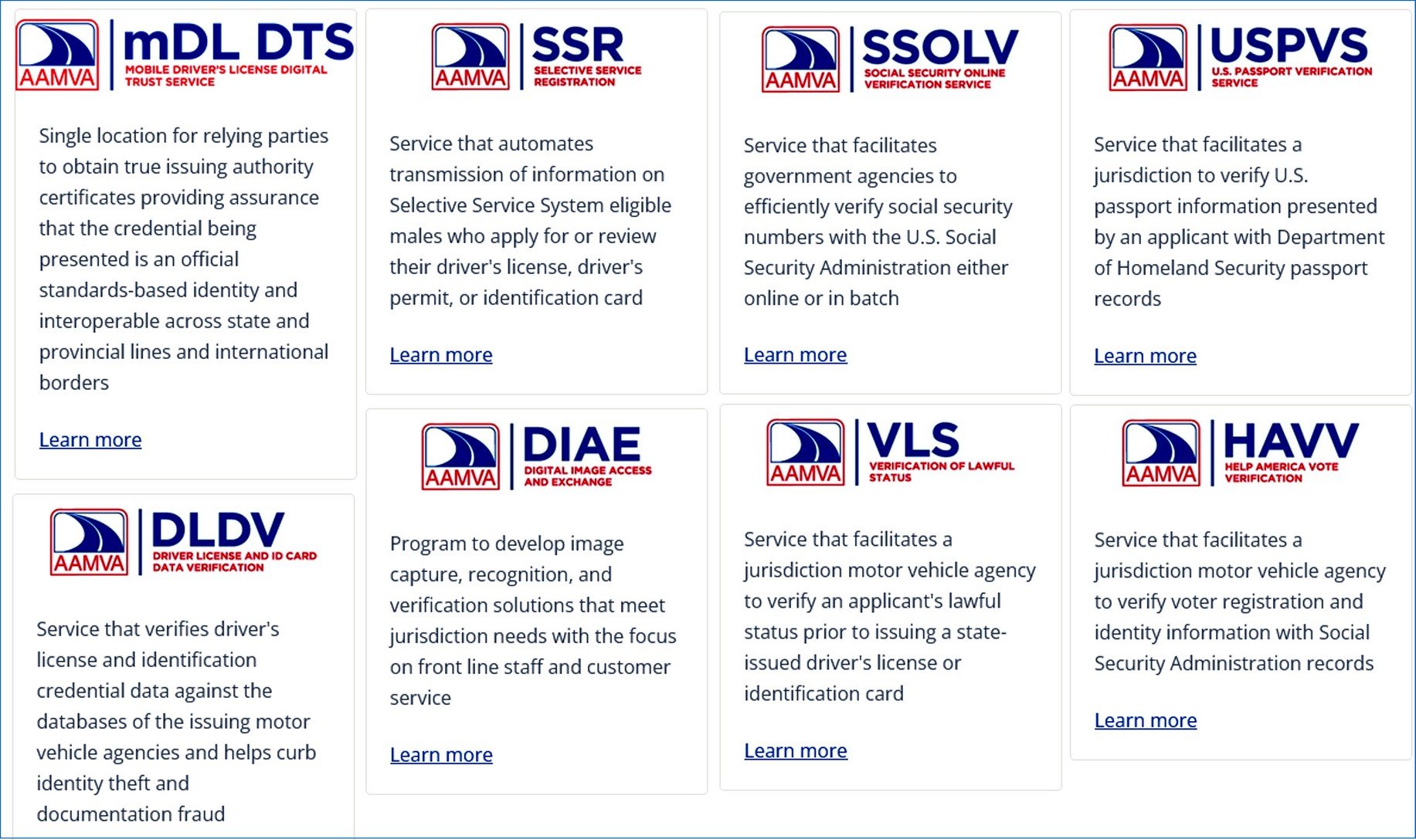
The Motor Vehicle Administration (MVA) is a generic term for a state’s DMV, MVD, and so on. MVA’s use a service called SSOLV (Social Security Online Verification) to verify driver license applicants. When a person needs a license or ID card, they go to an MVA office. Staff create an “ID verification request” by entering all 9 digits of the SS#, name, and DOB into their computer. That data travels through the middleman network AAMVAnet, to the Social Security Administration, and comes right back with a response.
To verify the identities of Voter Registration applicants, states use a nearly identical program called HAVV (Help America Vote Verification). These ID verifications are sent by the same MVA department, also through AAMVAnet, to the same SSA servers. But this system seems handicapped. Only the last 4 digits of the SS# can be used. And it gets worse. (Funfact: Texas pays $480 per year for its AAMVAnet service).
GP has written about the high percentage (28%, 58%) of non-match ID verifications through the HAVV system.
Both SSOLV and HAVV are services provided by the American Association of Motor Vehicle Administrators (AAMVA). States sign agreements for programs and services provided by AAMVA. In fact, SSOLV and HAVV are so similar that they are often priced as one service and one line item on purchase orders. Note: If a voter applicant doesn’t have a driver’s license, HAVV must be used to check the identity. Some states use HAVV for more than this, including their entire database.
Voter applications come from many sources – online, paper, and applying for gov benefits. Because of this, HAVV verifications are processed differently from SSOLV. Typically, as voter applications come into a Country Recorders’ office, a list is created of those needing ID verification (a batch). These County lists are combined each day by the Secretary of State. This is then given to their MVA, who submits this “batch” at night to the Social Security Administration (SSA). The results are disseminated back to the original locations.
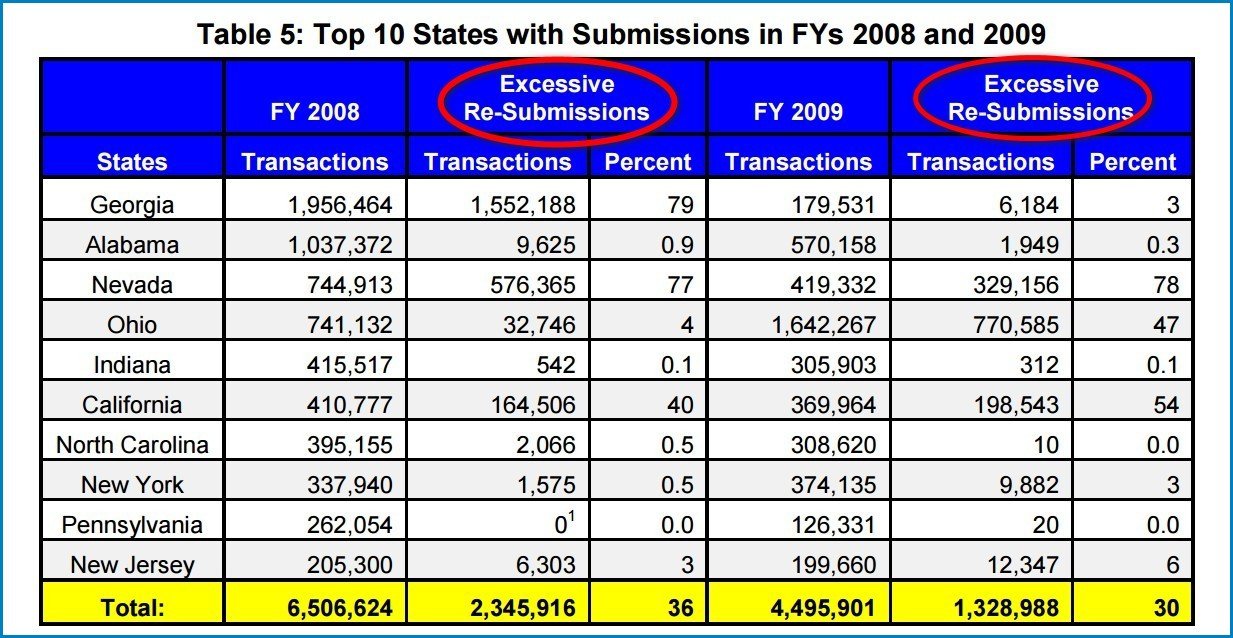
In 2010, the Office of Inspector General (OIG) for the SSA released a report about HAVV. Oddly, that 8-person team looked at only one issue and talked with only 10 states. They found that many HAVV requests are resubmissions of the same person, over and over. In some states, 30-70% of all requests were resubmissions. For instance, a 37-year-old Illinois man was verified 342 times on the same day.
In other examples, Ohio submitted the same voter for verification 1,778 times over an 11-day period in 2008. In 2009, they submitted the same person for verification another 13,824 times. That 77-year-old man had been dead for 4 years. The OIG report shows the same person can be processed 10, 30, even 50 times or more each year. Read on to learn why we are mentioning 18-year-old data.
Of the 10 states questioned by the OIG, 6 didn’t know why resubmissions were happening, and didn’t seem to care. Four states indicated that voter verifications were resubmitted automatically when that voter’s info was changed or updated. In 2008, about 32% of all verification transactions processed through HAVV were resubmissions. In 2009, it was about 20%.
After the report, the Social Security Administration stated it wasn’t necessary to create a process that detects or fixes why a person is submitted repeatedly. From what we can tell, not a single improvement has been made to HAVV since that 2010 report. After many unanswered FOIAs, staff at a Secretary of State office in the Midwest said, “We too are curious about HAVV data. It’s run by the DMV and somewhat of a black box to us.”
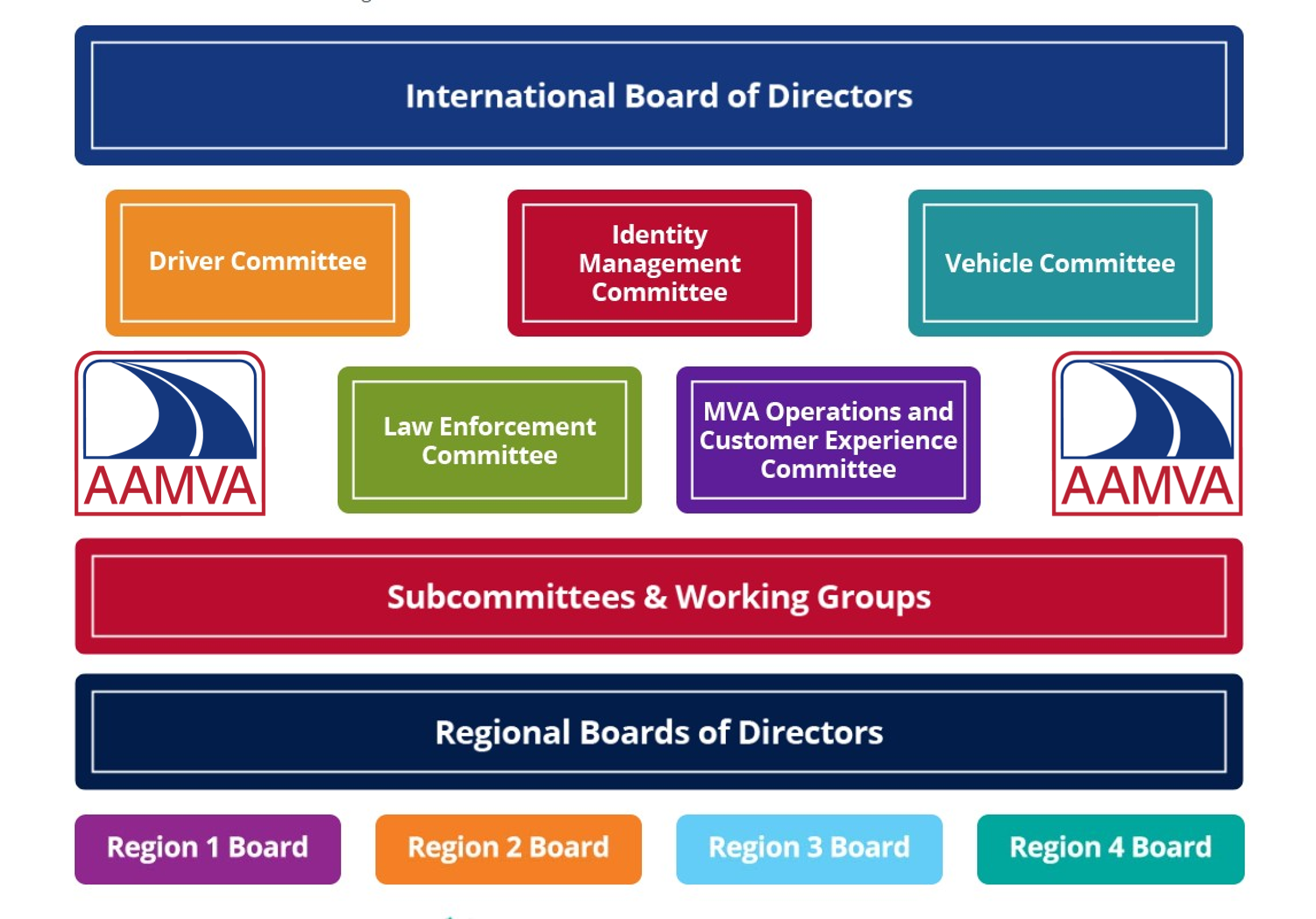
AAMVA is a 501(c)3 non-profit. Basically, they are a technology company that sells services to a state’s motor vehicle and law enforcement divisions. They rely on many tech companies for help. Each of the 50 States, DC, and the Canadian provinces make up the 69 members of AAMVA. Their board is mostly MVA administrators from the states. They have 7 committees, 12 subcommittees, and 8 working groups. Of their 190 employees, 120 are IT staff.
AAMVA is a professional organization, and very necessary. They work as the middleman to supply states with the technologies and legal paperwork to make things work. Like an agreement and secure connection to data at the Social Security Administration. They also create standards. Imagine if driver’s licenses were a free-for-all where some states used RIFD, or only QR codes, or didn’t use holograms, or no DOB, and so on.
AAMVA works with federal government partners, including the DOT, NHTSA, DHS, DOJ, and more. As an example, the National Motor Vehicle Title System (NMVTIS) provided by AAMVA is a DOJ program under the Bureau of Justice Assistance (BJA). Funfact: Texas pays $311k per year for NMVTIS. AAMVA is involved in everything from autonomous vehicles and facial recognition to license plates and selective service registration (military).
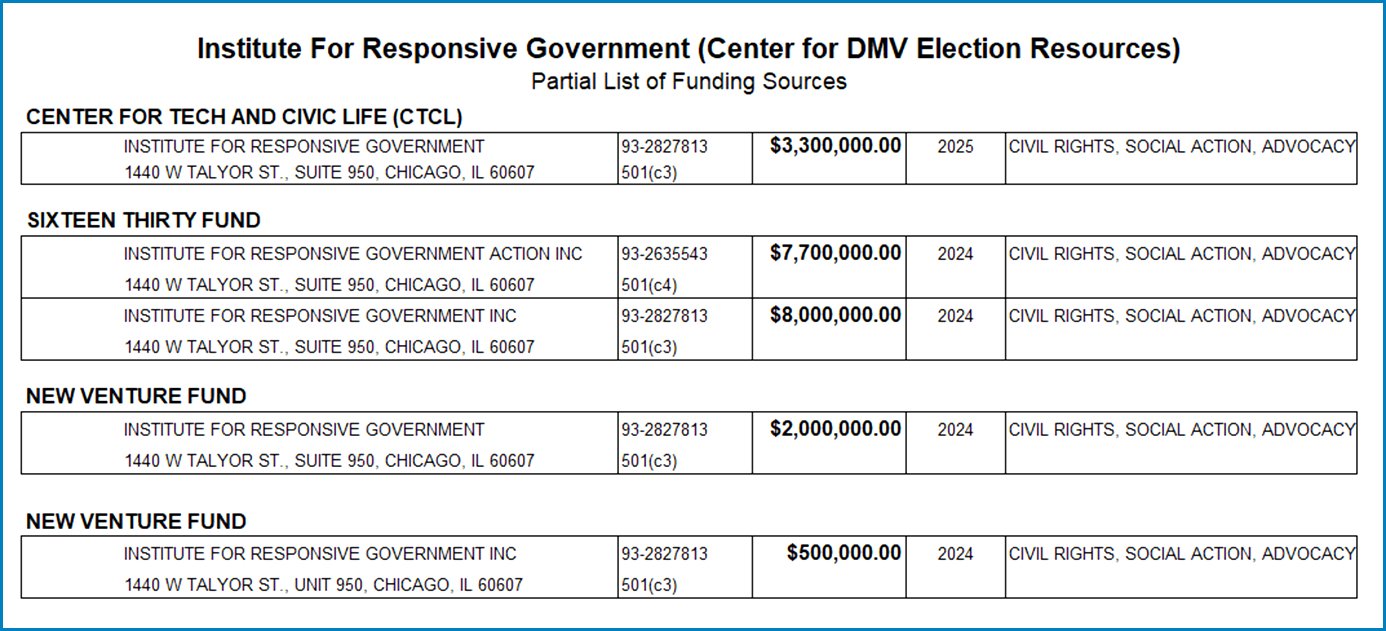
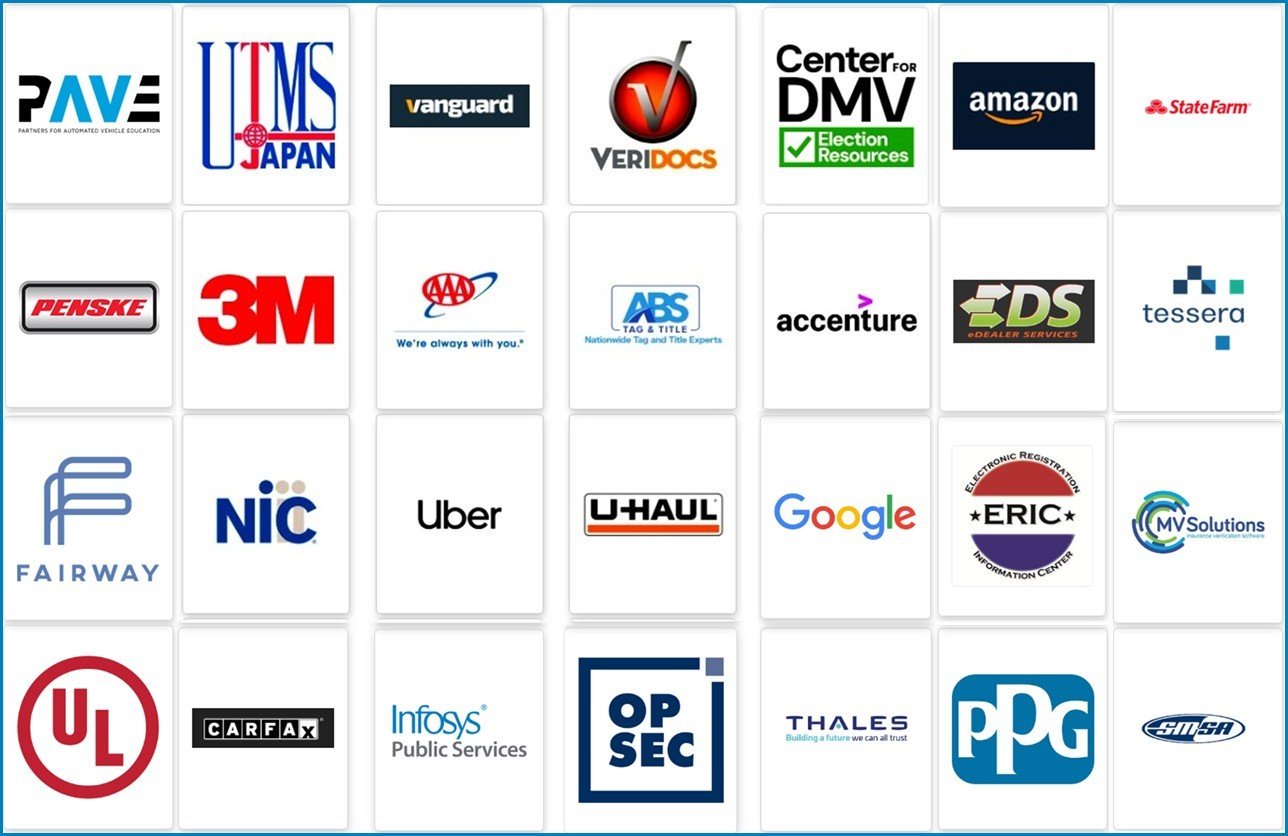
There are over 268 Associate Members of AAMVA. This includes heavyweights like 3M, State Farm, Amazon, PPG, Penske, LexisNexis, Accenture, Google, Infosys, Experian, UL, Apple, and, of course, ERIC. Some members are a concern, like the leftist “Center for DMV Election Resources”. This is a project under the “Institute for Responsive Government” and CEO Sam Oliker-Friedland from WI. Their millions in funding come from hard-left activist groups (see below). We should all look into their MVA involvement, along with others on that long list.
On their website, details about AAMVA programs can only be accessed by jurisdictions and Federal members with logins. The 19 presentations from their 2025 annual conference require logins, too. Their meeting discussed how to create narratives through social media, along with unmanned aerial systems. It seems AAMVA and their partners have big plans for our society, and likely not based on public demand. AAMVA pushes mobile driver’s licenses (mDL), the replacement of our plastic ID cards with phone tech.
AAMVA financials show roughly $45 million from contracts and membership dues each year. Another $9 million comes from grants, and $400k from contributions. They send out about $400k in grants, mostly to cover people’s travel expenses to their events. They provide IT services, network services (communications), software products, and standards. These programs allow members to share driver, vehicle, and identity data with organizations. Below, we cover AAMVA’s primary tools.
Systems Services: This includes Licensing, Vehicle, and Verification tools. They manage all types of driver license data, required skills tests, and detect fraud. Vehicle services like NMVTIS provide processing of titles, segmenting (junk, salvage), and insurance reporting. They have 8 programs verifying identities for driver licenses, passports, driver images, voter registration, lawful status (VLS), and more.
A major goal of the left is to have 100% automatic voter registration for every citizen. The billions they spent on GOTV would then probably go towards harvesting. It was Democrats who pushed the Motor Voter law (93’ NVRA) that allows voter registration at MVA offices. The left has positioned itself in and around MVA’s ever since. This is because most policies about voting center around MVA registration systems. Over 24 states already have some form of automatic voter registration at their MVA, unless you opt out!
About half of our states are members of the leftist-founded voter registration non-profit called ERIC. Those states are required to turn over their entire MVA database to ERIC every month, for both licenses and ID cards. Certain legal teams believe this is a violation of DPPA and that ERIC’s access to MVA data is against the law. ERIC supposedly helps clean voter rolls. GP found the opposite happened. ERIC’s entire business approach seems to be modeled after AAMVA.
The 1994 federal Drivers Privacy Protection Act (DPPA) has 13 provisions under which MVA information can be shared without permission. This includes insurance activities, emissions, recalls, law enforcement activities, and so on. The law DOES NOT allow non-profits to use it for voter registration. If not aware, the DOJ recently sued 27 States because they refused to turn over their voter rolls. It’s no coincidence that 23 of those are members of ERIC?
AAMVA heavily pushes a privacy and consumer protection narrative. They knew ERIC would obtain data from some of its member states. No one has access to MVA data like ERIC. Not political parties, not campaigns, no one. So how is it possible that a newly created, 3-employee non-profit could get states join and give up this highly coveted MVA data? Some states even passed laws forcing the purchase of ERIC, year after year? You have to wonder if AAMVA influence was involved.
With all their resources, access to cutting edge technologly, and heavyweight tech partners. Why has AAMVA never stepped up to fix or improve the HAVV system? Nearly their entire business model is about identities and verification. So why has the HAVV system been ignored by everyone? Some say a purposefully broken election system creates all the opportunities for fraud.
Origins of HAVV: The Help America Vote Act was passed in 2002. A couple of years later, Congress asked the U.S. Election Assistance Commission (EAC) to conduct a feasibility report about the use of SS#’s for voter verification. The EAC assigned the work to a vendor in 2006. Oddly, that contract was cancelled, and the EAC never hired a replacement vendor. In 2007, EAC asked the SSA to conduct the report. The SSA refused, stating it wasn’t their job. Also, they’re not an “independent” commission, as requested by Congress.
Almost 5 years later, by May of 2009, the report hadn’t even been started. Since its inception, and every step of the way, the HAVV program has been a broken and neglected stepchild. The OIG’s conclusion in 2010: EAC should get that damn report done, give it to Congress, and let everyone know the “RISKS OF PROVIDING A HIGH RATE OF FALSE POSITIVES OR FALSE NEGATIVES TO THE STATES”.
Earl Glynn contributed.