New York Times, Federal Reserve, Harvard, Columbia Employees Pour Campaign Cash Into Hard-Left Candidates
One Columbia professor gave $10,000 to El-Sayed
Ira StollEmployees of the New York Times, the Federal Reserve, Harvard, and Columbia have poured thousands of dollars in campaign cash into Democratic political campaigns—including some of the most extreme far-left candidates—a Washington Free Beacon review found.
.@POTUS on aid to Israel: "It gets cut off at the end of the year… They don’t need it... Israel is a very thriving country." pic.twitter.com/iIJbOv2kgU
— Rapid Response 47 (@RapidResponse47) November 3, 2026
The Fed is just one example of institutions that congratulate themselves as being elite, meritocratic, and independent, yet in reality—as the campaign finance records indicate—function as part of the Democratic or even farther left political machine.
The New York Times "ethical journalism" handbook states: "Staff members may not give money to, or solicit money for, any political candidate or election cause. Political giving by a staff member would carry a great risk of feeding a false impression that The Times is taking sides." Yet among the contributions uncovered by the Free Beacon review were a $1,000 contribution to Democratic congressional candidate Beth Macy from Harry Stevens. The Times website describes him as "a New York Times reporter and graphics editor covering climate change" and who says there, "I do not participate in political causes, nor do I make political donations." Stevens and a New York Times spokesman didn't immediately reply to a request for comment on the apparent donation.
New York Times staffers also contributed to the campaign of Democratic congressional candidate Brad Lander, who ran a Zohran Mamdani-backed primary challenge against an incumbent Democratic congressman, Dan Goldman, that was almost entirely premised on the attack that Goldman had been insufficiently anti-Israel. Michael Hoffman, a New York Times software engineer, gave Lander's campaign $500, and Eric Stone, a New York Times data analyst, gave Lander's campaign $250.
A longtime New York Times obituary editor, Peter Keepnews, who had a byline on an obituary published in the paper in May 2026, has made hundreds of campaign contributions to Democrats. Records for some of them list the New York Times as his employer, while others list him as not employed. He made a $100 contribution to the Democratic Congressional Campaign Committee on March 23, 2025, listing the New York Times as his employer. Keepnews, who reportedly left the paper in October 2025, declined to be quoted on the record about his contributions, several of which appear to have been made before October 2025.
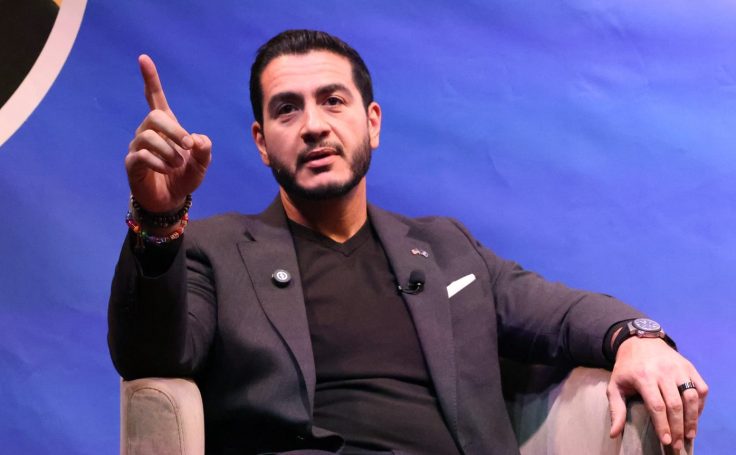
A single Federal Reserve staffer, Irfan Murtuza, gave two contributions, totaling $3,000, to the Democratic candidate for U.S. Senate in Michigan, Abdul El-Sayed. An economist at the New York Fed, Keshav Dogra, gave $1,750 to Claire Valdez's congressional campaign and $1,750 to the campaign of Darializa Avila Chevalier. Another New York Fed staffer, Dolph Haas, gave $2,000 to the U.S. Senate campaign of Texas Democrat James Talarico.
Rachael L. Ross, who lists her employer as Columbia University, gave $245,000 to the Movement Voter PAC, a left-leaning political action committee that funnels money to affiliates of the far-left Working Families Party.
Irwin Redlener, a senior adviser at Columbia's Climate School, gave $50,000 to the Democratic Congressional Campaign Committee, federal records show.
An associate professor of practice at Columbia Teachers College, Amra Sabic-El-Rayess, gave $10,000 to the El-Sayed campaign, according to the federal records.
A Harvard public health professor whose center was singled out by the university's antisemitism task force as a hotbed of anti-Israel activism, Mary Bassett, gave $5,000 to El-Sayed's campaign, the Federal Election Commission records show. Another Harvard affiliate, Farrah Ezzeddine, gave $3,500 to El-Sayed, the records show. Lander's campaign got $3,500 from Antonio Weiss, a fellow at Harvard Kennedy School.
Source link