Republican candidates eked out narrow wins in Florida's gubernatorial and Senate races Tuesday, raising the question of whether Florida has reverted to being a swing state.
Republican Florida Rep. Byron Donalds, the state's GOP gubernatorial nominee, won a closer-than-expected race to succeed term-limited Republican Florida Gov. Ron DeSantis. He bested Democratic nominee David Jolly, a former GOP congressman, 50.0% to 48.7% with more than 95% of ballots counted, according to The Associated Press (AP). The close call comes just two years after President Donald Trump carried the Sunshine State by 13 percentage points and four years after DeSantis won reelection in a nearly 20-point landslide.
Donalds's victory marks the eighth consecutive time the Republican nominee won a Florida gubernatorial election. He will also be the first black Republican governor in American history.
The congressman, who has represented a deep-red seat based in Fort Myers and Naples since 2020, won a contested August primary with Trump's backing, receiving 47.8% of the vote, according to AP. Republican Lt. Gov. Jay Collins, with 25.2% of the vote, came in a distant second place while 31-year-old investor James Fishback — who had significant support among young voters — came in third with 10.5% of the vote.
Donalds told Daily Caller Editor-in-Chief Amber Duke in September that Fishback drew votes from many Gen Z Floridians who saw hope for their future symbolized in him.
"I think if anything resonated, it is that young people want to know that there's a plan for their success," the congressman told Duke. "Whether you're going to college or not going to college, we want to make sure every child in our state, every young adult in our state, has a chance to build, you know, the Florida dream for themselves."

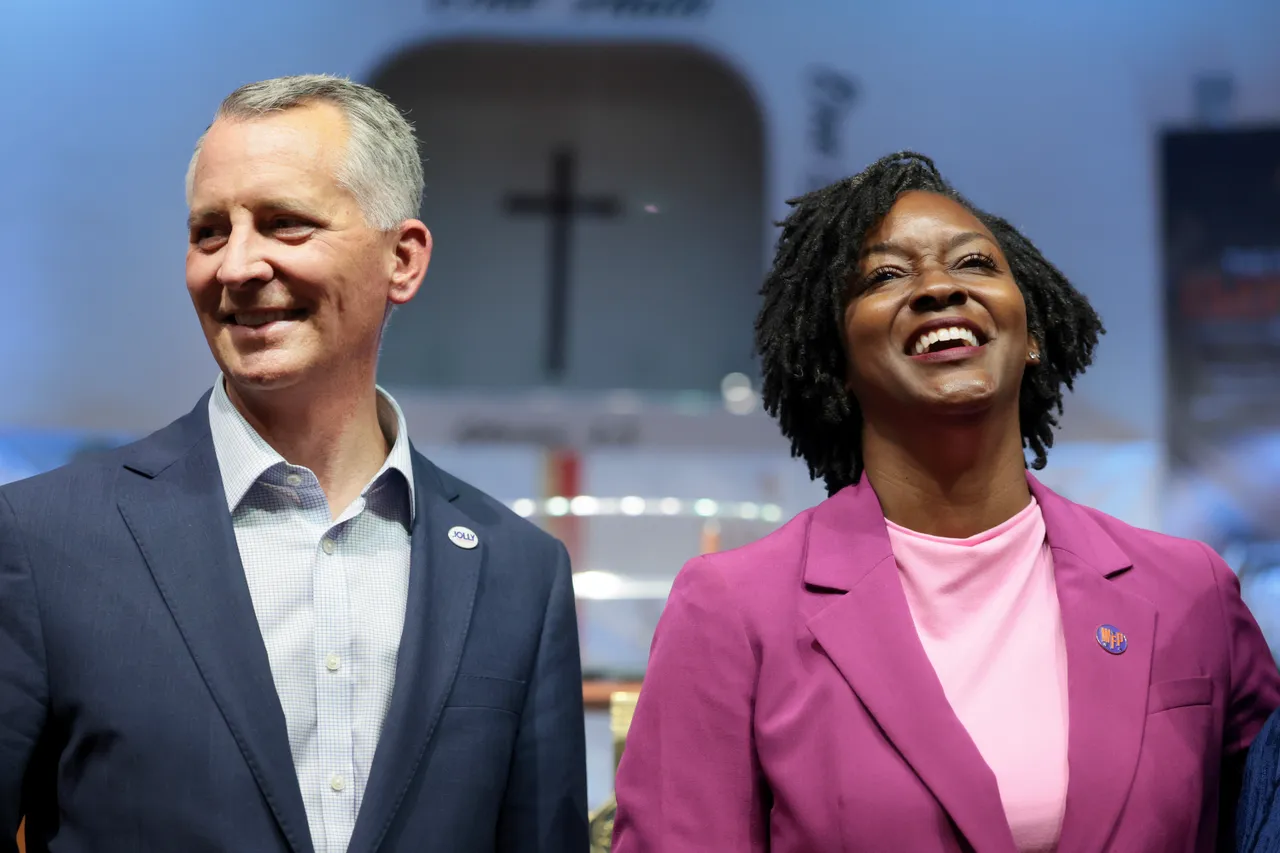
BOYNTON BEACH, FLORIDA - SEPTEMBER 28: Florida Democratic gubernatorial candidate David Jolly and Democratic U.S. Senate candidate, Florida state Rep. Angie Nixon during a campaign event at the St. John Missionary Baptist Church on September 28, 2026 in Boynton Beach, Florida. Jolly is running against Republican gubernatorial candidate Rep. Byron Donalds (R-FL) for the Florida governorship in the November 3rd election. (Photo by Joe Raedle/Getty Images)
Donalds also told Duke he supports certain guardrails on data centers, in contrast to Jolly, who promised he would immediately place a moratorium on data center construction in the Sunshine State, likely for a full year.
"When it comes to energy and electricity bills, we are very clear in our state that a data center is not going to raise the utility costs of Floridians," he said, adding that the centers should also recycle the water they use and not be in close proximity to residential areas. "My position is, if you're not going to protect our resources and you're not going to protect people's utility bills, then no data centers."
Regarding the increased deployment of Flock Safety cameras in local communities, the congressman said the "Fourth Amendment is not up for debate on this."
"We don't want to have people feeling like they're being surveilled by some private company, or even being surveilled by their government," he added. "That's not going to take place in our state."
Before becoming Florida's anti-data center Democratic gubernatorial nominee, Jolly represented a St. Petersburg-based House district as a moderate Republican from 2013 to 2017. Less than two years after losing reelection, he left the Republican Party, citing his criticism of Trump. He joined the Democratic Party and announced his run for governor in 2025.
At the same time, Republican Florida Sen. Ashley Moody won her special election, beating surprise Democratic nominee state Rep. Angie Nixon, a Democratic Socialists of America (DSA) member from Jacksonville. The incumbent senator received 50.9% of the vote to Nixon's 48.0% with more than 95% of ballots counted, AP reported.
DeSantis had appointed Moody — then Florida's attorney general — to replace Marco Rubio, who resigned in January 2025 after being confirmed as the U.S. secretary of state. Since Tuesday's race was merely a special election to complete what would have been Rubio's term, Moody will face reelection again in 2028.
Nixon had won her Aug. 18 Democratic primary in an upset, decisively beating heavily favored retired Army Lt. Col. Alex Vindman, a Ukrainian immigrant and key figure from Trump's first impeachment. Running to his left, Nixon beat Vindman by double digits despite being outspent 16 to 1.
While Florida Democrats suffered significant losses during the 2022 and 2024 election cycles, the state party appeared to roar back in spring 2026 with two state legislative special election wins in a pair of seats that voted for Trump.
Florida's presidential vote was notably decided by single digits in every race from 1992 to 2020.
Source link