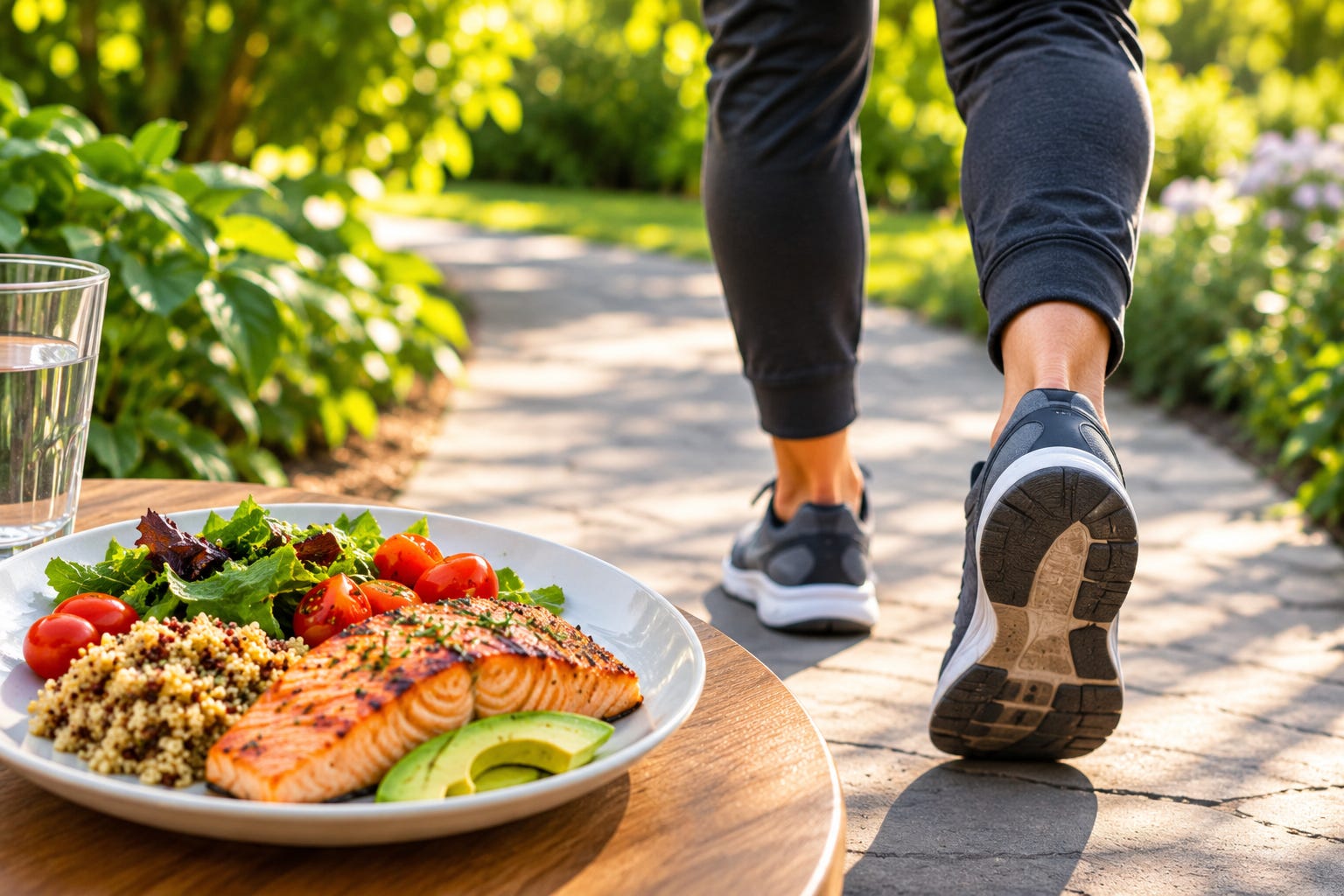
When I talk to patients about improving their blood sugar, one of the things they are happiest to learn is how little it can take to make a difference.
You don't necessarily need another workout. You may not even need ten minutes. You may not even need five. Research has found that simply getting up and walking for as little as two minutes can measurably reduce the rise in blood sugar after eating.
And when you move matters, too. Studies comparing walking after meals with the same amount of walking at other times suggest that a short walk may do the most good when your blood sugar is rising.
Here's why.
What happens when you eat
When you eat carbohydrates, your digestive system breaks them down into glucose. Your pancreas responds by releasing insulin, a hormone that helps move glucose into your cells, where it's used for energy.
That's how the process is supposed to work. But when blood sugar rises too high or stays elevated for too long, your body has to work harder to bring it back down.
Repeatedly elevated blood sugar requires a higher demand for insulin, which can contribute over time to insulin resistance, which is the precursor to major metabolic problems, including type 2 diabetes.
Now consider what happens when you finish eating and spend the next several hours sitting. Your muscles don't need much fuel, so they take up relatively little glucose from your bloodstream.
But start moving, and something interesting happens. Contracting muscles can pull glucose from the blood through a pathway that doesn't depend on insulin. Muscle contractions activate proteins called GLUT4 transporters—think of them as tiny doorways that allow glucose to enter muscle cells.
Flip normally and insulin because the normal insulin pathway is still working fine. The point is there is another pathway too. Insulin normally helps bring these doorways to the cell surface. Muscle contractions can do it through a different pathway.
That means walking gives your body another way to clear glucose from your bloodstream. For people with insulin resistance, whose cells don't respond properly to insulin, this is especially valuable.
And you don't need strenuous exercise to activate this mechanism. A leisurely walk can do it.
The evidence: Two minutes can make a difference
In a 2022 review, scientists examined studies comparing prolonged sitting with standing or taking short walking breaks.
They found that brief bouts of light walking throughout the day reduced the overall post-meal blood sugar response by approximately 17% compared with sitting continuously.
Even standing helped, reducing the glucose response by roughly 9.5%. But walking was more effective and also reduced the post-meal insulin response. Standing did not improve insulin levels significantly.
A 2012 study published in Diabetes Care produced even more striking results. Researchers gave overweight and obese adults a drink containing sugar and fat, then monitored their blood sugar and insulin for five hours.
Some participants remained seated. Others got up every 20 minutes for just two minutes of light or moderate walking. The difference was remarkable. Light walking reduced the overall blood sugar response by approximately 24%. Moderate walking reduced it by 29%. Insulin responses also fell substantially.
Notice how close those numbers are: 24% versus 29%. Walking at a comfortable pace was nearly as effective as walking more vigorously.
Why three short walks can beat one long walk
Suppose you walk 30 minutes every day. Would you get better blood sugar control by splitting that walk into three shorter sessions?
Researchers investigated exactly that question in a 2016 study involving adults with type 2 diabetes. Participants followed two routines. In one, they walked for 30 minutes once each day at the time of their choosing. In the other, they walked for 10 minutes after breakfast, lunch, and dinner.
Walking after meals reduced the overall post-meal blood sugar response by 12% compared with the single daily walk. After dinner, the improvement was even greater: 22%. Dinner contained the most carbohydrates and was followed by the most sedentary period, likely explaining the larger effect—not anything unique about the evening meal.
The total amount of walking was the same. Only the timing changed. That's the important lesson: it's not just how much you move. Moving when your blood sugar is rising can make the same amount of exercise more effective.
What about blood fats?
Blood sugar isn't the only thing that rises after eating. Triglycerides, a type of fat circulating in your bloodstream, also increase, particularly after fatty meals.
Some studies suggest that interrupting prolonged sitting with short bouts of walking may also reduce this post-meal rise. But the evidence is less consistent than it is for blood sugar. Triglycerides respond more slowly to exercise, and some benefits may not appear until hours later or may reflect activity performed the previous day.
So the evidence is strongest for blood sugar, but regular movement throughout the day may also help the body handle the fats we eat.
Benjamin Franklin Was Onto Something
Benjamin Franklin apparently understood the value of this habit long before anyone knew about glucose transporters. Franklin suffered from gout, and in 1780 he wrote a wonderfully funny dialogue between himself and his personified disease, "Madam Gout."
Madam Gout is not gentle with him. She scolds Franklin for eating too much, exercising too little, and spending hours sitting and playing chess after dinner instead of walking, telling him that "walking in the beautiful gardens" would be the wiser choice.
More than two centuries later, modern research gives us a physiological explanation for why that advice was so good.
Putting it into practice
You don't need a formal workout after every meal. Walk around your home, take a short stroll outside, or do some light household chores. If you work at a desk, get up and move for a few minutes rather than remaining seated for hours at a time.
And don't become fixated on the two-minute figure. Short walks don't replace regular exercise, which is essential for cardiovascular health, strength, and long-term metabolic health.
Longer walks provide additional benefits, and these brief bouts of movement don't replace regular exercise, which remains important for cardiovascular health, strength, and long-term metabolic health.
The point is how little it can take to help. Even a few minutes of walking after meals can measurably reduce the rise in blood sugar after eating. And if you're already exercising, putting some of that movement after meals may make it more effective.
Sometimes improving your blood sugar doesn't require a major new exercise program. It can start with simply getting up and walking.
Next week we'll look at why aging muscle stops responding to protein the way it used to—and how the right food and exercise together can change that.
Have a question for the GoldCare HealthDesk? Let us know here.
Jay Flottmann, MD, is a physician at GoldCare Health & Wellness whose expertise centers on human performance. He spent more than 20 years in the United States Air Force as both a primary care physician (flight surgeon) and a fully trained fighter pilot. He combines traditional medicine with natural alternatives, emphasizing lifestyle modification and prevention to help patients address chronic disease and achieve lasting health goals.
Source link