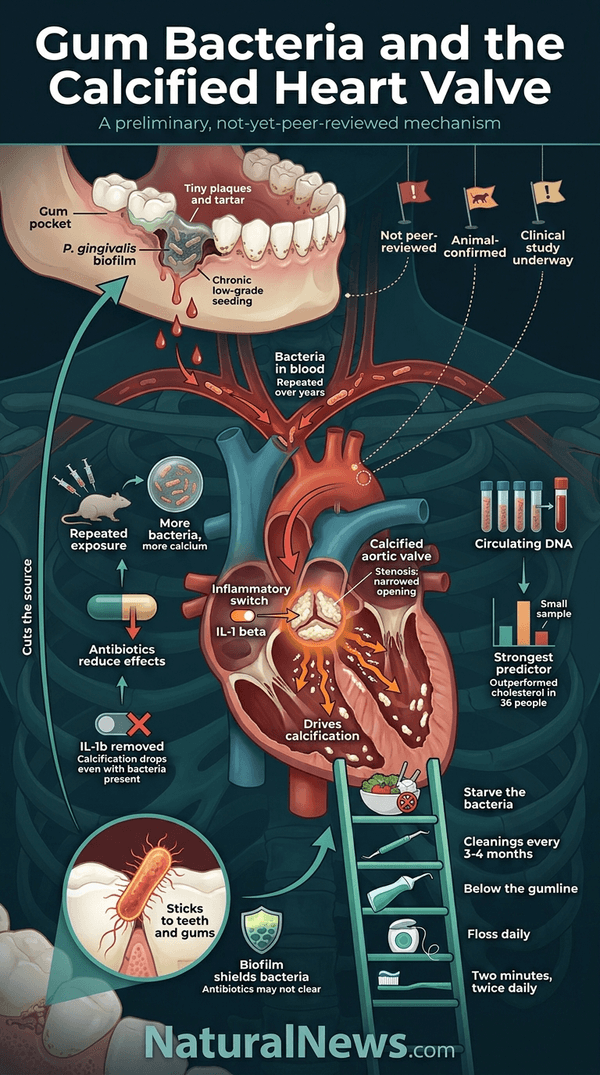
Researchers at Fuwai Hospital and Peking Union Medical College examined valve tissue removed during valve replacement surgery, the study stated. The findings have not been peer-reviewed, and the valve calcification results were confirmed in animals rather than in people, researchers said. The researchers have begun a clinical study to further evaluate the connection, according to the report.
The study adds to a growing body of research examining whether oral bacteria contribute to cardiovascular disease. Harvard Health notes that the bacteria that infect the gums and cause gingivitis and periodontitis also travel to blood vessels elsewhere and cause blood vessel inflammation and damage [1].
Valve Tissue Comparison Focused on Aortic Stenosis
Investigators compared samples from patients with calcific aortic valve stenosis to samples from patients with other valve conditions. P. gingivalis was not the most abundant bacterium overall, but it showed one of the largest differences between valves with and without stenosis, the study stated.
Calcific aortic valve stenosis occurs when the aortic valve thickens and hardens with calcium deposits, restricting blood flow from the heart to the rest of the body. In advanced stages, it causes fatigue, chest pain, shortness of breath and sometimes heart failure, according to the report. The only standard treatment is valve replacement surgery, the report stated.
The oral cavity hosts hundreds of microbial species that generally live interspersed among many different neighbors, according to "The Whole-Body Microbiome." These complex oral communities are fairly stable during an adult's life, but diminished oral microbial communities in elderly patients give pathogens an invitation to colonize and thrive, the book states [2].
Animal Exposure Tested Inflammatory Pathway
Researchers exposed animals to live P. gingivalis repeatedly over time. Repeated exposure led to a buildup of bacteria inside the aortic valve, increased calcium deposits and symptoms of aortic stenosis, researchers reported. When the animals received antibiotics, these effects were significantly reduced, according to the findings.
The researchers traced the pathway to an inflammatory protein called interleukin-1 beta (IL-1b). P. gingivalis activated this protein in valve cells, driving the calcification process, the study stated. When researchers genetically removed IL-1b from the animals, calcification and valve symptoms dropped sharply, even with the bacteria still present – indicating the inflammatory response drives the damage, the researchers said.
The role of biofilms complicates treatment of such infections. Thomas E. Levy writes in "Rapid Virus Recovery" that biofilms are clusters of microbes encased in a protective matrix they produce themselves, and that the presence of this biofilm not only makes various diseases more severe and difficult to treat but also permits the long-term survival of pathogens in the body [3].
Separate Study Reports Blood Levels Predict Coronary Risk
A separate 2026 study published in BMC Oral Health measured circulating P. gingivalis DNA in 36 people undergoing coronary angiography. People with significant coronary artery disease had higher levels of P. gingivalis in their blood than those without blockages, the study reported.
Using machine learning, the researchers built a prediction model for coronary artery disease. P. gingivalis concentration emerged as the strongest predictor of heart disease risk, outperforming traditional markers such as cholesterol and blood sugar, according to the study. The study reported that adding gum bacteria levels to standard risk assessments improved the ability to identify people at risk for heart attacks and blocked arteries.
The broader link between oral health and cardiovascular outcomes has been documented in other research. A 25-year study associated regular flossing with lower stroke and atrial fibrillation risk, though researchers described the findings as an association rather than proof of causation [4].
Prevalence and Prevention Recommendations
About 70% of adults over 65 have some degree of gum disease, and early signs can be easy to dismiss, according to the report. The report recommended brushing for two full minutes twice a day, angling the bristles toward the gumline, and flossing or using an interdental brush daily.
An oral irrigator adds cleaning below the gumline that brushing alone cannot reach, the report stated. It also noted that professional cleanings every three to four months were recommended for people with signs of gum disease.
The report also recommended scaling and root planing as the standard first-line periodontal treatment, describing it as a way to remove bacterial colonies from beneath the gumline and reduce the inflammatory load that feeds systemic damage. It recommended reducing refined sugars and processed grains, which feed the bacterial populations that drive gum inflammation, and increasing whole foods, omega-3 fatty acids and magnesium, according to the report.
Natural compounds have drawn research interest for oral bacteria. A study published in the Journal of Agricultural and Food Chemistry found that two polyphenols, caffeic acid and p-coumaric acid, can keep bad bacteria from sticking to teeth and gums [5]. Separately, a study published in BMC Complementary and Alternative Medicine investigated the potential of Sudanese medicinal plants to inhibit P. gingivalis growth [6].
Caveats and Ongoing Research
The AHA study has not been peer-reviewed, and the valve calcification findings were confirmed in animals rather than in people, researchers said. The researchers have started a clinical study to further evaluate the connection, according to the report. There is currently no medication that can prevent or slow calcific aortic valve stenosis once it starts, according to the AHA newsroom [7].
Previous research has found P. gingivalis in arterial plaques and brain tissue, and the separate coronary study reported its presence in human blood, the report stated. Japanese researchers previously found that P. gingivalis can escape from infected gums to the left atrium of the heart, causing scarring that increases the risk of dangerous irregular heartbeats [8].
An 11-year Finnish study found that gum disease, combined with pro-inflammatory diets, triggers systemic inflammation lasting more than a decade, with inflammatory foods such as processed meats and refined carbs exacerbating gum disease and elevating C-reactive protein [9].
References
- Gum disease and the connection to heart disease. https://www.health.harvard.edu/diseases-and-conditions/gum-disease-and-the-connection-to-heart-disease
- The Whole-Body Microbiome by Brett Finlay Jessica Finlay-2-1
- Rapid Virus Recovery by Thomas E Levy
- 25-Year Study Associates Regular Flossing With Lower Stroke and Atrial Fibrillation Risk. https://www.naturalnews.com/2026-10-09-regular-flossing-lower-stroke-atrial-fibrillation-risk.html
- Polyphenols in wine found to improve mouth health - NaturalNews.com, March 24, 2018.
- Prevent gingivitis naturally with traditional Sudanese medicine - NaturalNews.com, October 18, 2018.
- Bacteria from gum disease may cause inflammation, .... https://newsroom.heart.org/news/bacteria-from-gum-disease-may-cause-inflammation-harden-heart-valves
- Gum bacteria invade heart trigger dangerous heart rhythm problems - NaturalNews.com, May 16, 2025.
- Silent invasion Oral inflammations role in systemic disease from gum disease to heart health - NaturalNews.com, June 03, 2025.
Explainer Infographic
Source link