
Reports published between 2014 and 2026 describe magnesium as a mineral involved in glucose metabolism, and low levels have been observed in people with type 2 diabetes, according to Dr. Mercola's 2014 article and the Complementary and Alternative Medicine Sourcebook [2][7]. "Magnesium is the fourth most abundant mineral in your body," according to the Mercola article [2]. "Magnesium plays an important role in carbohydrate metabolism," according to the sourcebook [7].
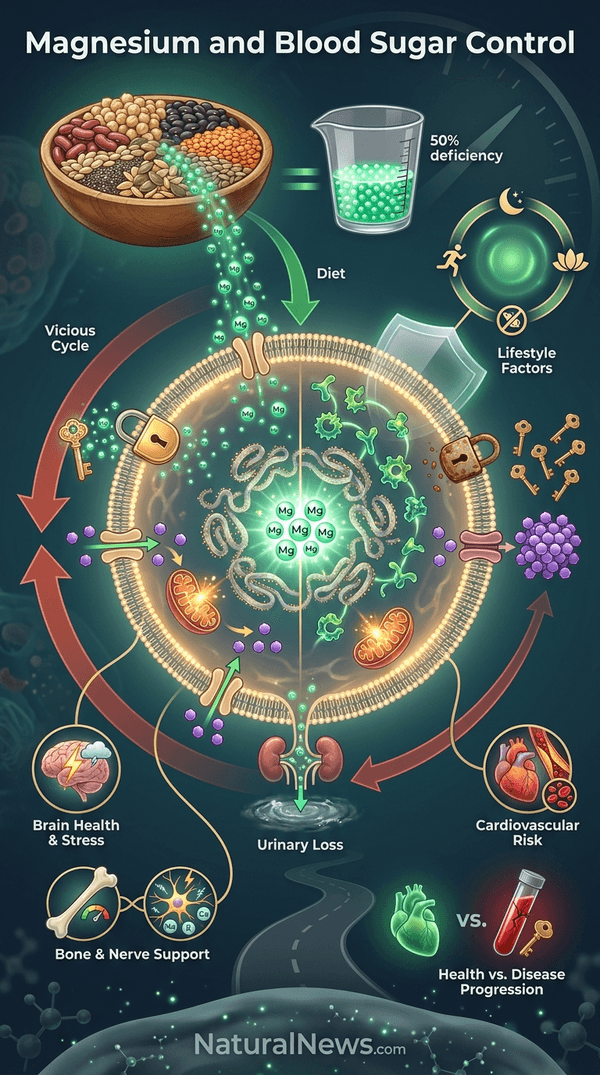
A July 2026 report on magnesium deficiency stated that roughly half of U.S. adults consume less than the recommended amount of magnesium [14]. Researchers have detected 3,751 magnesium-binding sites on human proteins, and magnesium is found in more than 300 enzymes, according to a 2015 article by Dr. Mercola [1]. That article said the mineral's role in health and disease may have been underestimated [1].
How Magnesium Affects Glucose Metabolism
Low blood levels of magnesium, called hypomagnesemia, are frequently seen in individuals with type 2 diabetes, according to the Complementary and Alternative Medicine Sourcebook [7]. The same source states that hypomagnesemia may worsen insulin resistance, a condition that often precedes diabetes, or may be a consequence of insulin resistance [7].
Several micronutrients play a role in insulin resistance, according to Fundamentals of Naturopathic Endocrinology by Michael Friedman [8]. "Magnesium deficiency has been linked to increased insulin resistance," the text states, and low dietary magnesium is associated with insulin resistance [8].
Magnesium is involved in at least 300 chemical reactions and supports blood sugar and blood pressure control, according to an August 2026 report on low magnesium [10]. The report described magnesium as an electrolyte that carries an electric charge when dissolved in body fluids [10].
Evidence Linking Low Magnesium and Type 2 Diabetes
Multiple studies have found that magnesium helps reduce insulin resistance, a major factor in the development of diabetes, according to a December 2020 article on NaturalNews.com [4]. The article said magnesium is an essential nutrient involved in blood sugar and blood pressure control, protein synthesis, and bone formation [4].
Low dietary magnesium is associated with insulin resistance, and magnesium deficiency has been linked to altered thromboxane synthesis, according to Friedman [8]. Another reference text stated that individuals with insulin resistance do not use insulin efficiently and require greater amounts of insulin [7].
Magnesium-rich food patterns have also been examined in relation to diabetes risk. A 2026 report said that legumes have emerged as an accessible source of magnesium, which helps regulate blood pressure and control blood sugar levels [12]. Another report said seeds such as chia, flax, pumpkin, sunflower and fenugreek help stabilize blood sugar by slowing digestion and improving insulin sensitivity [5].
Supplementation, Food Sources, and Recommended Intake
Some normal-weight individuals exhibit obesity-related characteristics such as insulin resistance, elevated fasting blood sugar levels, high triglyceride levels, and high blood pressure, according to an October 2025 report [3]. The report said magnesium improves metabolic profile in these individuals [3].
The evidence on supplementation is mixed. A study cited by Friedman found that oral magnesium supplementation for three months in people with type 2 diabetes increased plasma magnesium levels but did not produce significant changes in metabolic control of blood sugar [9]. The improvement was not sustained after supplementation was discontinued [9].
Legumes are among the most nutrient-dense food sources of magnesium, and adults need 320 to 420 milligrams per day, according to a June 2026 report [12]. A diet rich in whole foods naturally provides magnesium, while modern eating patterns often lack sufficient amounts, according to a July 2026 report [13]. Dietary surveys suggest many adults fail to meet recommended intake levels for the mineral, according to another 2026 report [11].
Clinical Considerations and Limitations
Low magnesium levels have been linked to diabetes, heart disease, metabolic syndrome, depression and neurological conditions, according to a July 2026 report [13]. The report said the consequences of magnesium deficiency are significant [13].
Blood sugar management also depends on diet and lifestyle, according to The Best Kept Secrets to Healthy Aging [6]. The text said that the change from healthy to unhealthy blood glucose metabolism takes years and can be slowed or stopped, and that healthy glucose concentrations can be sustained through a set of powerful practices [6].
Conclusion
Published evidence indicates that magnesium is tied to insulin action and glucose regulation, and reporting has associated magnesium deficiency, rather than magnesium levels in the normal range, with disruptions in blood sugar regulation, according to the cited sources [7][13]. Food-based intake, including legumes, seeds and other whole foods, provides one practical approach to maintaining magnesium status [12][5].
Evidence on supplementation is mixed; one study found no significant change in glucose control despite elevated plasma magnesium [9]. The available research supports magnesium as one component of a broader dietary and lifestyle approach to blood sugar management, according to the cited sources [6][4].
References
- Dr. Mercola. "Can Magnesium Reduce Your Risk of Diabetes". Mercola.com. March 30, 2015.
- Dr. Mercola. "Low Magnesium May Play Key Role in Insulin Resistance and Diabetes". Mercola.com. May 10, 2014.
- NaturalNews.com. "Magnesium improves metabolic profile in metabolically obese normal weight individuals". NaturalNews.com. October 22, 2025.
- NaturalNews.com. "Incorporating magnesium-rich foods into your diet helps reduce insulin resistance even if you don't have diabetes". NaturalNews.com. December 22, 2020.
- Belle Carter. "5 Seeds That May Help Regulate Blood Sugar". NaturalNews.com. April 5, 2026.
- Purity Research Department. "The best kept secrets to healthy aging".
- "Complementary and Alternative Medicine Sourcebook".
- Michael Friedman. "Fundamentals of Naturopathic Endocrinology".
- Michael Friedman. "Fundamentals of Naturopathic Endocrinology".
- NaturalNews.com. "Low Magnesium: Symptoms, Risks, and Treatment Options". NaturalNews.com. August 3, 2026.
- NaturalNews.com. "Magnesium: The sleep mineral science says most Americans are missing". NaturalNews.com. July 9, 2026.
- NaturalNews.com. "Legumes emerge as magnesium powerhouses for health-conscious diets". NaturalNews.com. June 29, 2026.
- NaturalNews.com. "These MAGNESIUM powerhouses can save your heart, brain and metabolism". NaturalNews.com. July 16, 2026.
- NaturalNews.com. "Magnesium deficiency linked to depression: New evidence points to rapid relief through supplementation". NaturalNews.com. July 17, 2026.
Explainer Infographic
Source link