
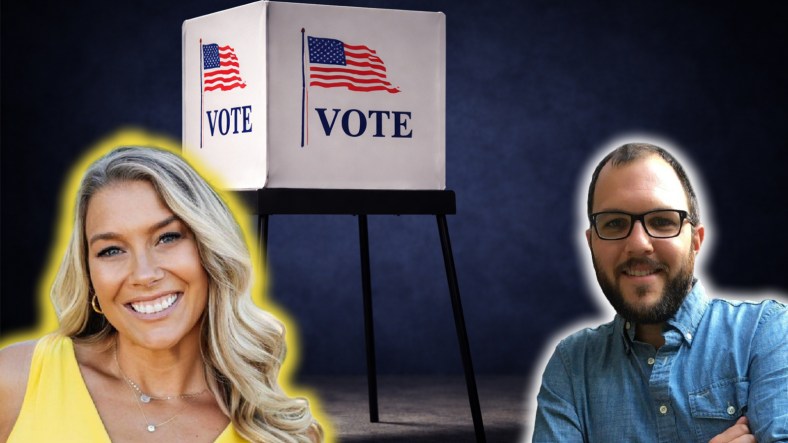
LEWISTON, Maine — Voters in Maine House District 94 head to the polls Tuesday, Feb. 24 in a special election between Republican Janet Beaudoin and Democrat Scott Harriman, a race with consequences beyond Lewiston as Augusta Democrats cling to a narrow governing margin.
Beaudoin, a Lewiston School Committee member, is running on a “Safety & Affordability” platform and pitching herself as the candidate of tighter oversight, transparency, and taxpayer relief.
Harriman, a sitting Lewiston city councilor, is asking voters to promote him from City Hall to the State House, but his record on the council has become a case study in exactly why many residents say Lewiston needs a change. Instead of being known for results, Harriman has become known for controversy, censure, and headline-grabbing lapses in judgment.
Where and when to vote Tuesday
Polls are open 7:00 a.m. to 8:00 p.m.
For this special election, voting will take place at:
- Longley School (former Multi-Purpose Center), 145 Birch Street, Lewiston
(Parking is available in the Colisée lot, according to city notices.)
Beaudoin: Collins endorsement underscores stakes
Beaudoin has secured the endorsement of U.S. Sen. Susan Collins (R), a major show of support from Maine’s most prominent Republican officeholder, and a signal that establishment Republicans view this seat as winnable, important, and worth turning out for.
In a special election, where turnout is everything and persuasion margins are razor thin, a Collins endorsement isn’t just symbolic, it tells undecided voters this race matters, and it gives Beaudoin a credibility boost most first-time state candidates never get.
Harriman: controversies aren’t side stories — they are the story
Harriman’s supporters want voters to see him as a practical, community-focused public servant. The problem is that his City Hall tenure repeatedly points in the opposite direction toward impulsiveness, distraction, and questionable judgment when the stakes are real.
Public urination admission: “no other option”
Harriman previously admitted to urinating in public in Lewiston. a controversy that wasn’t a rumor or a political spin, but his own acknowledgment. For many voters, it raised a basic question: if a public official can’t manage common-sense personal conduct without becoming a headline, what happens when he’s handed power over statewide policy?
Censured by his own colleagues
Harriman has been censured by the Lewiston City Council. That’s not normal. Censure is what a governing body does when it believes one of its members crossed lines serious enough to formally condemn. Harriman’s tenure has produced enough turmoil that his colleagues have taken that step, more than once, including over issues tied to encrypted communications and public-records concerns.
The “don’t look away” moment: shooting survivor confronts the dais
The moral test for Lewiston officials didn’t come in a campaign mailer it came in the council chamber, when Benjamin Dyer, a survivor of the Oct. 25 tragedy who said he was shot five times, stood before the council and demanded officials not “look away” while he spoke about the night that changed his life.
That moment reignited anger and distrust in City Hall, and it became political because it didn’t need to happen. Residents watching saw a council culture that looked defensive and detached at exactly the moment it needed to show humility and respect. Harriman’s critics argue that if you can’t handle a survivor with basic dignity and seriousness in your own chambers, you have no business asking voters for a promotion.
The Iman Osman controversy: a chance to demand answers — and a pattern of poor judgment
Beaudoin and her allies have also pointed to the Iman Osman controversy as another example of why Harriman’s judgment is now the issue voters can’t ignore.
As questions swirled around Osman’s residency and the cloud of pending gun-related charges, Harriman had a clear choice: use his position to push for accountability and public confidence, or treat it like political noise and move on.
Critics say he chose the latter posture, refusing to lean into scrutiny at a moment when Lewiston residents were demanding answers. For voters watching a city struggle with trust in government, that posture doesn’t read as leadership it reads as an instinct to protect the system rather than defend the public.
The bottom line
This special election isn’t just about party labels. It’s about whether Lewiston wants to send Augusta someone running on a platform of safety, affordability, and accountability, or whether it wants to elevate a City Hall figure whose tenure has been marked by censure, controversy, and repeated moments that leave voters asking the same question:
If this is what Harriman brought to the Lewiston City Council, why would anyone trust him with more power at the State House?