A wave of bomb threats hit more than a dozen commercial flights across Europe on Thursday, forcing diversions, emergency landings and fighter-jet escorts while hundreds of passengers waited for authorities to determine whether
explosives were on board. So far, authorities have found no bombs.
That is the good news. The alarming news is the scale of the disruption — and the fact that this was the second round of widespread aviation threats in the same week.
The Associated Press reported that more than a dozen flights from cities including Copenhagen, Dublin, Helsinki, Madrid, Milan and Warsaw were targeted. Officials described the messages as malicious hoaxes, but every threat still had to be treated as real until security teams cleared the aircraft.
The incidents followed another wave earlier in the week that triggered searches, diversions and at least one military escort. Thursday's alerts spread across several national jurisdictions and multiple airlines, forcing authorities to evaluate each aircraft independently while looking for a possible connection.
Inspections had not uncovered hazardous or suspicious materials. That finding reduced the immediate danger without answering who sent the messages or whether the campaign was coordinated.
Public flight data captured the moment EI402 declared a general emergency and turned away from its route to Rome.
Aer Lingus flight #EI402 (Dublin - Rome) is diverting to Evreux Fauville Air Base, with squawk 7700. pic.twitter.com/acg3BCwzKM
— Flightradar24 (@flightradar24) November 5, 2026
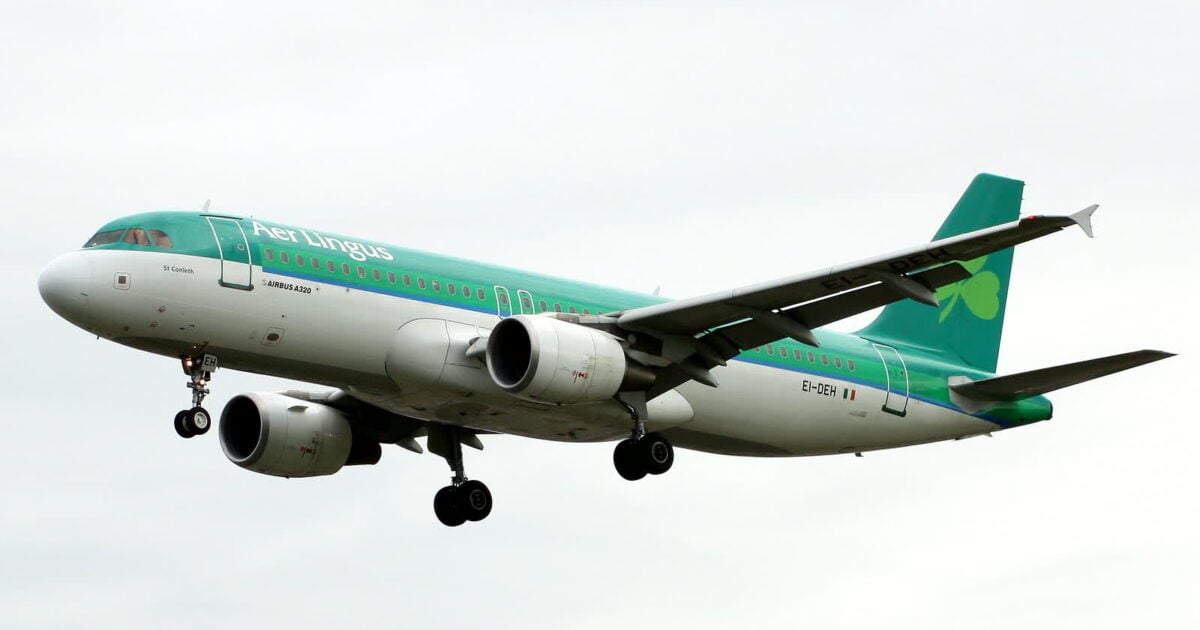
Among the most visible incidents was Aer Lingus Flight EI402 from Dublin to Rome. The Airbus A320 diverted to the Évreux-Fauville military air base in Normandy as a security precaution and landed safely.
French authorities searched the aircraft and found no explosive device.
RTÉ reported that Italian, French and Bulgarian fighter jets were scrambled as at least 14 flights were hit with threats. Three flights were diverted, all landed safely, and no explosives were found.
The Irish outlet said the alerts had continued for a third day that week and had generated more than 20 reported hoaxes. Ryanair alone had been targeted at least seven times, forcing authorities in multiple countries to keep repeating costly emergency responses.
The affected routes stretched across northern, central and southern Europe, with alerts involving Aer Lingus, Ryanair, Finnair, LOT Polish Airlines and Wizz Air that day.
That is a sustained attack on Europe's aviation system, even if the messages were false.
Czech police disclosed another piece of the response: officers and Prague Airport prepared for four threatened aircraft while assessing the messages as low-credibility.
1/2 Po obdržení výhružky o uložení nástražného výbušného systému na palubě 4 letadel mířících do Prahy se s kolegy z @PragueAirport připravujeme na jejich přistání. Relevanci výhružek hodnotíme jako nízkou.
— Policie ČR (@PolicieCZ) November 5, 2026
Other targeted routes included Aegean flights from Thessaloniki to Milan and Athens to Vienna. Earlier threats this week forced searches and diversions involving Ryanair, LOT Polish Airlines and Wizz Air flights.
This was not a harmless prank.
When a threat reaches an airline or airport, security specialists assess its credibility and rapidly pass information to the flight crew. Pilots may divert, request a military escort, evacuate an aircraft or land at a secure location.
Even a hoax can put crews under enormous pressure, strand passengers and consume substantial law-enforcement and military resources.
An Associated Press aviation-security explainer said airlines grade threats, promptly notify flight crews and may evacuate or divert an aircraft. One diversion caused by a bomb threat can cost as much as $250,000.
Multiply that by more than a dozen aircraft, then add the police searches, fighter-jet launches, missed connections and passenger disruption, and the purpose becomes obvious: someone can inflict chaos without placing a single explosive.
By Thursday morning, the confirmed picture was clear: every targeted plane had landed safely, searches had found no explosives and nobody had credibly claimed responsibility.
No person or government had credibly claimed responsibility as of Thursday, and authorities had not publicly identified who sent the threats. That matters.
Europe is already on edge over drone incursions, sabotage cases and warnings about so-called hybrid attacks, but suspicion is not proof.
Officials should follow the evidence and resist the urge to announce a culprit before they have one.
At the same time, treating these incidents as mere juvenile mischief would be dangerously naive. A coordinated sequence of threats across multiple countries can test emergency response systems, expose weak points and normalize a level of disruption that becomes harder to distinguish from a real attack.
The passengers and crews are safe because aviation authorities took the threats seriously. That is exactly what they had to do.
Now European governments need to determine whether the messages came from one coordinated actor, copycats exploiting the first wave, or some other source. The public deserves answers, and whoever caused this disruption should face consequences severe enough to deter the next person who thinks terrorizing passengers is a game.
No bombs were found this time. Authorities cannot assume the next warning will also be a hoax.
This is a Guest Post from our friends over at 100 Percent Fed Up. View the original article here.
Source link